

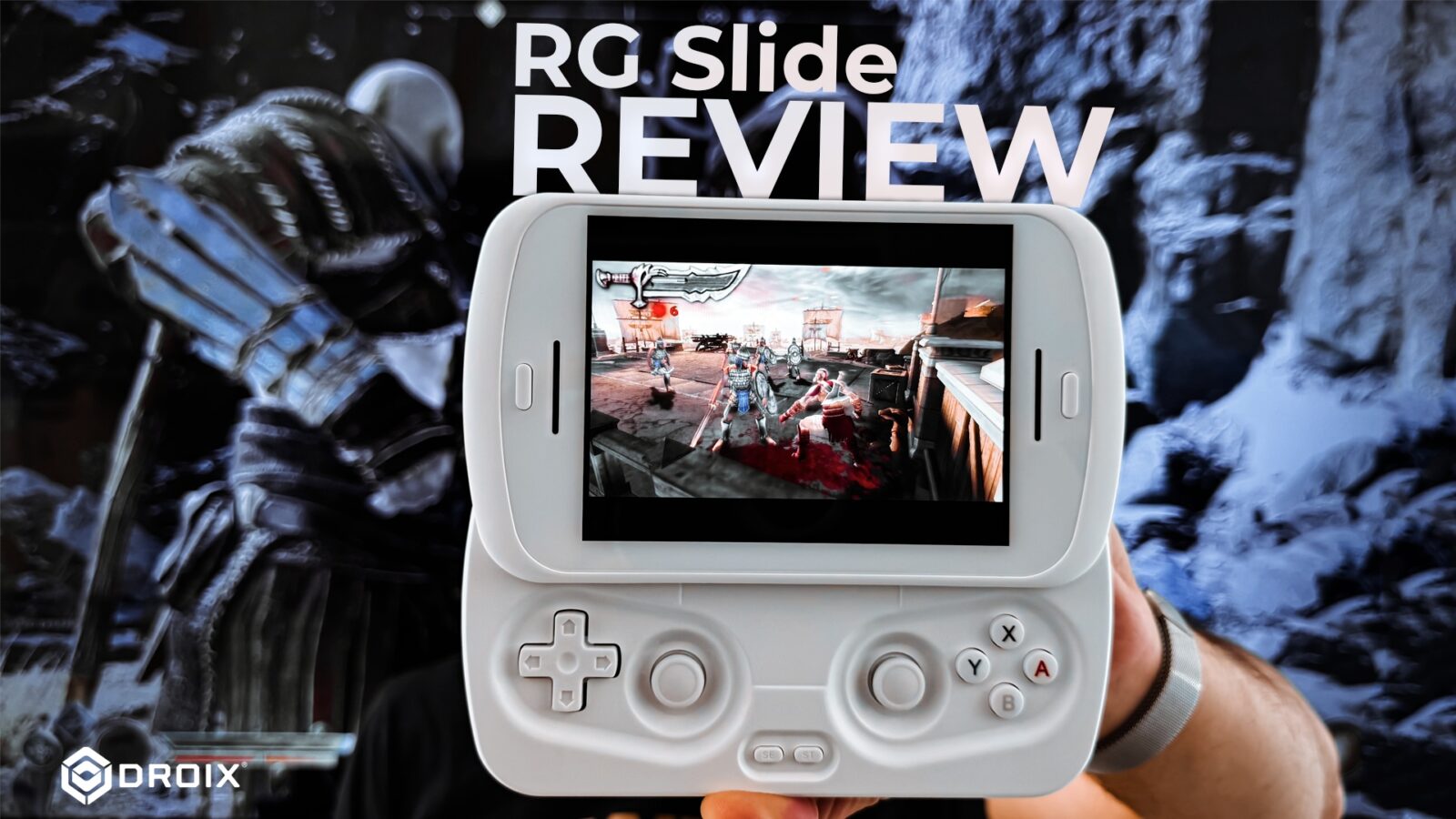
Anbernic RG Slide Review
-
Design
(4.8)
-
Build Quality
(4.8)
-
Display
(4.5)
-
Performance
(4.5)
-
Features
(4.5)
-
Software
(4.5)
Summary
The Anbernic RG Slide offers a fresh take on Android handhelds with its robust and satisfying sliding mechanism, a 4:3 aspect ratio display perfect for retro emulation, and a surprisingly useful AI translation feature.
Overall
4.6User Review
( votes)Pros
- Unique and Sturdy Sliding Mechanism
- Excellent Value for Performance
- Pocketable Design
- Great for Retro Emulation
- Useful AI translation feature
Cons
- No simultaneous video out and charging function
Gamers have been waiting for an Android gaming handheld with a slide out display for some time now. Well, we finally have one with the aptly named Anbernic RG Slide. Let’s check out how well the mechanism works, how it handles and most importantly how well it runs in our Anbernic RG Slide review.
Anbernic RG Slide Review Video
Anbernic RG Slide Overview
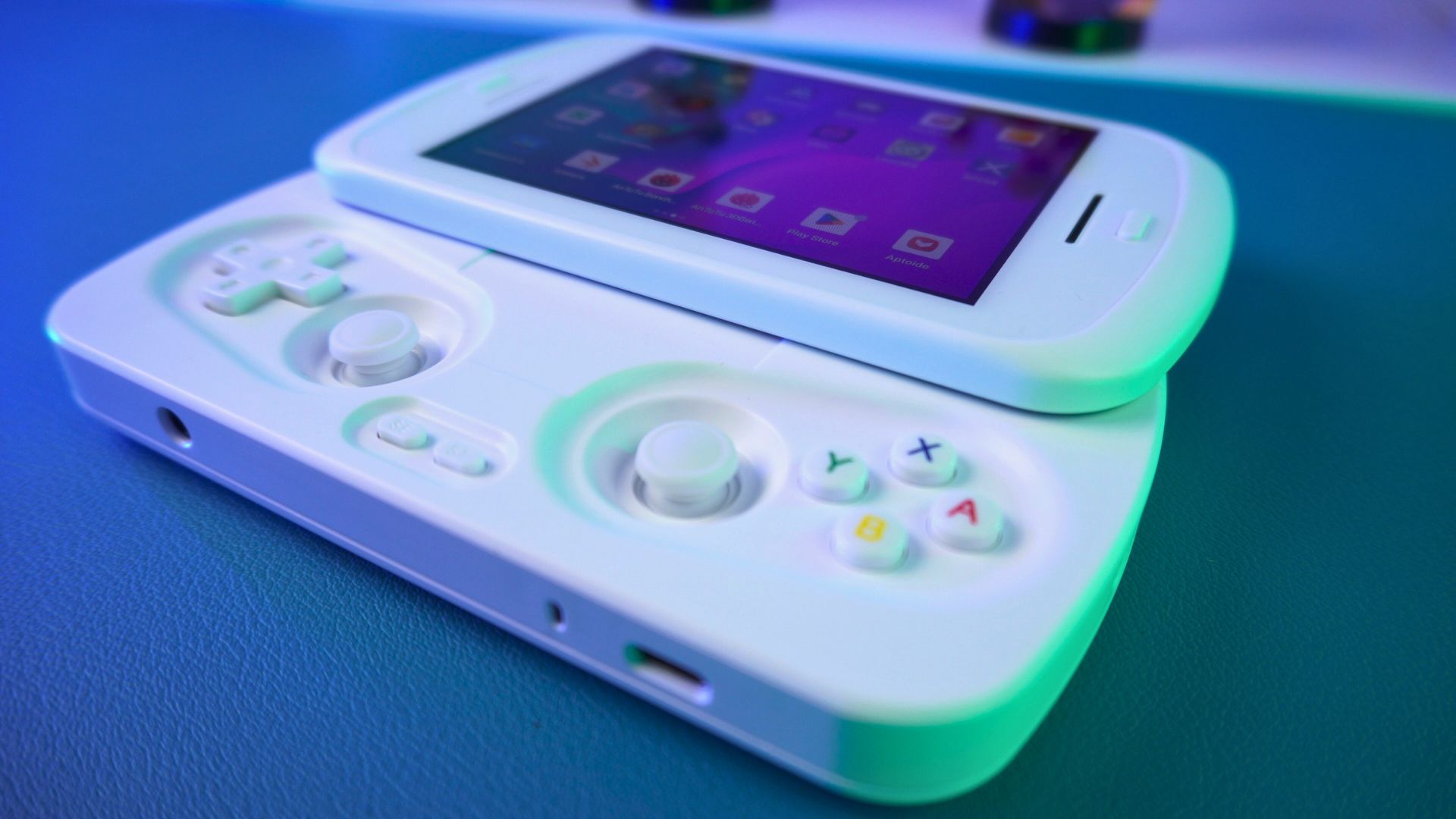
We will start off our Anbernic RG Slide review with an overview. The Anbernic RG Slide is available in two colours, Black & White. When closed it measures around 6.06 x 3.54 x 1.02 inches (15.4 x 9 x 2.6 cm) and weighs around 379g (0.836 lbs). It’s quite thick, but not beyond fitting in your pocket.
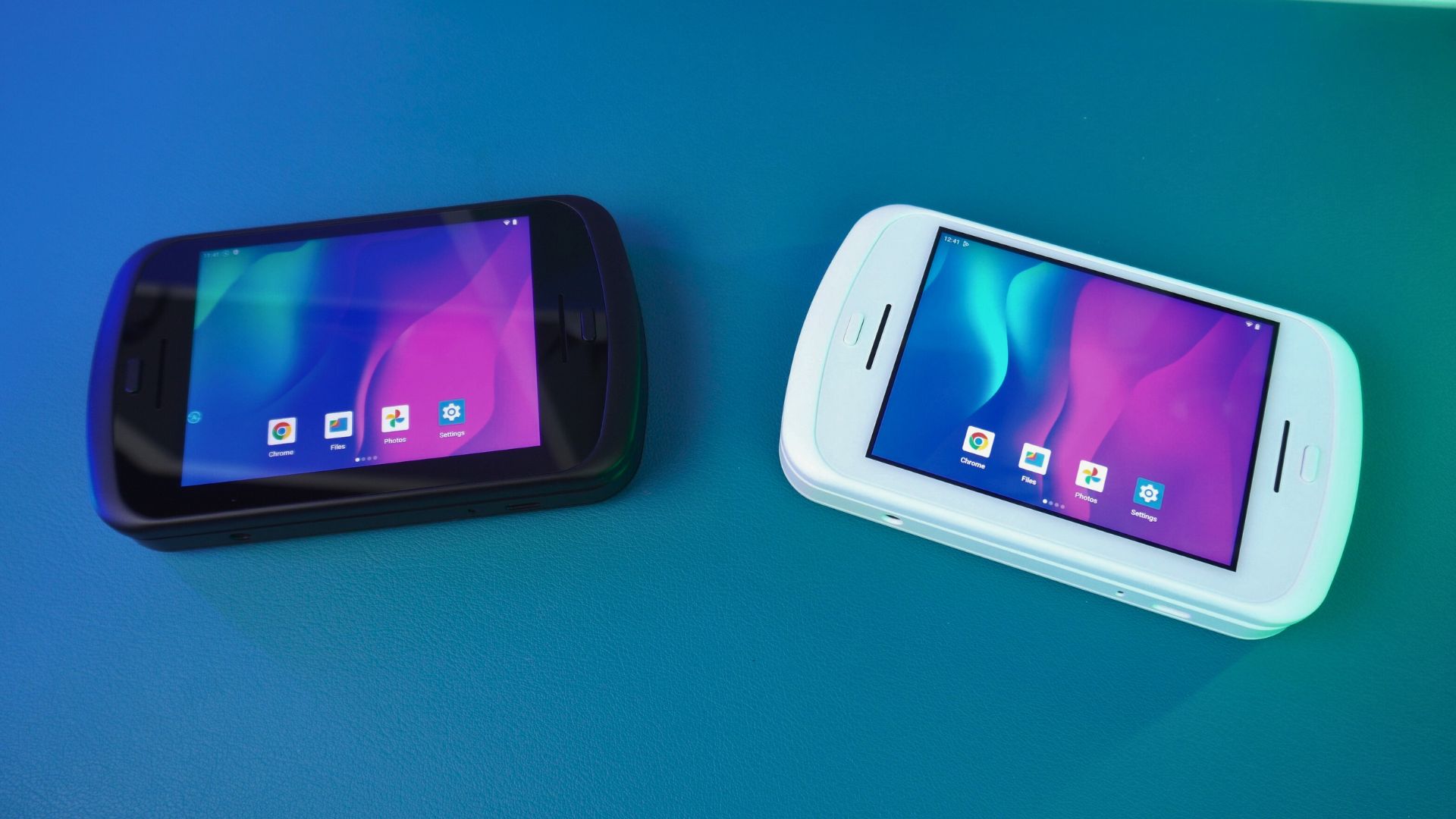
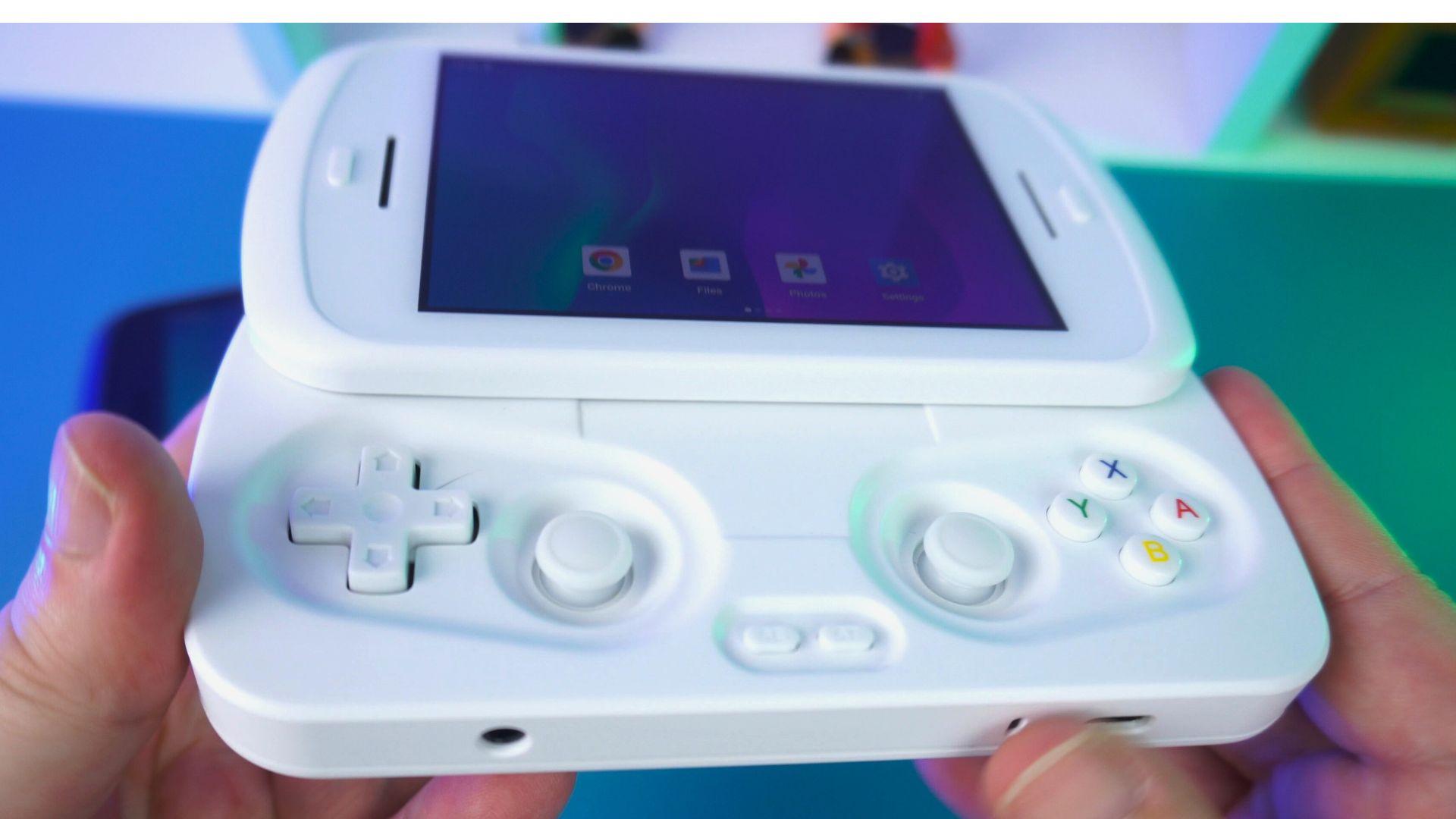
The sliding mechanism is smooth and feels quite strong which is reassuring. You can slide it with one finger and thumb and it has a satisfying clunk when opened and closed. I’ve spent a while opening and closing and had no issues so far with any failure.
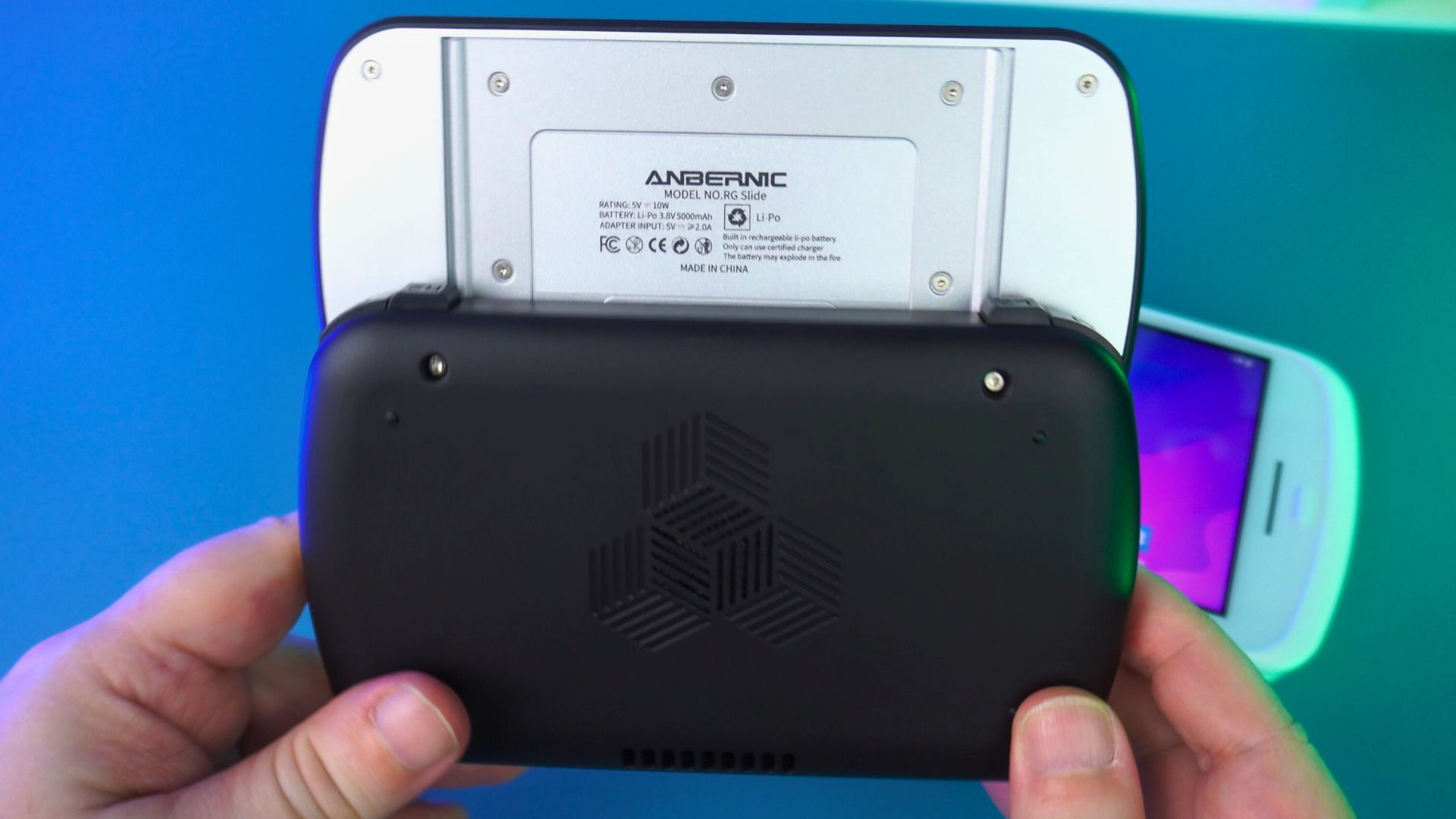
On the front we have a 4.7 inch LTPS touchscreen display with a 1280×960 resolution and up to 120Hz refresh rate. On either side are speakers and a pair of buttons for Function and Home.
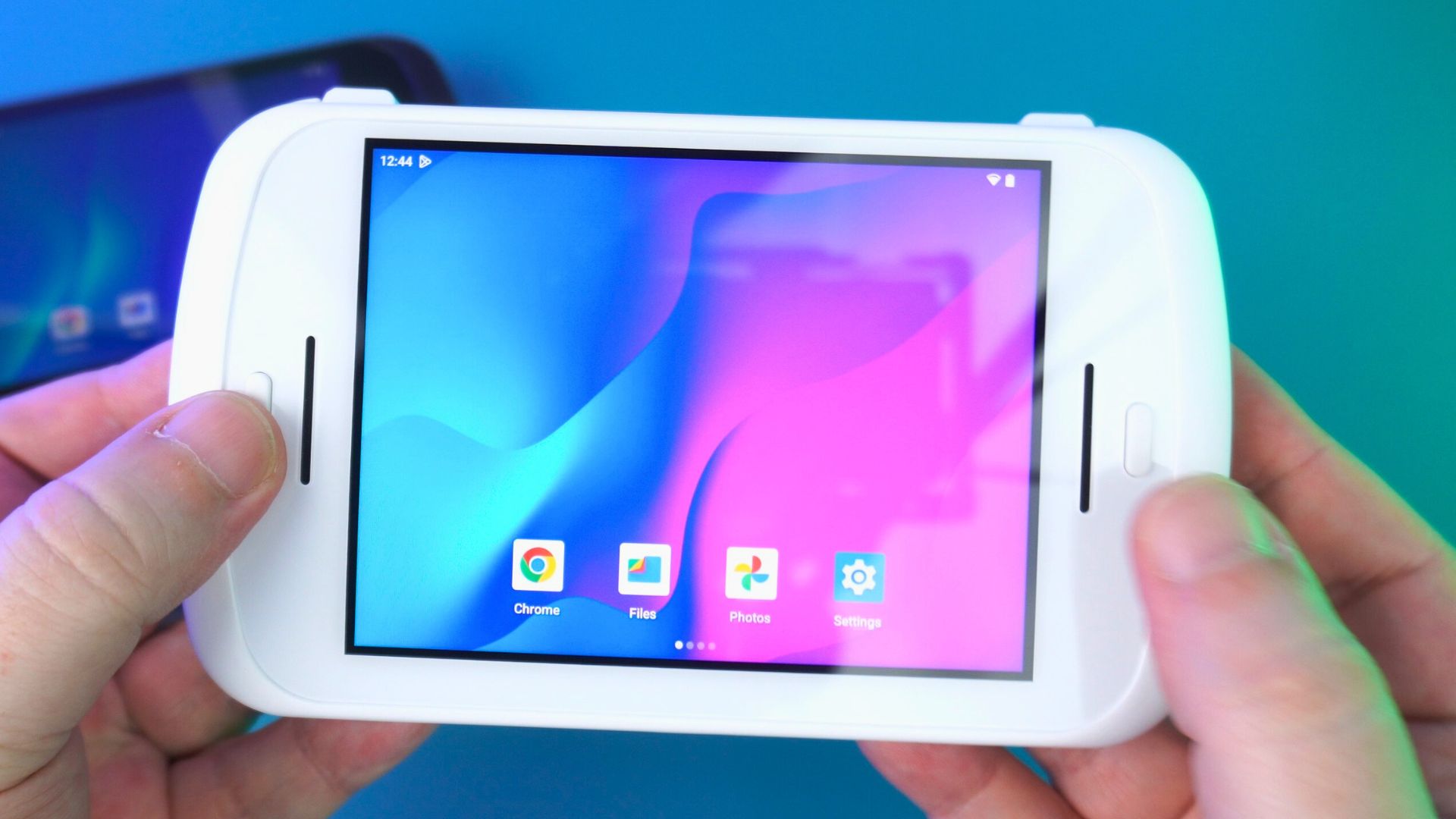
On the lower half we have a D-Pad, analogue sticks and all the usual gaming buttons. The left side has a micro SD card reader to expand your storage. The bottom has a 3.5mm headphone port and USB Type-C port. You can use this to charge the device as well as video output, but you can not do both at the same time.
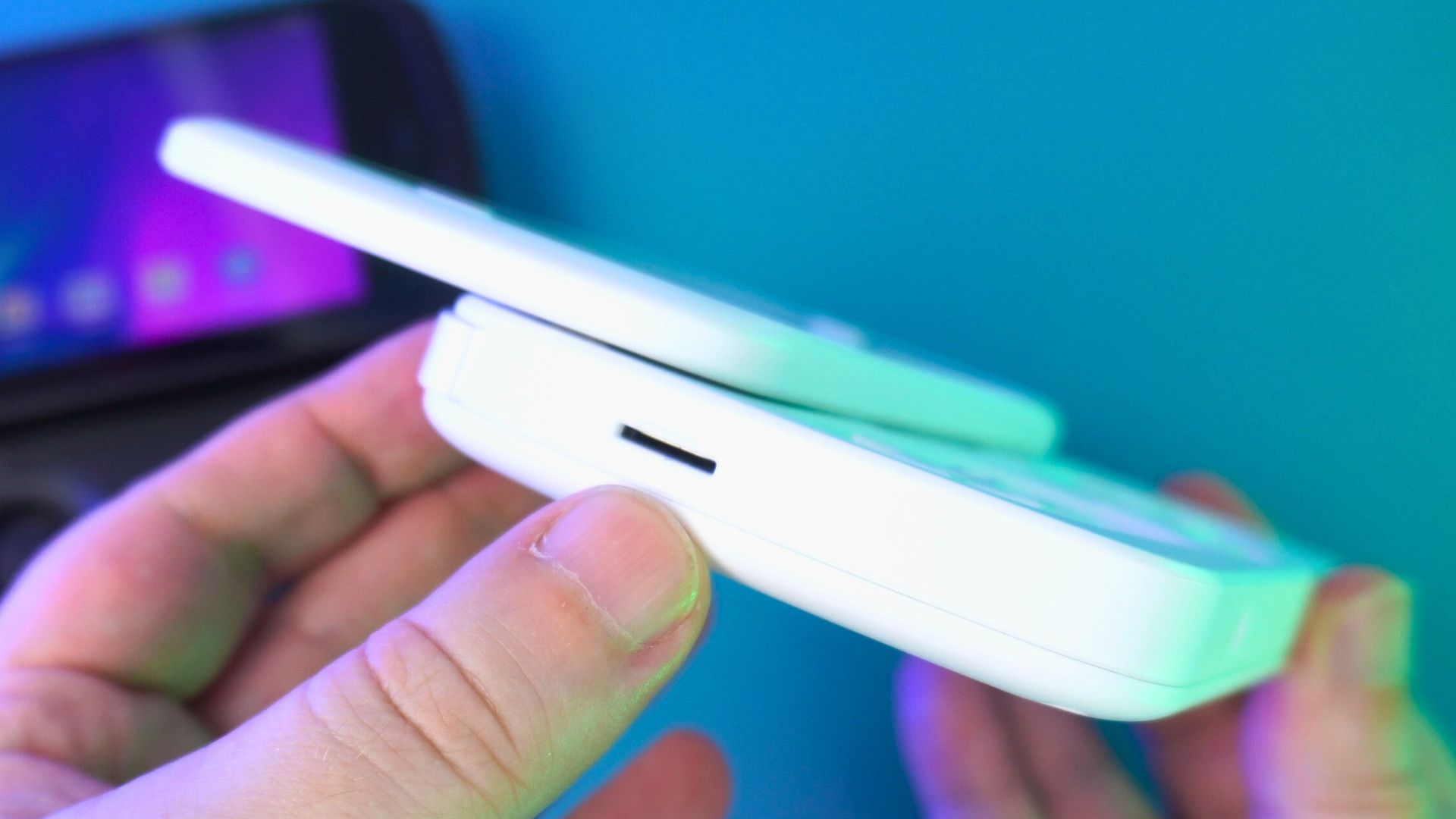
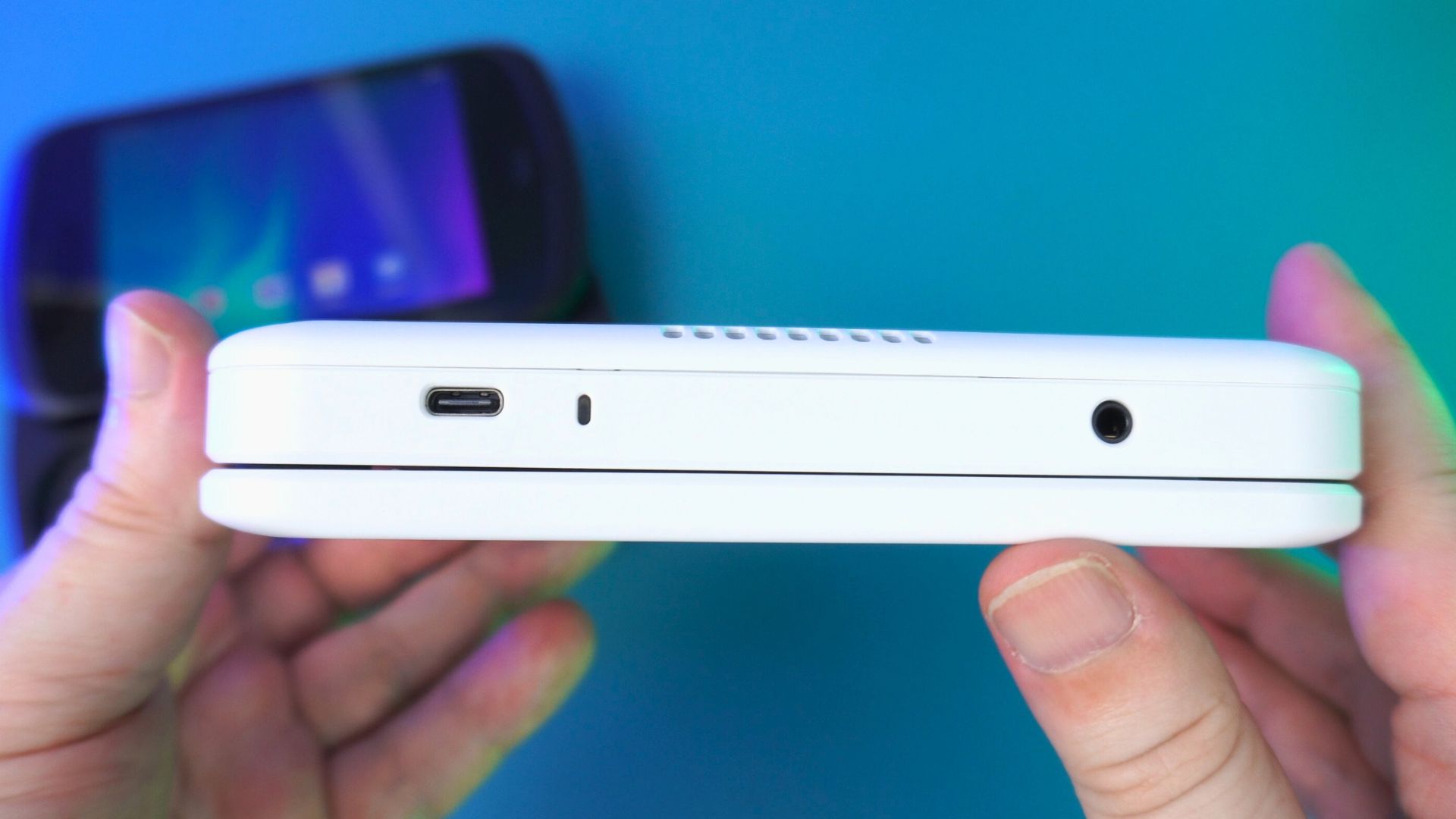
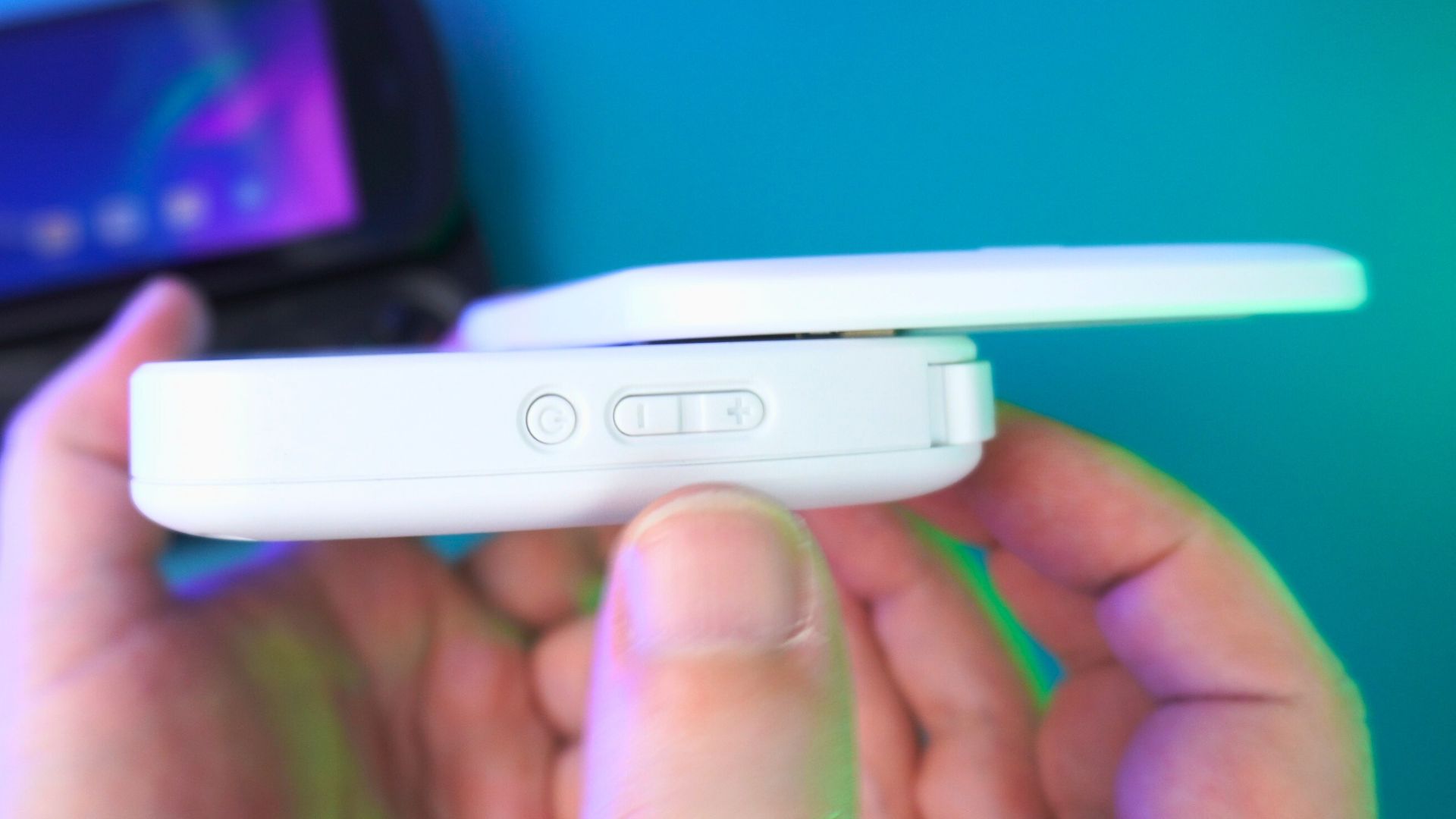
On the right side we have the power button and volume buttons. And on the top are the left and right shoulder and trigger buttons.
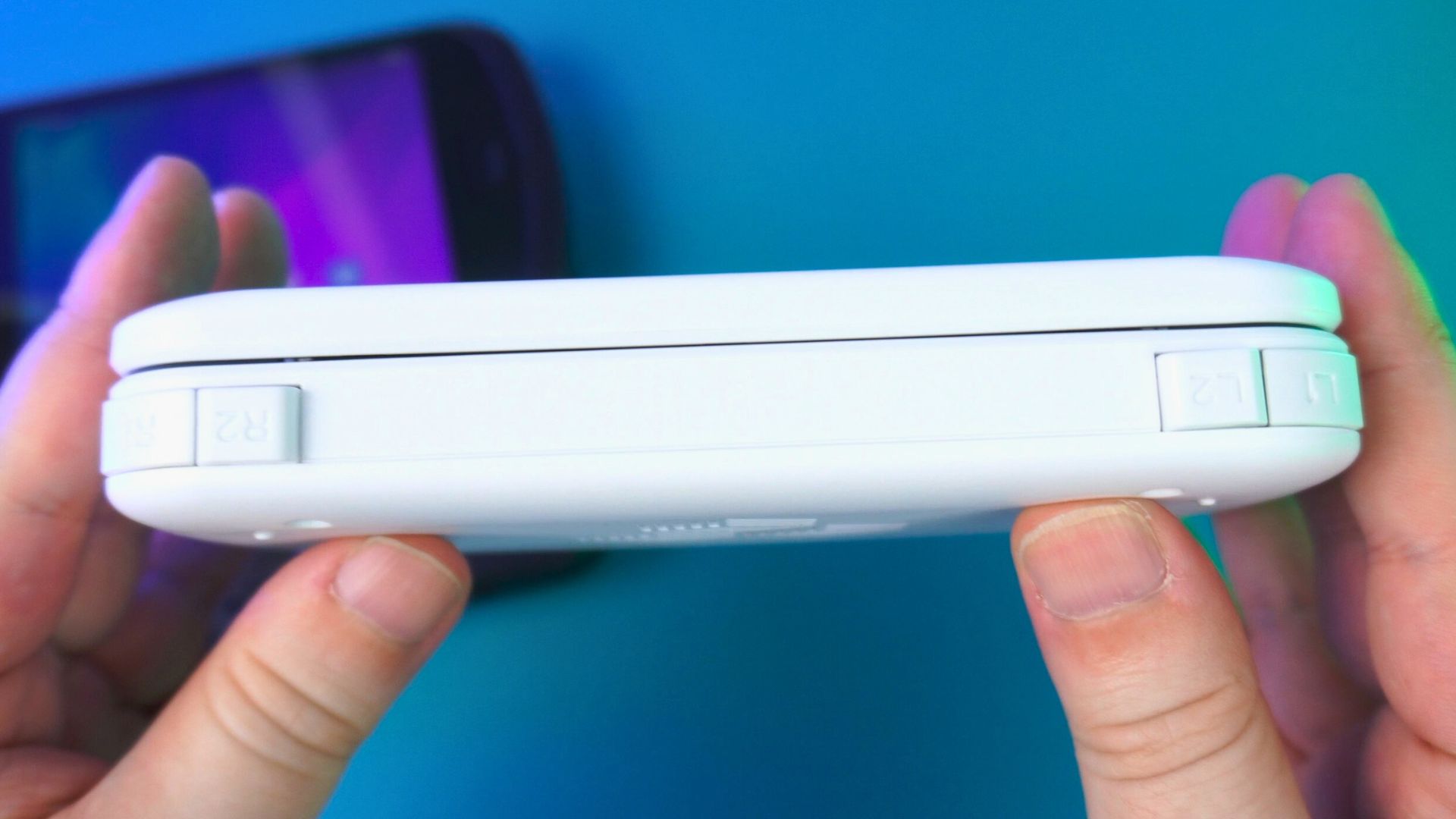
After spending some time with both Android games and emulators, the Anbernic RG Slide feels nice to play on. I do feel it’s a little top heavy and wants to fall back, it needs a little more weight on the bottom to balance it.
Anbernic RG Slide Technical Specifications
As part of our Anbernic RG Slide review we take a look at the technical specifications as well as run our own battery life, fan noise and temperature tests.
| DISPLAY | 4.7-inch LTPS In-Cell, OCA full lamination, multi-touch Resolution: 1280×960 Refresh Rate: Supports up to 120Hz |
| CPU | Unisoc T820 (6nm EUV 5G SOC Octa-Core: [email protected] + [email protected] + 4*[email protected]) |
| GPU | Quad-core Mali-G57, 850MHz |
| RAM | 8GB LPDDR4X |
| STORAGE | 128GB UFS2.2 Micro SD Card Support: Up to 2TB |
| CONNECTIVITY | Wi-Fi: 2.4/5G WIFI 802.11a/b/g/n/ac Bluetooth: 5.0 |
| BATTERY | 5000mAh Polymer Lithium Battery Battery Life: ~6 hours Charging: 5V/2A (approx. 3 hours for full charge) |
| OS | Android 13 |
| FEATURES | Six-axis gyroscope sensor High-speed fan + heat pipe active heat dissipation FOTA wireless upgrade support Online multi-player Streaming Wireless projection screen USB Type-C (supports 1080p Display Port output or charging, not simultaneously) Vibration motor Energy-saving settings Display brightness adjustment AI Software: One-click game guide retrieval, real-time translation, intelligent dialogue, text-to-image generation, image processing, and more features. |
| COLOURS | Black, White |
| SIZE | 6.06 x 3.54 x 1.02 inches / 15.4 x 9 x 2.6 cm |
| WEIGHT | 379g / 0.836 lbs |
The 5000mAh rechargeable battery will get you around the usual 6 hours on average usage. We ran the Antutu benchmark on a loop, with the highest performance settings at full brightness, and got around 3 hours 50 minutes hours battery life.
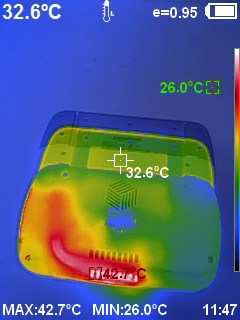
While running the benchmarks we also tested the fan noise and temperatures. On the highest fan setting we got 53 dB, and around 46 dB on average. And for temperatures we got a highest of around 44 °C. So it runs quiet and fairly cool.
Benchmarks
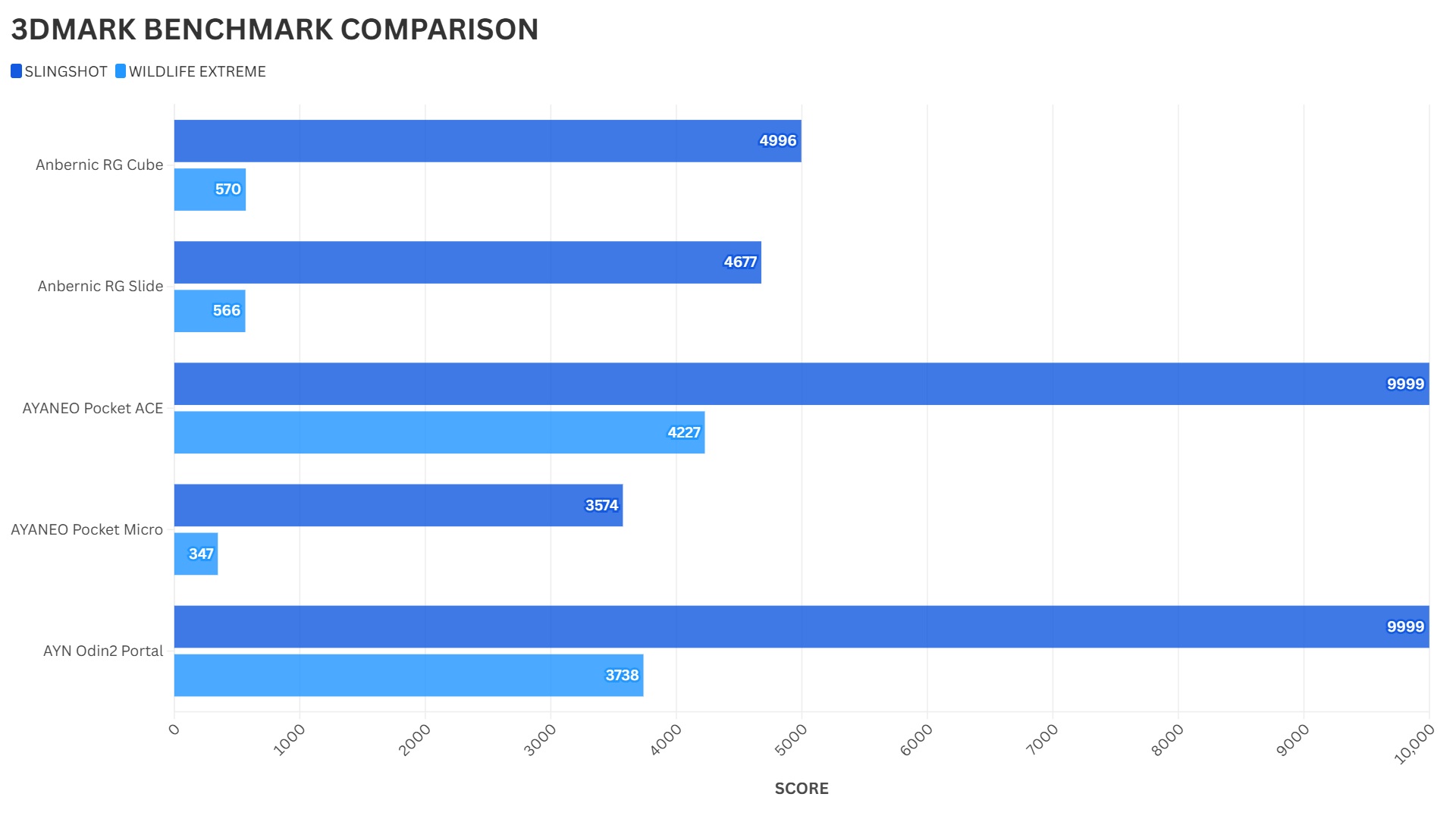
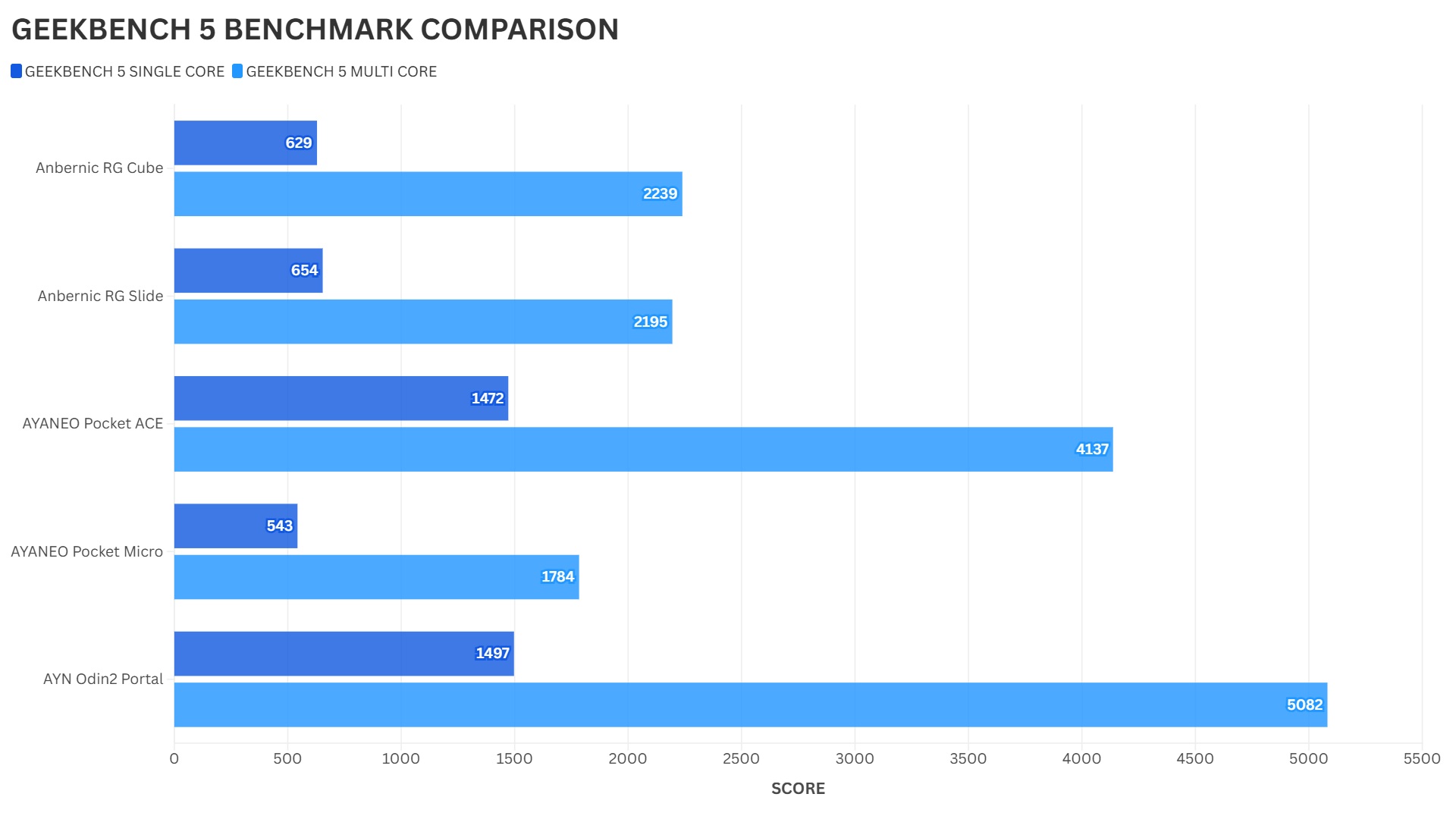
As part of our Anbernic RG Slide review, we run some benchmarks to get an idea of the performance and to also compare it with other devices. These include the premium lower end performing AYANEO Pocket Micro, along with the higher priced and performing Pocket ACE and Odin 2 Portal.
3DMARK
For the Wildlife Extreme benchmark we do see lower scores than the RG Cube which has the same processor. On Slingshot the scores are within the margin of error. It has a nice lead on the Pocket Micro, and the high end devices blow all the scores out of the water here.
Geekbench 5 and 6
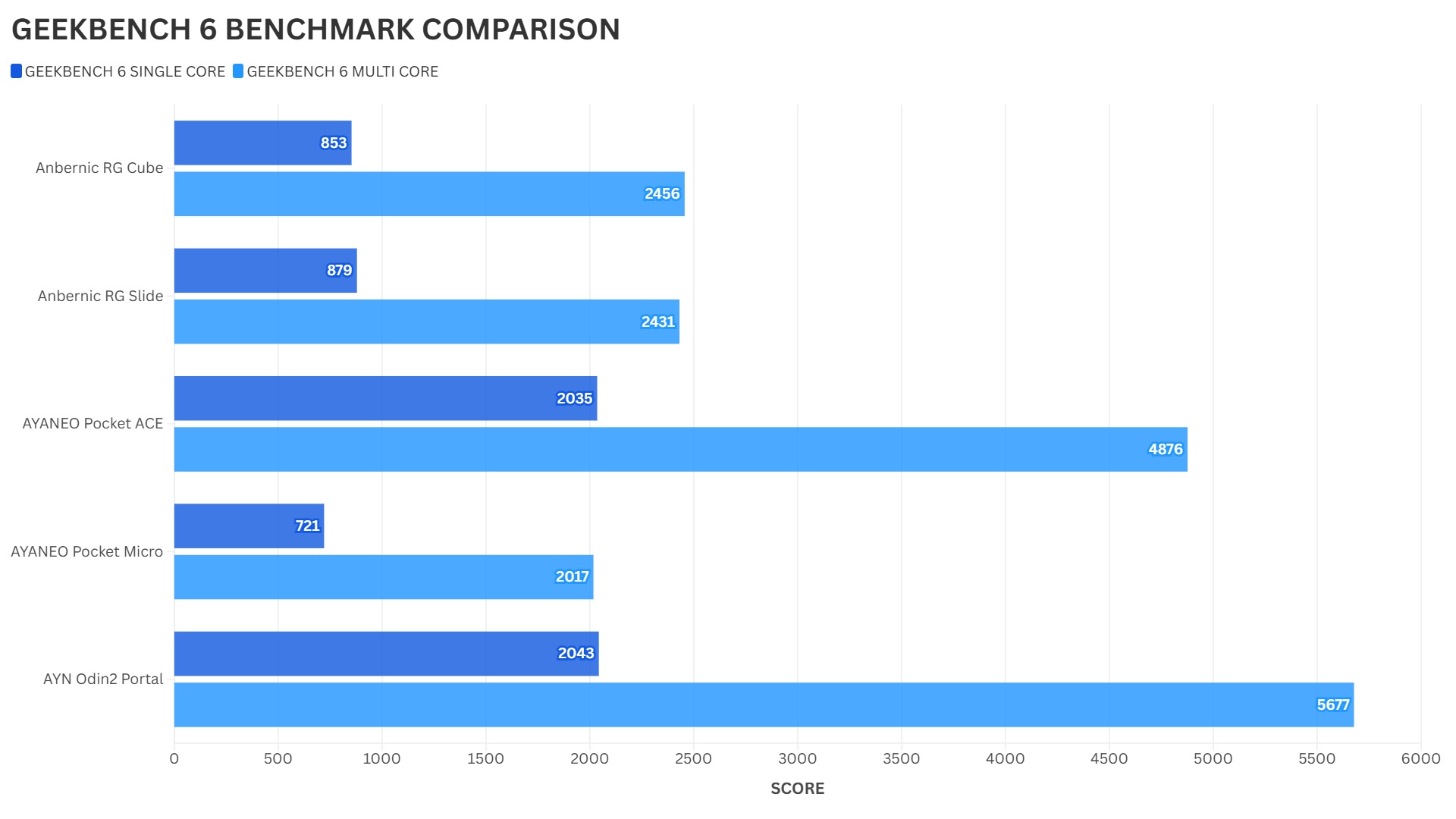
With the Geekbench 5 and 6 scores we see good results for both single and multi core when compared with the RG Cube. Again we see higher scores for the Pocket Micro, and over double the scores for the Odin 2 and AYANEO Pocket ACE.
Antutu
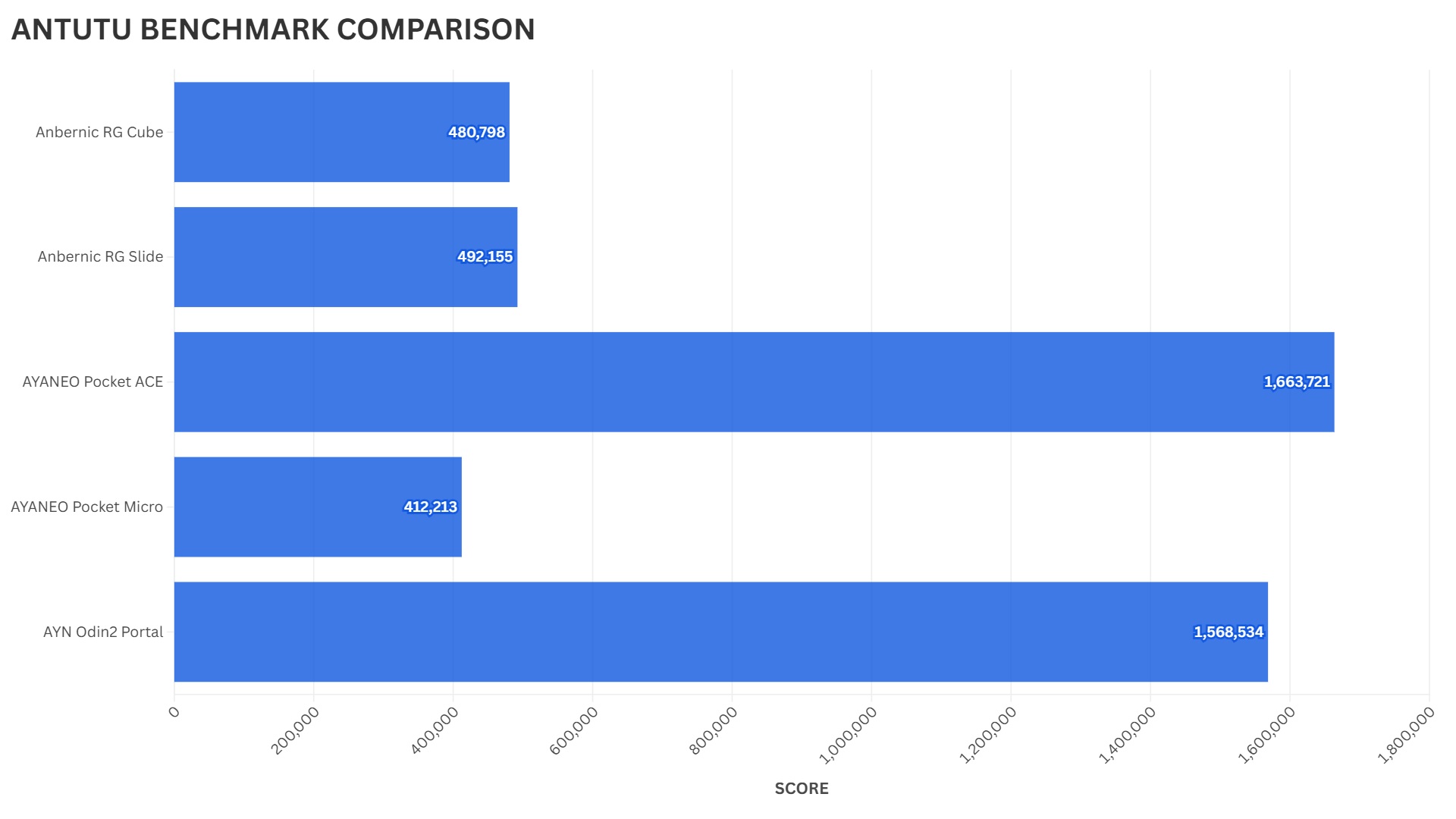
With the Antutu benchmark which tests many factors of an Android device, we see the Anbernic RG Slide just ahead of the Cube. The Pocket Micro is not massively far behind though, and of course the higher end models like the AYANEO Pocket S enjoy scores of more than those three devices combined.
Benchmark Summary
Overall we see expected results for the Anbernic RG Slide, around those of the RG Cube. In terms of price versus performance, the RG Slide costs around the same as the AYANEO Pocket Micro so we see excellent value there. The AYN Odin 2 Portal is around 30% more expensive but we do see a noticeable increase in performance. The Pocket ACE and S are upwards of 100% more expensive but do of course see the current highest benchmark results on Android handhelds.
OS Overview
Next in our Anbernic RG Slide review we take a closer look at the OS and its features. The Anbernic RG Slide has a standard default home screen which is perfectly fine for organising and locating all of your apps. If you are into retro gaming then the RG Launcher is a quick and easy way to get your classic game collection sorted and presentable in easy to locate console categories. Top marks here!
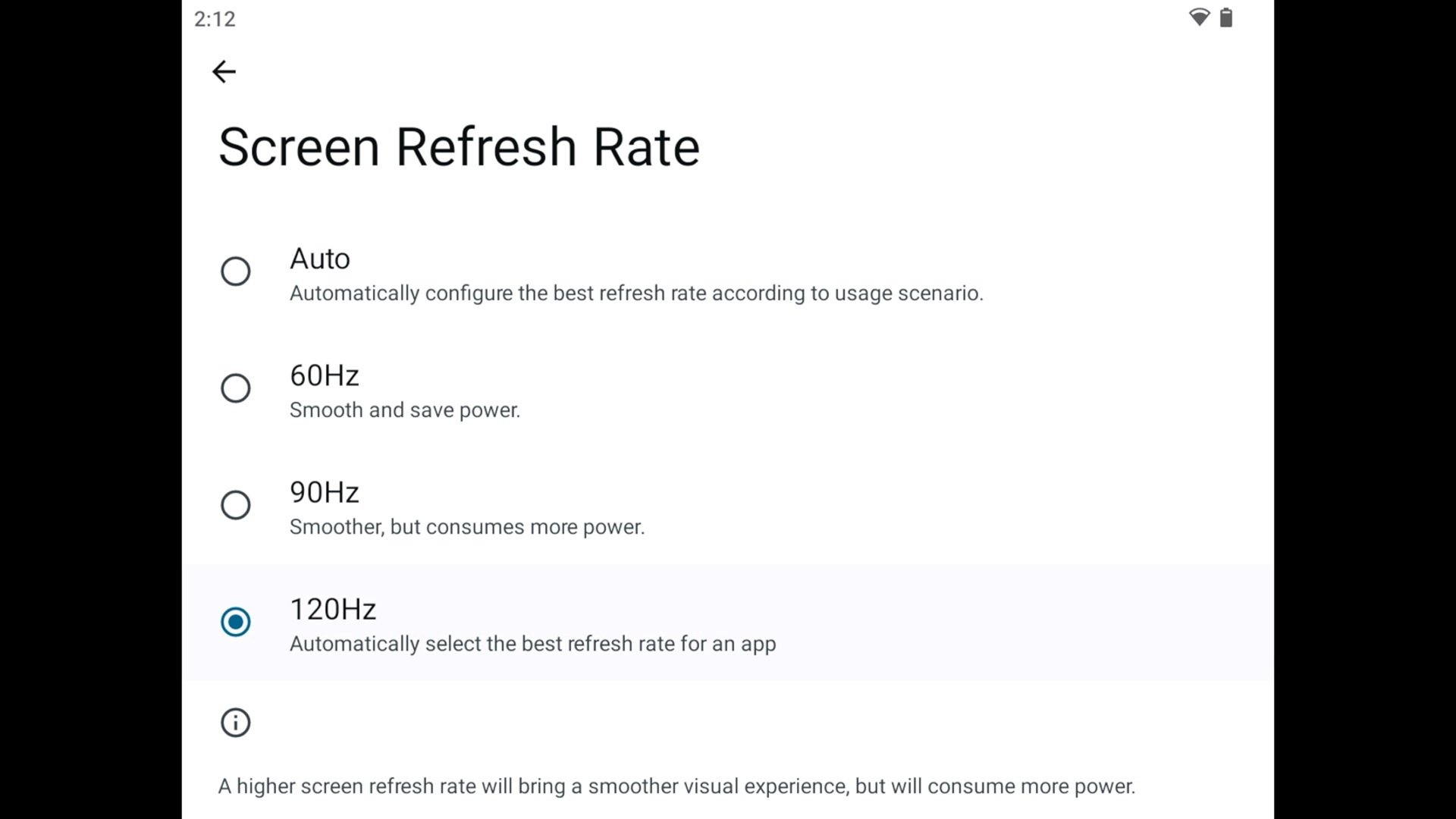
In the settings menus you can access the device performance and fan control options. And located in the System settings you can control the refresh rate with Auto, 60, 90 and 120Hz as required. In the main settings you have functions to test the controls, custom fan configuration and how the sliding controls the power. You can have it slide to wake and hibernate, or remain on, or a mix of those.
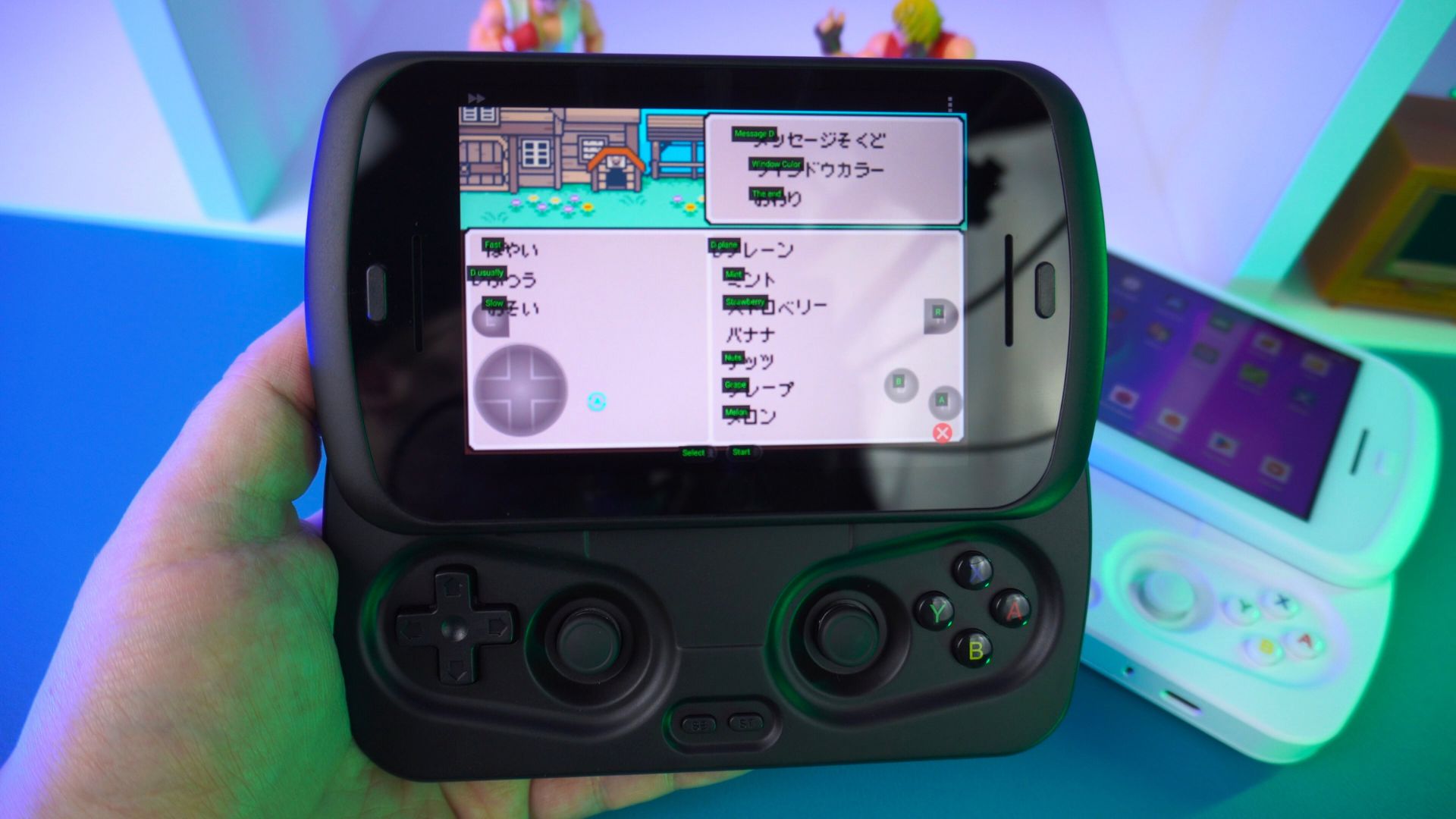
A recent addition to Anbernic devices is their AI app.You would almost feel like they have thrown this in to take advantage of the AI trend, but there is one useful feature. You can translate text on screen to another language. This is quite cool for say Japanese games that may not have an English translation for example. The translation does take a few seconds and you do manually have to choose when to translate. But it’s a great concept and I hope to see this improved on.
Android Gaming
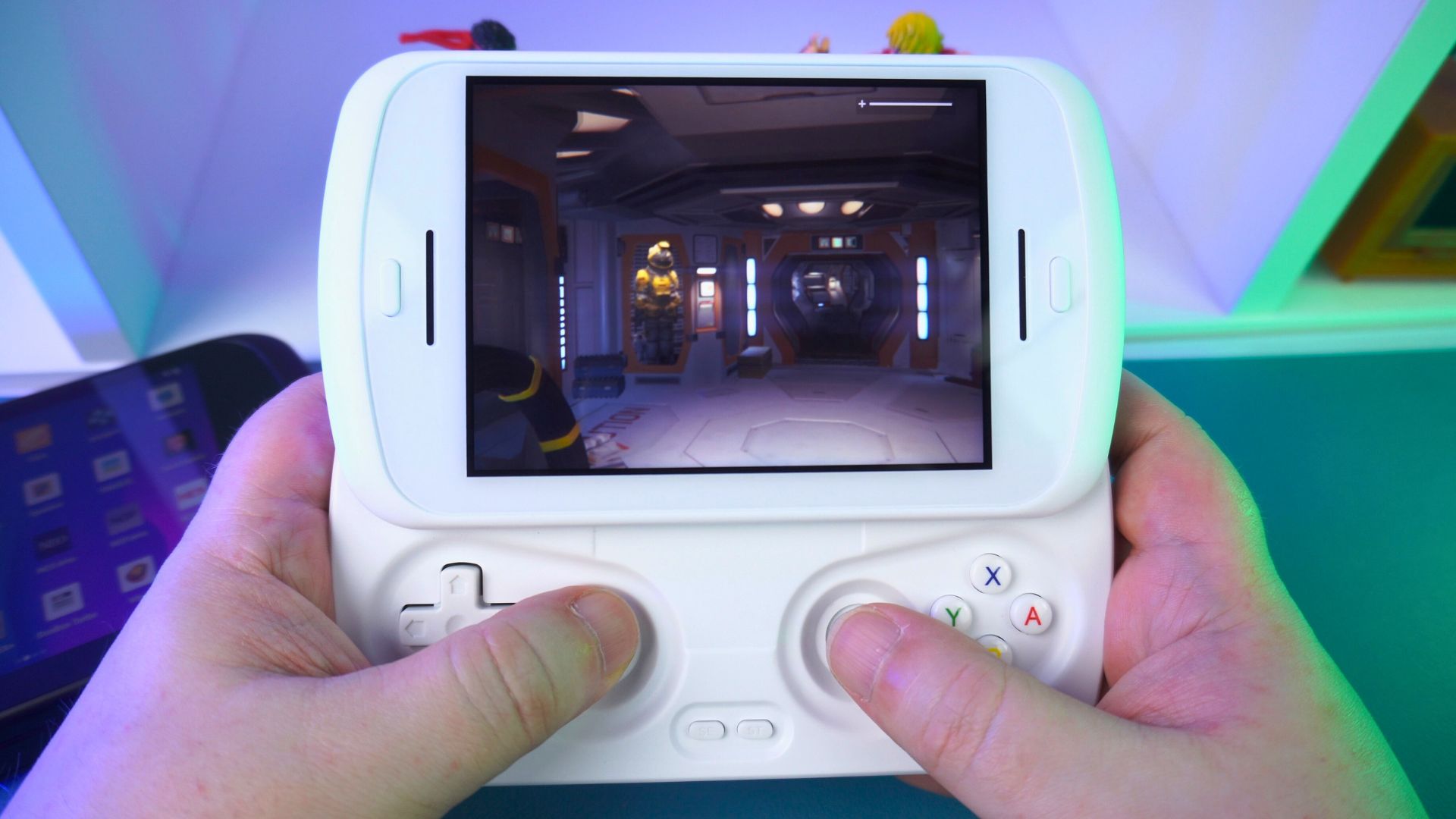
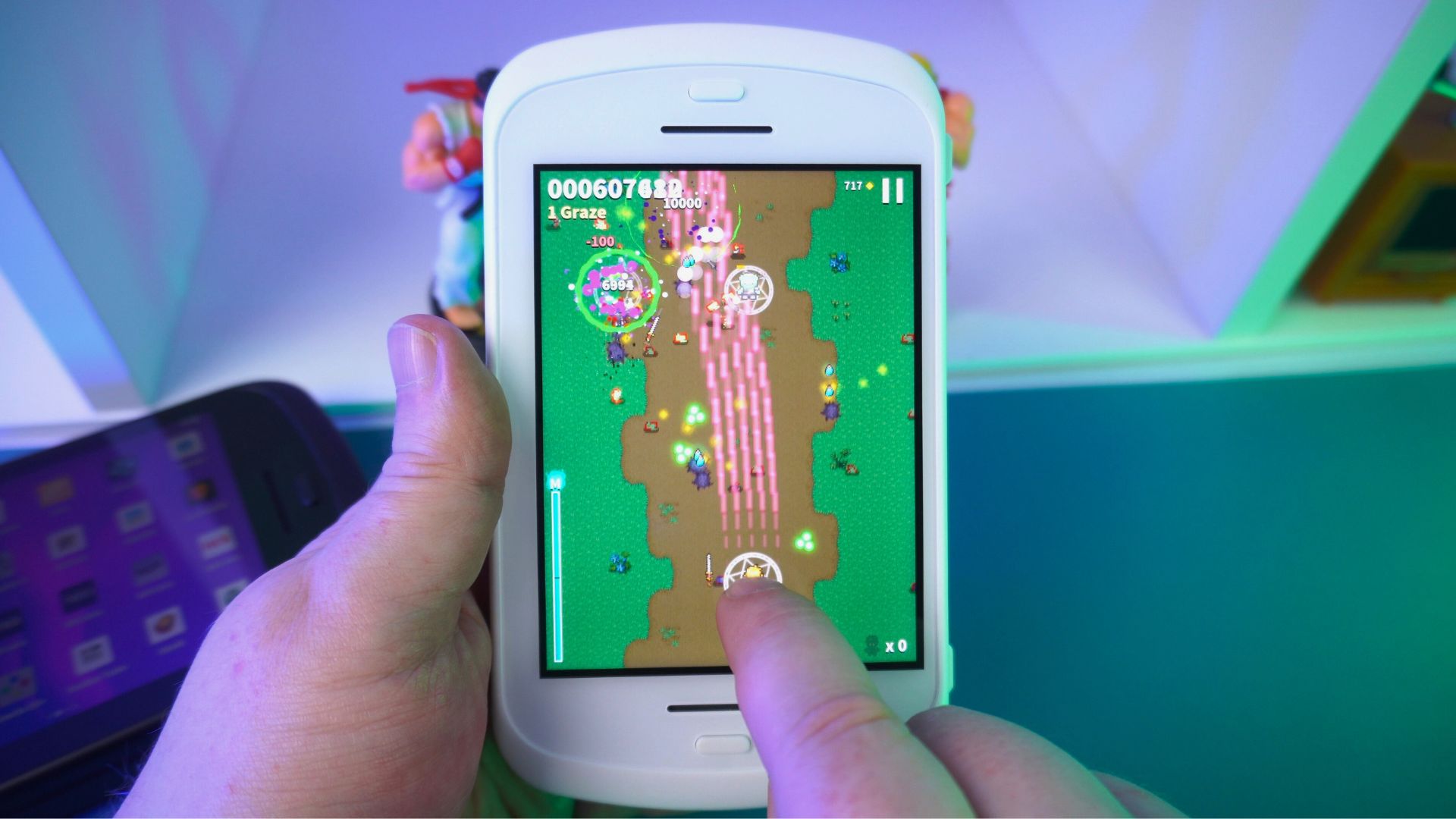
At the this an Android handheld we will take a brief look at native Android gaming as part of our Anbernic RG Slide review. Despite the 4:3 aspect ratio screen, the Anbernic RG Slide remains very playable with a number of games self-adjusting to reflect this. Even 16:9 aspect ratio games are not too bad. We had no issues with games that support gamepads, all worked and ran great.
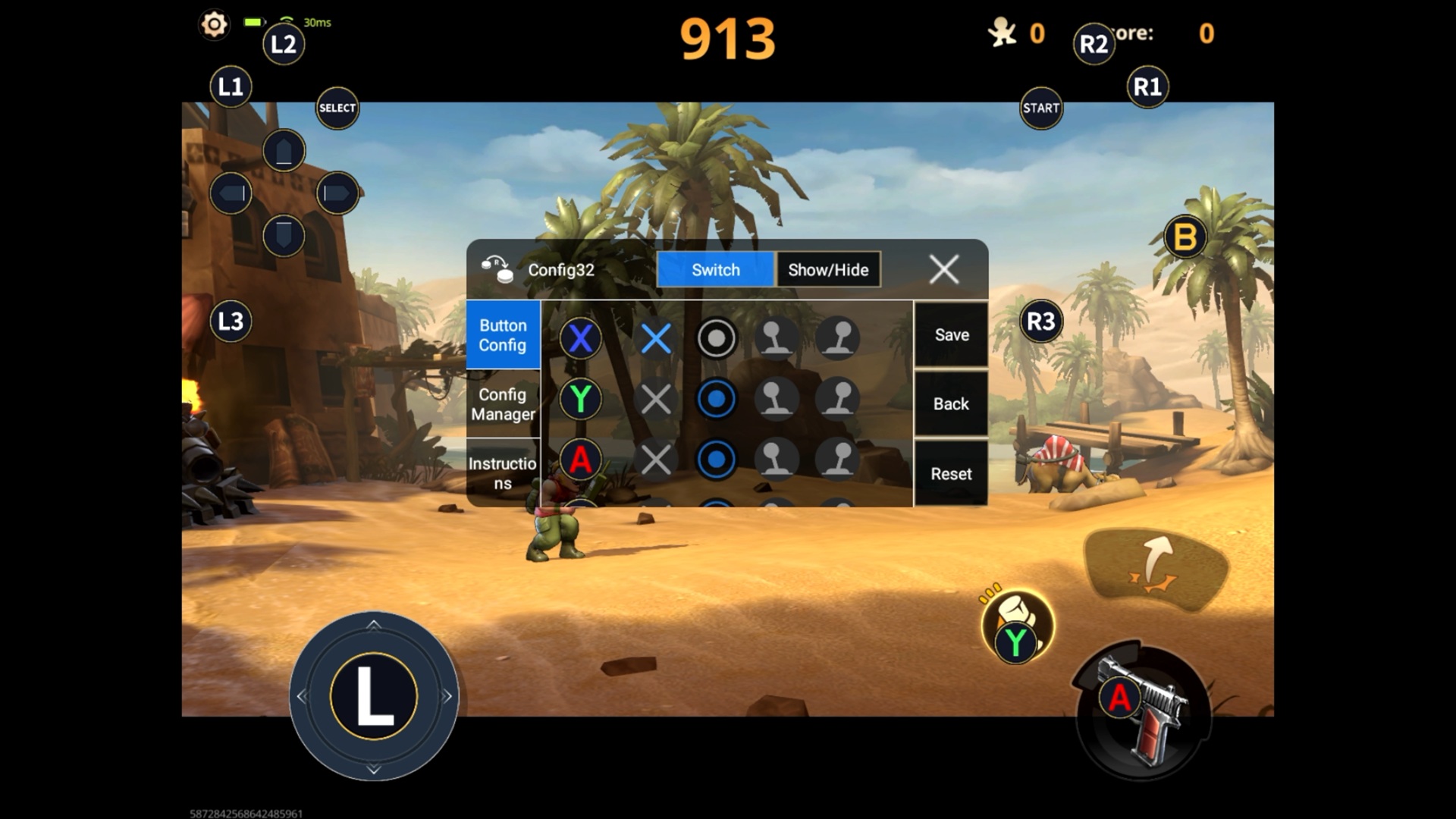
And for games that do not support gamepads, you can use the built in screen mapping software which works perfectly. It is very easy to configure per game and you can even download pre-made profiles for popular games.
Emulation
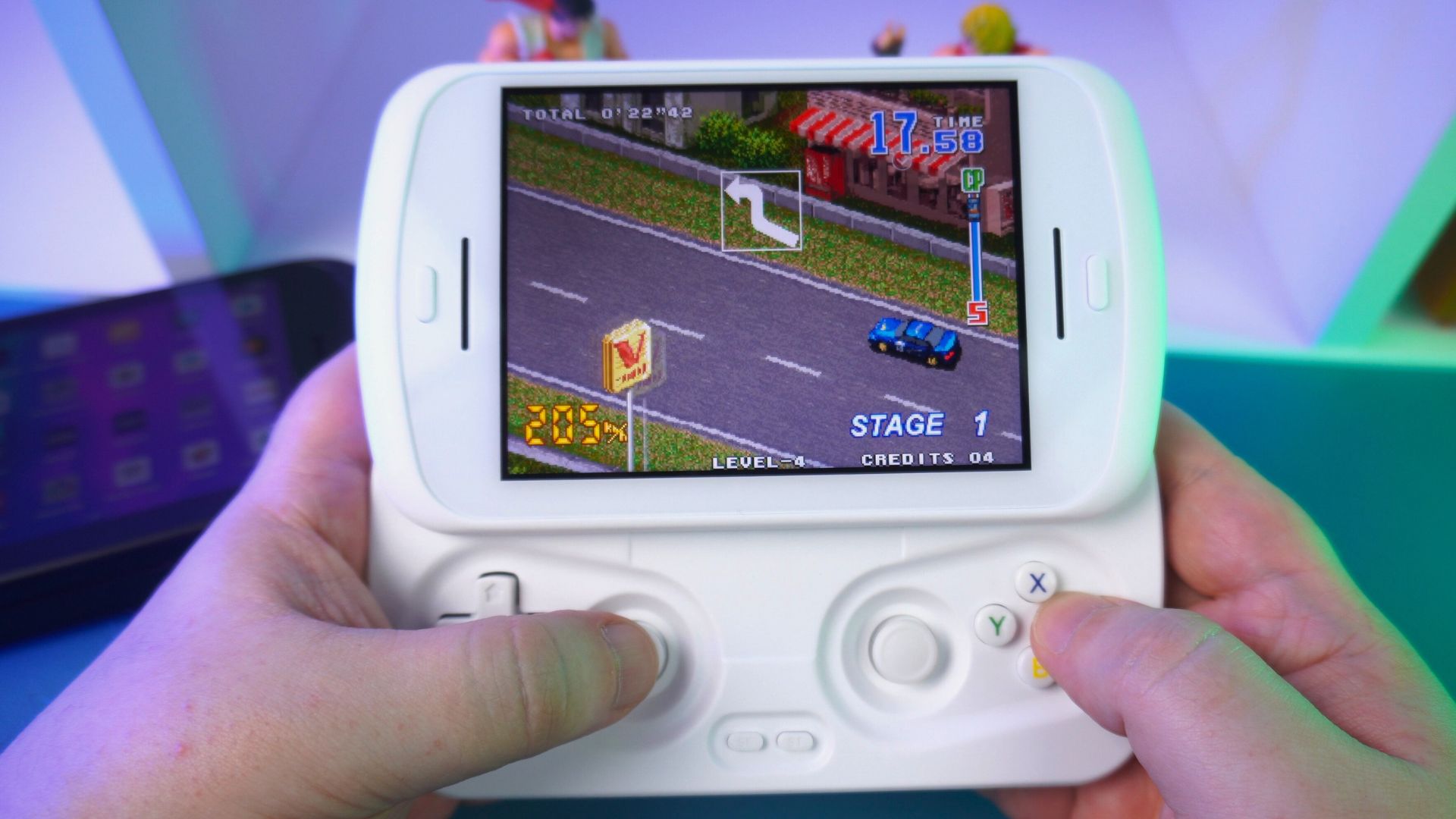
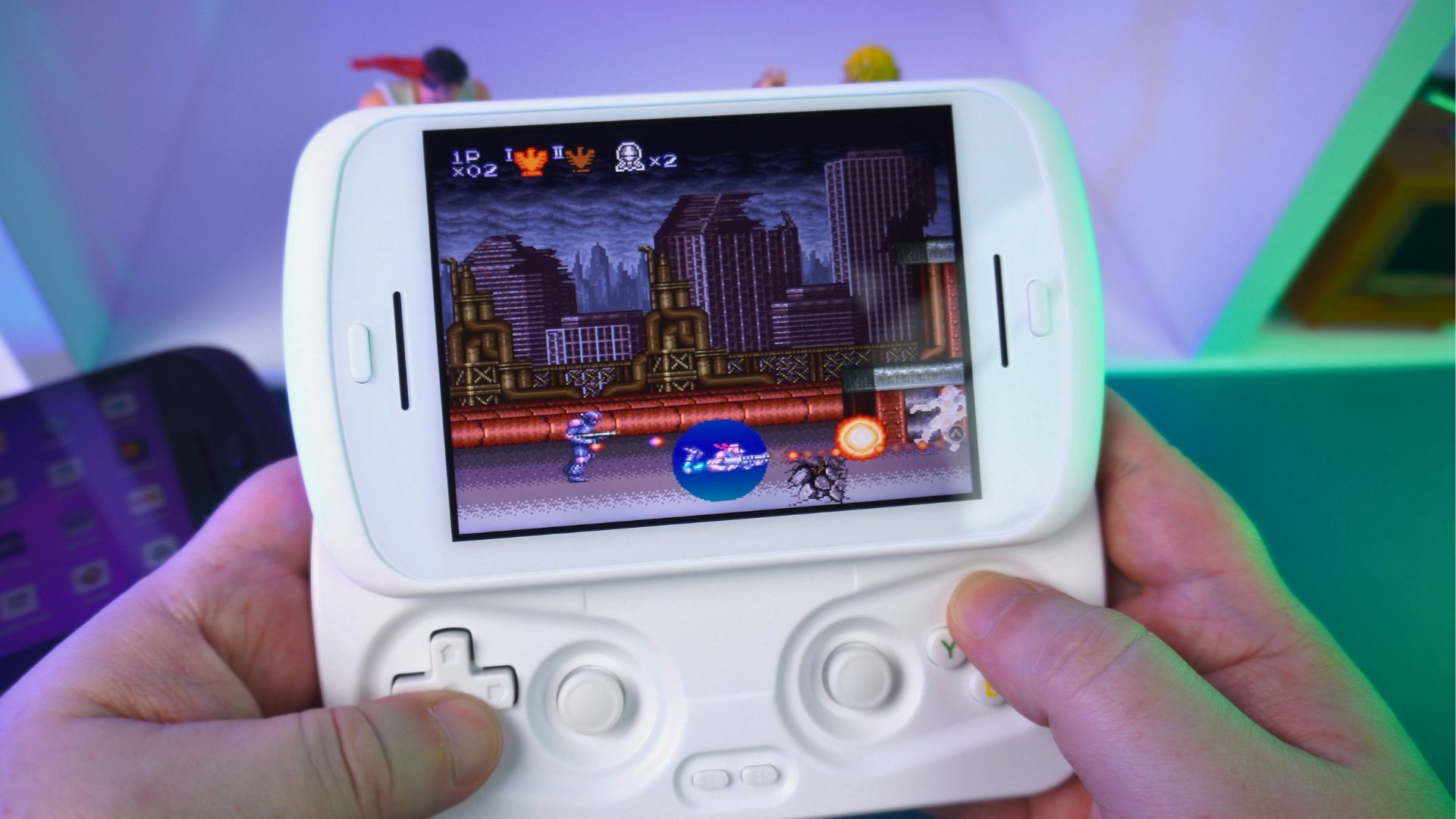
As this is a mid-range handheld we know roughly where it can reach in terms of widely playable emulators. All of your classic consoles right up to the PS1 era will run great.
You can enjoy PlayStation games with graphics tweaks including setting rendering resolutions to 4x to match the Anbernic RG Slide’s resolution.
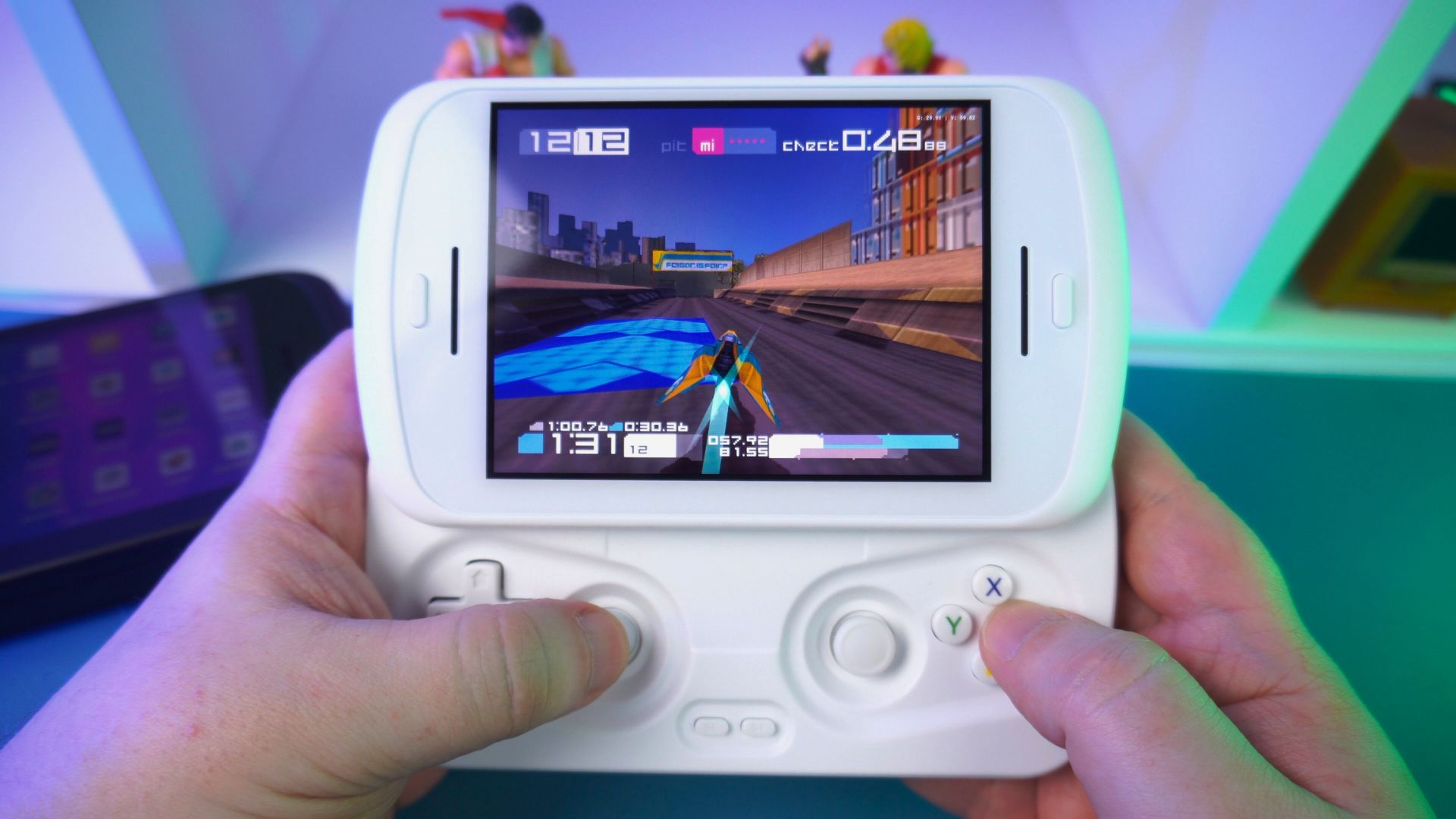
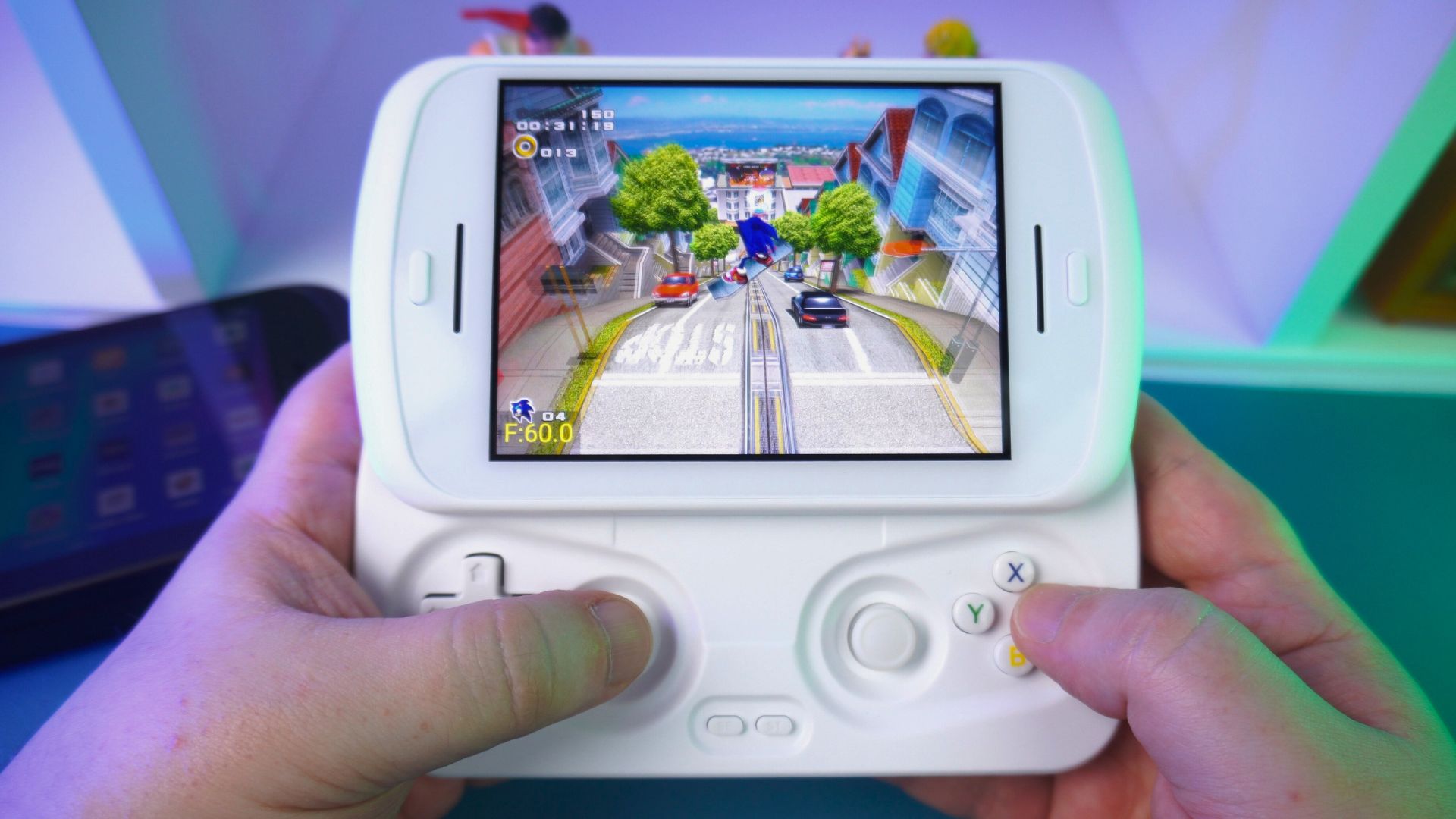
And the same for Dreamcast, you can increase the rendering resolution for higher quality visuals.
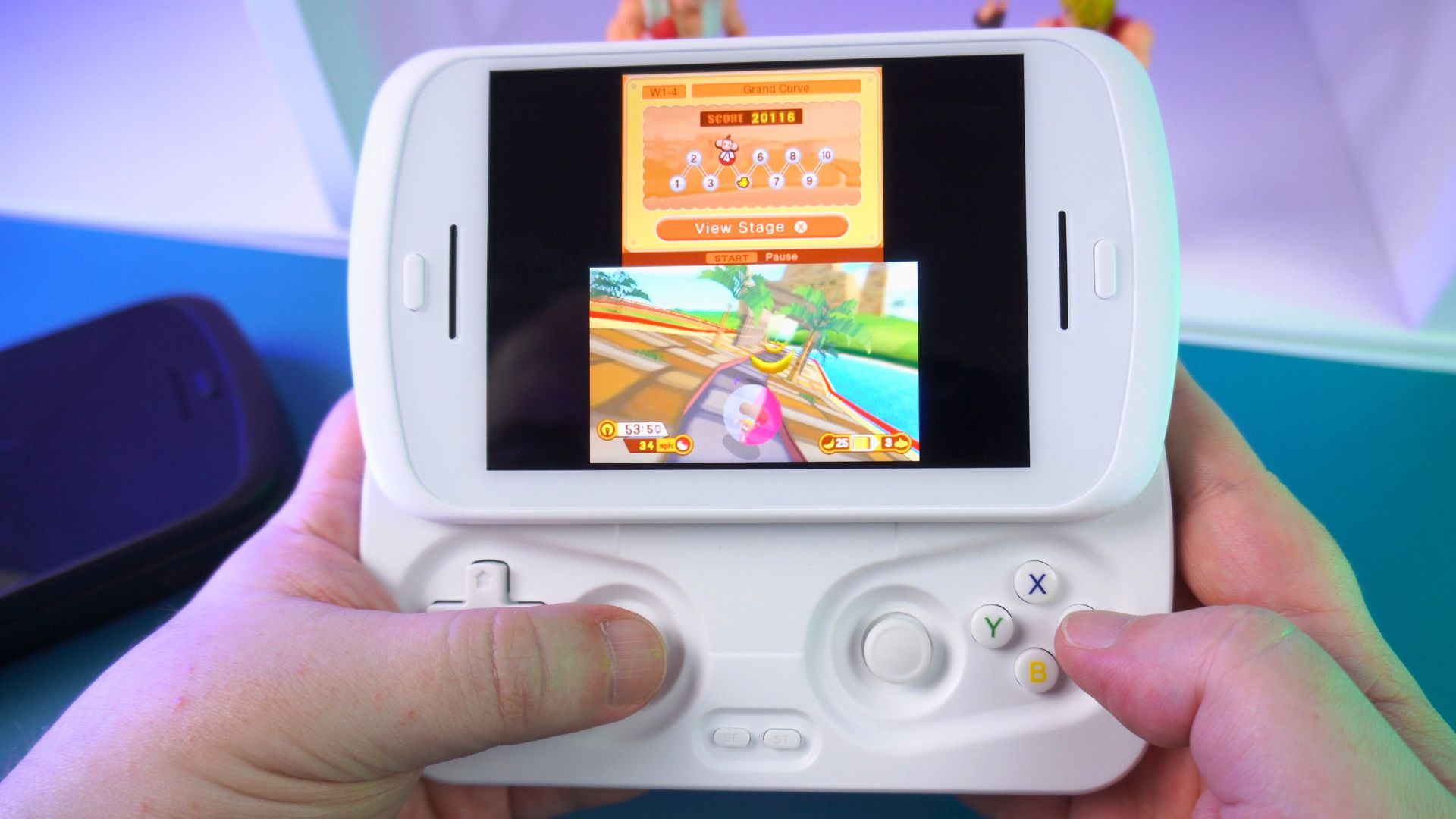
For the Citra emulator you will overall see good performance. On the more demanding games you may get some occasional shader cache lag but nothing really game breaking.
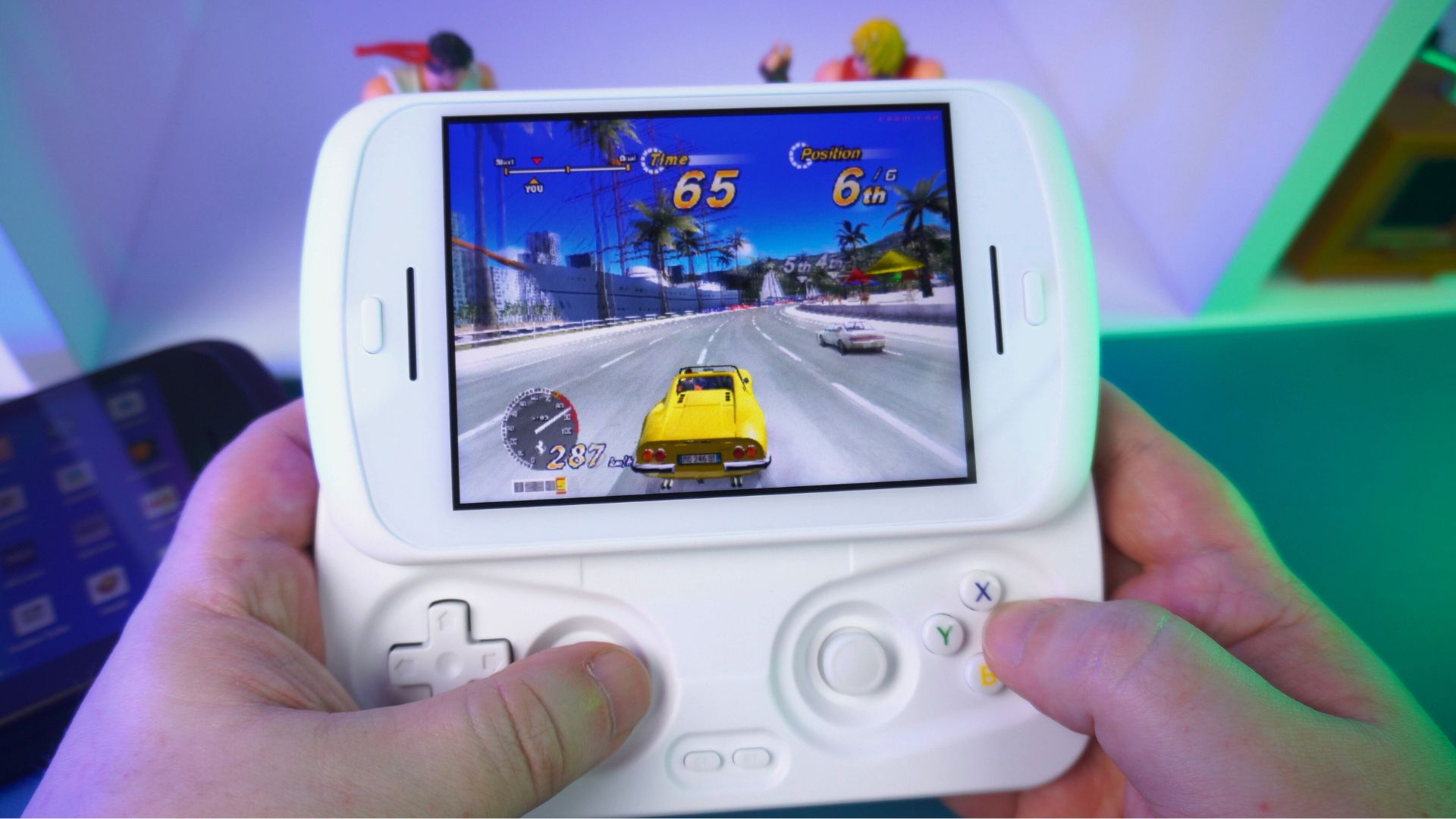
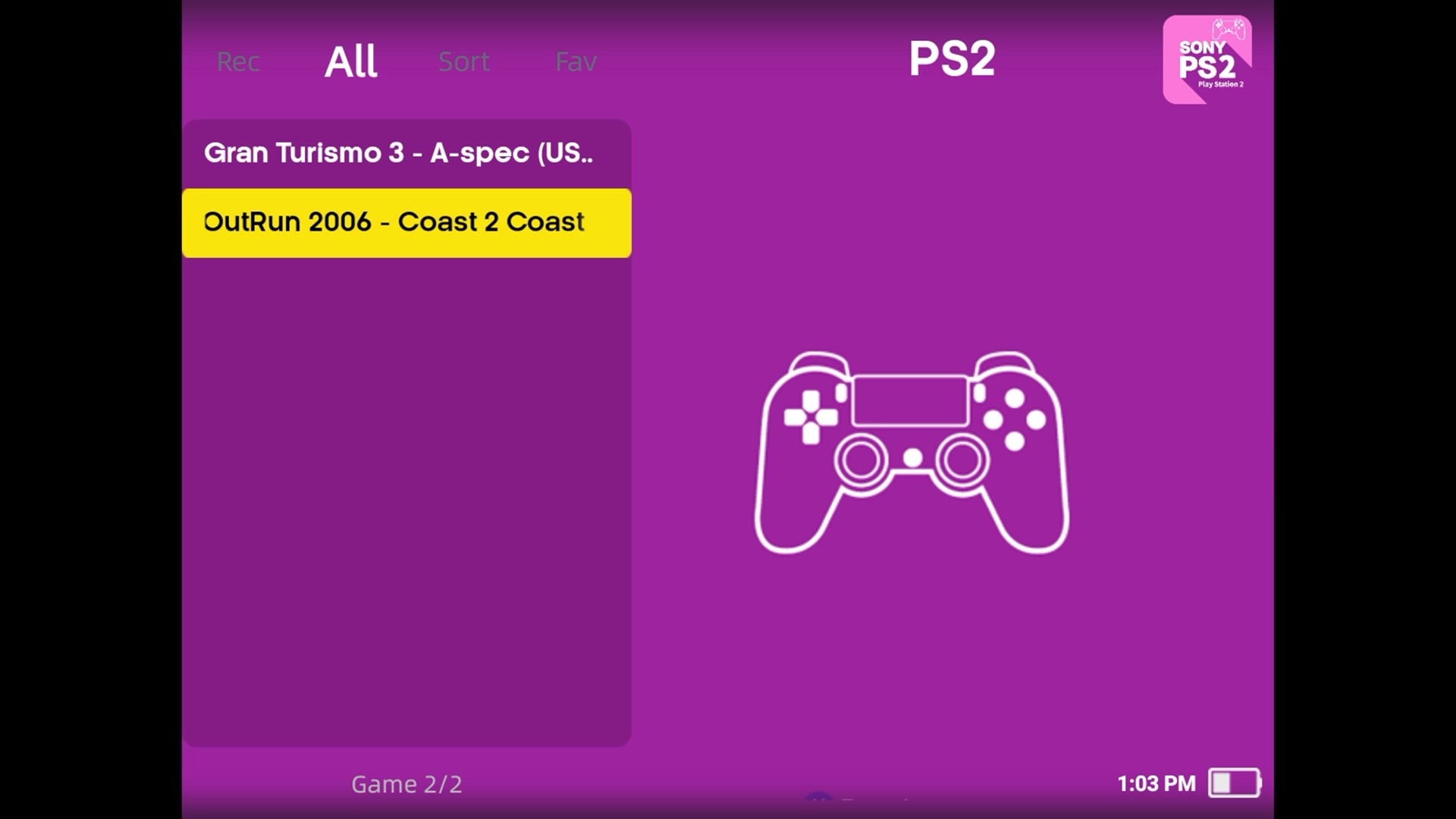
As we move up to the more demanding PlayStation 2 we do see some games with performance drops. Our go to game OutRun struggled to run even at lower rendering resolutions. Other games fare better, it does depend on how demanding the game is.
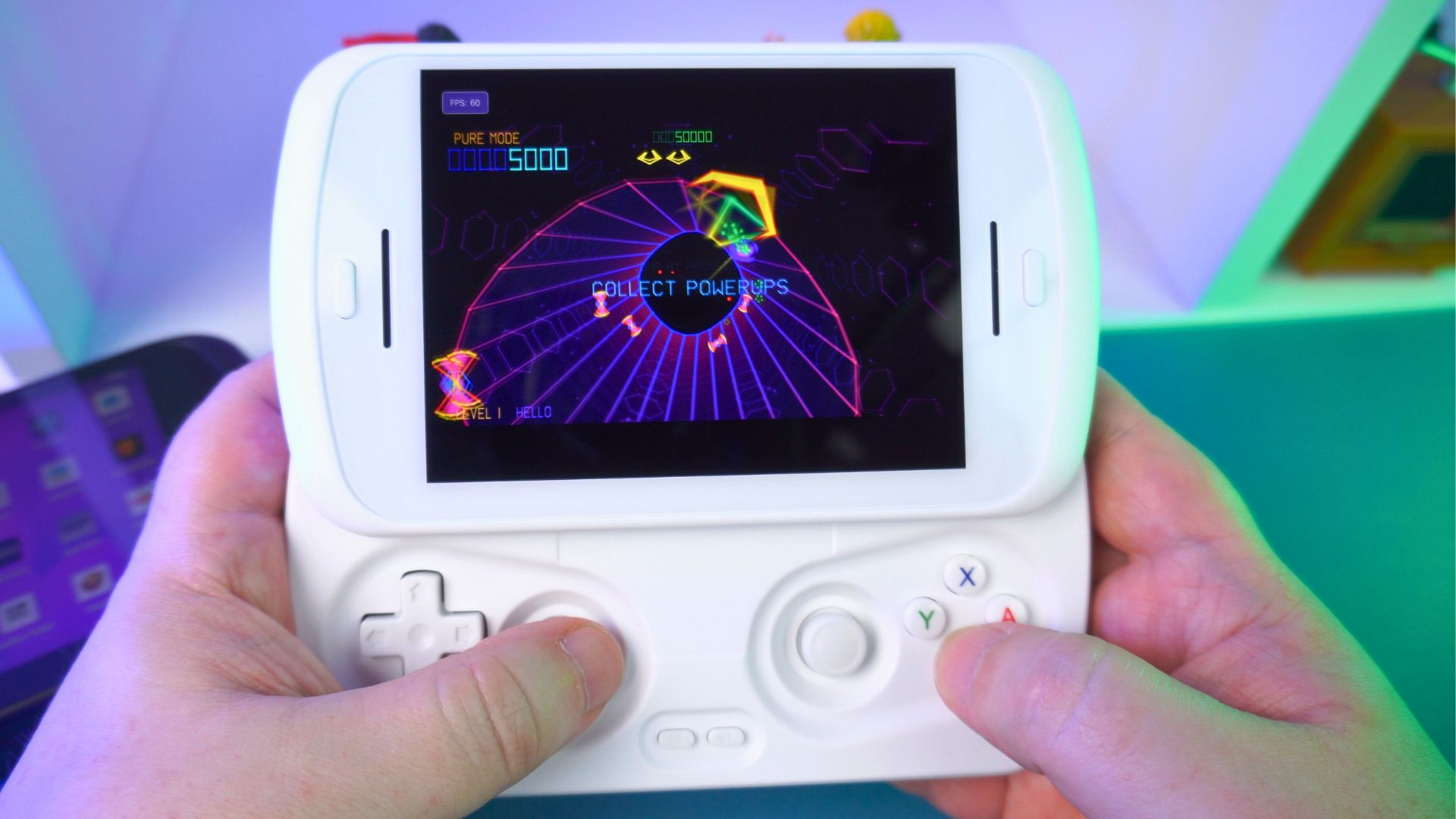
The Vita emulator enjoys a bit more success. Compatible games can be playable depending on how demanding they are. Lower demanding TxK runs great whereas Street Fighter X Tekken will get anything between 30 to 50 frames per second. Not bad for a mid range device though.
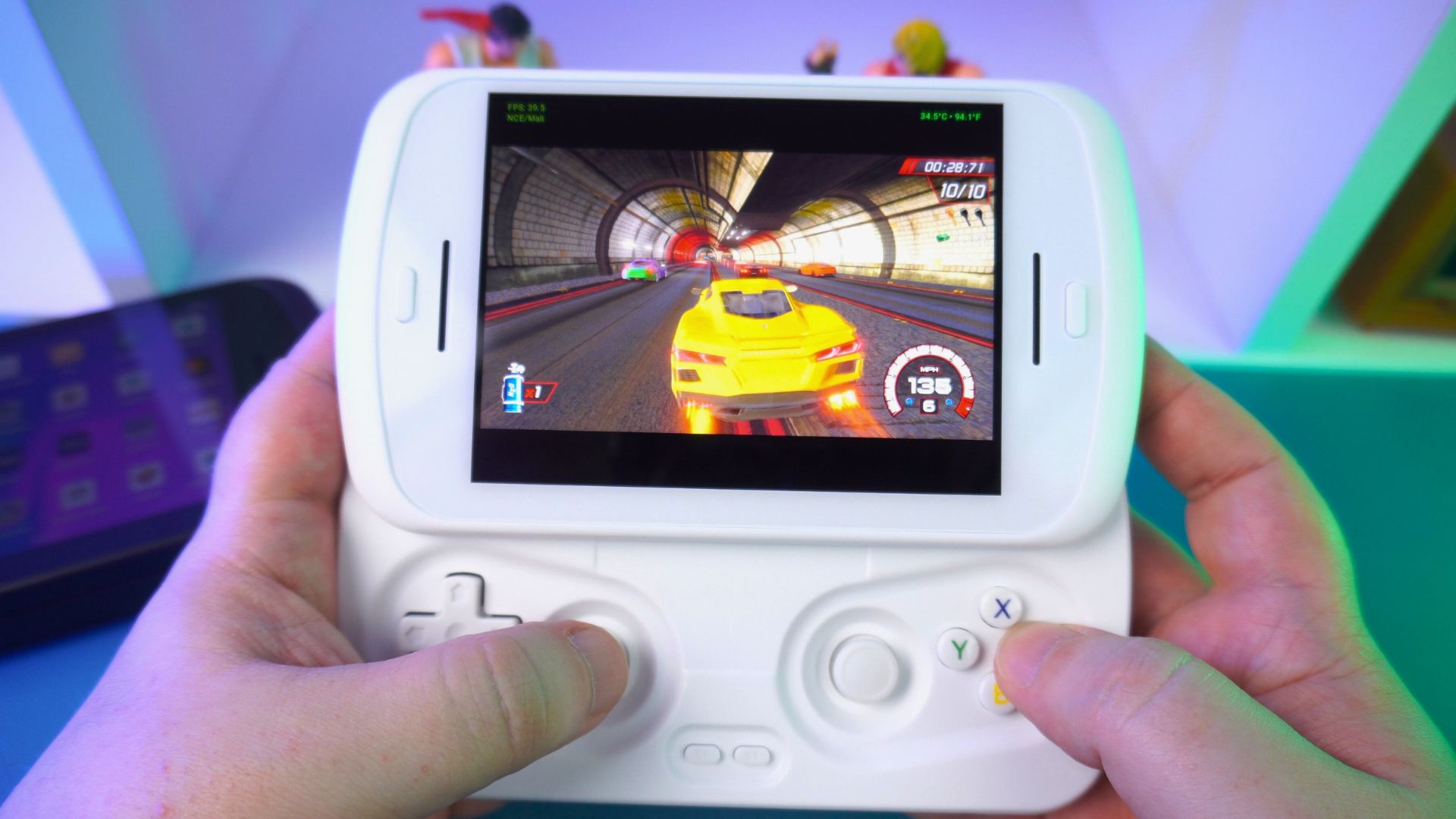
And now on to Ryujinx and its forks. Again this is going to massively depend on how demanding the game is. Low demanding games can be quite playable to be fair. But as you can see with Cruisn’ Blast we are getting around 40 frames per second.
Using the Turnip drivers and/or lowering the rendering resolution with all supported emulators may improve performance a bit, but don’t expect miracles and have high demanding games playable!
Final Thoughts
Time to sum up our thoughts for our Anbernic RG Slide review. How does the Anbernic RG Slide fare against its competitors? In terms of design, the slide out display is something new to Android handhelds. I have to say for the first attempt, Anbernic seems to have done a great job with it. So far I have no complaints about the mechanism or worries about if it is going to break, it feels well made and sturdy. I would have liked to see it a little thinner, but it remains pocketable.
In terms of performance, we saw good results compared with the RG Cube and far higher performance than the similarly priced AYANEO Pocket Micro. If you want to spend more for higher performance devices the option is there with the Odin 2 and Pocket ACE. But do keep in mind that you are only going to see improved performance for high end emulators at a potentially 100% price difference.
The Anbernic RG Slide is a great option if you are on the move often. You can store it in your pockets for example without having to worry about analogue sticks getting stuck or broken.. The 4:3 aspect ratio display may not be for everyone, but then you have something like the AYN Odin 2 Portal which will cover you there for widescreen fans.
You can learn more and buy the Anbernic RG Slide here. We hope you have found this Anbernic RG Slide review useful, if you do have any questions about it, please feel free to ask in the comments below.