

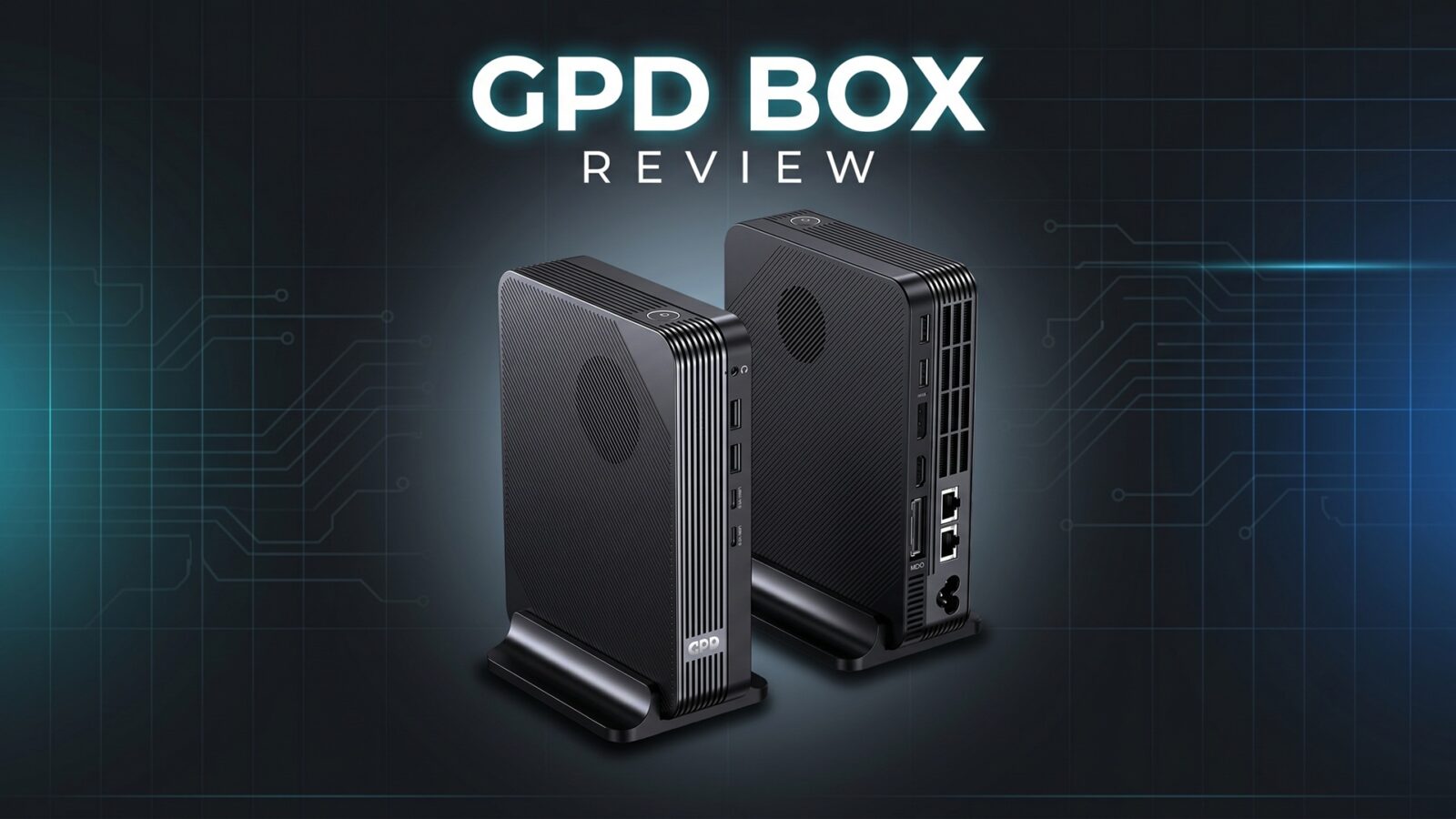
GPD BOX Review
-
Design
(4.5)
-
Build Quality
(5)
-
Performance
(4)
-
Features
(4.5)
Summary
Celkovo
4.5Klady
- Compact and distinctive design
- Strong everyday performance
- Excellent connectivity including USB4 2.0 & dual 2.5Gb Ethernet
- Efficient during light use
- eGPU support with the GPD G2
Nevýhody
- MCIO support is model-dependent
What is the GPD BOX?
The GPD BOX is GPD’s first mini PC, offering Intel Ultra processor options, compact desktop sizing, USB4 2.0 connectivity, dual 2.5Gb Ethernet, and optional eGPU expansion through the GPD G2 docking station. This GPD BOX review tests its design, system performance, gaming, emulation, and external graphics potential.
This GPD BOX review looks at whether GPD’s first move into the mini PCs category brings something useful to the desk. GPD is best known for handheld gaming PCs and mini laptops, so the GPD BOX enters a busy market with a slightly different design language and a clear link to the wider GPD ecosystem.
The practical question is simple: is the GPD BOX just another compact desktop, or does it make sense as a mini PC with Intel processor hardware for work, media, gaming, emulation, and GPU expansion? Based on our testing, it is best understood as a compact everyday system with good performance for its price range, rather than a direct rival to higher-performance devices such as the GPD WIN 5.
Testing conditions
- Device: GPD BOX
- CPU options covered: Intel Ultra 7 356H and Intel Ultra X7 358H
- Tested model: Intel Ultra X7 358H model
- Graphics: Intel graphics on 356H; Intel Arc B390 GPU on 358H
- Memory options: 32GB or 64GB LPDDR5x up to 8533 MT/s
- Storage options: 512GB to 4TB M.2 NVMe 2280 SSD
- eGPU test: GPD G2 docking station via USB4 v2 with NVIDIA GeForce RTX 3090
- Items tested: Geekbench 6, Cinebench 2026, PCMark 10, 3DMark, selected PC games, selected emulators
GPD BOX Review overview and design
The GPD BOX measures around 6.88 x 5.27 x 1.55 inches, or 17.5 × 13.4 × 3.95 cm, and weighs around 940g. It is compact enough for a desk, TV setup, office counter, or small workspace without feeling like a generic black box.
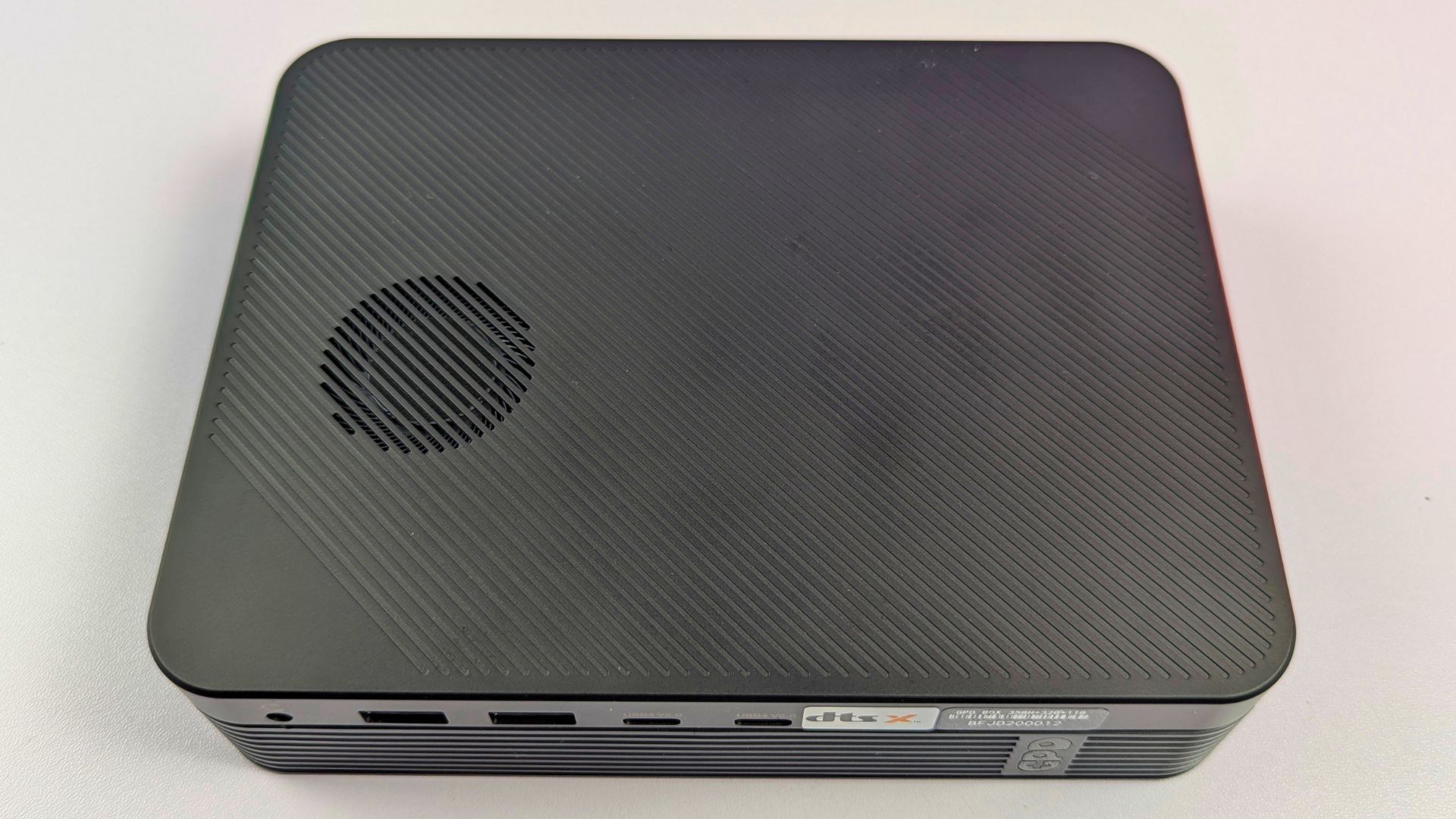
The design clearly carries GPD’s own style. The grilled front panel, visible branding, and compact shape give it more personality than many Intel compact computers, while still keeping the overall look clean enough for office or home use.
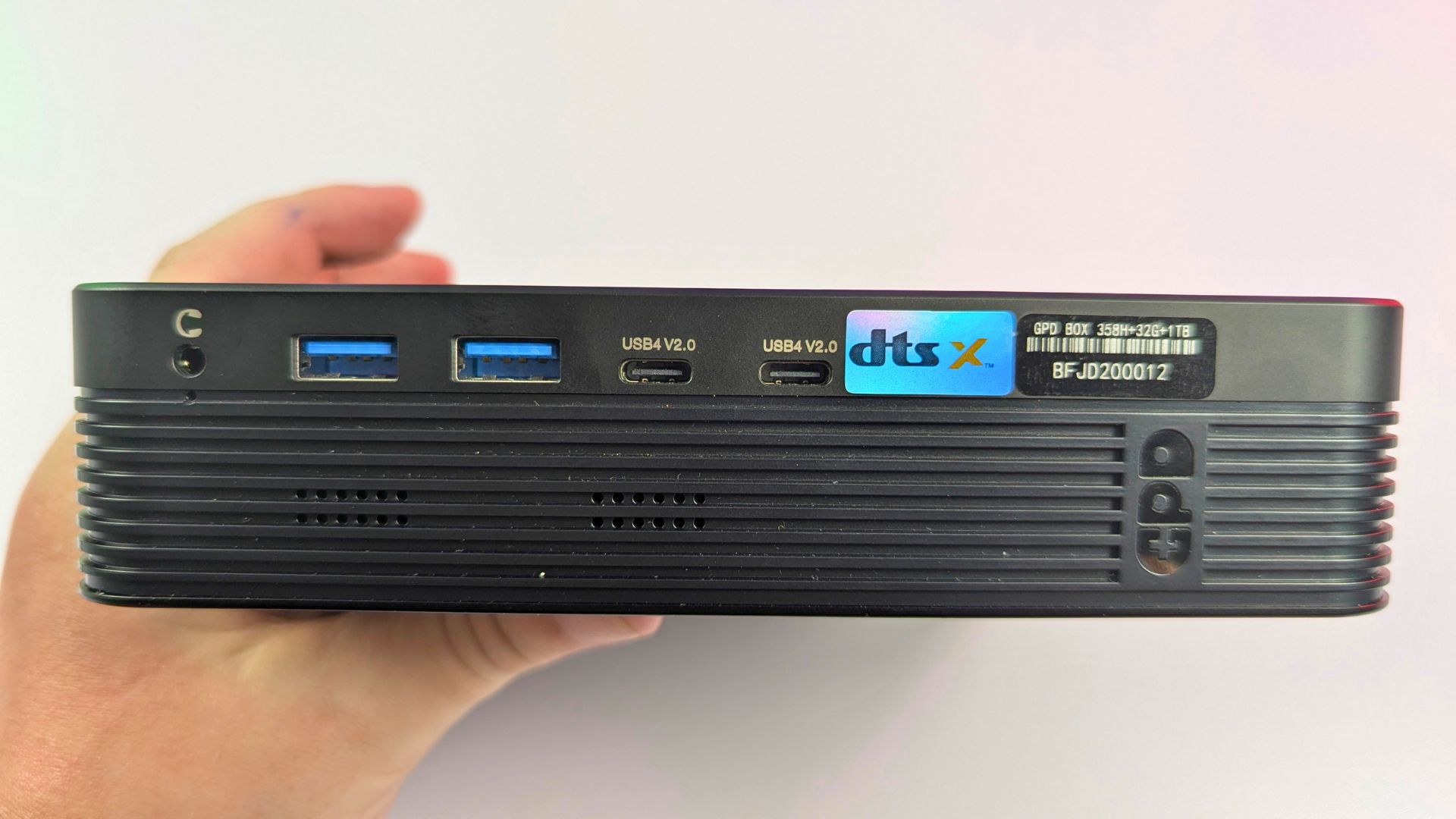
On the front, from left to right, there is a 3.5mm mic and audio combo port, two USB-A 10Gbps ports, and two USB4 2.0 ports supporting up to 80Gbps bandwidth. Below those are two 2W speaker grilles, which help the unit feel more self-contained for simple desktop use.
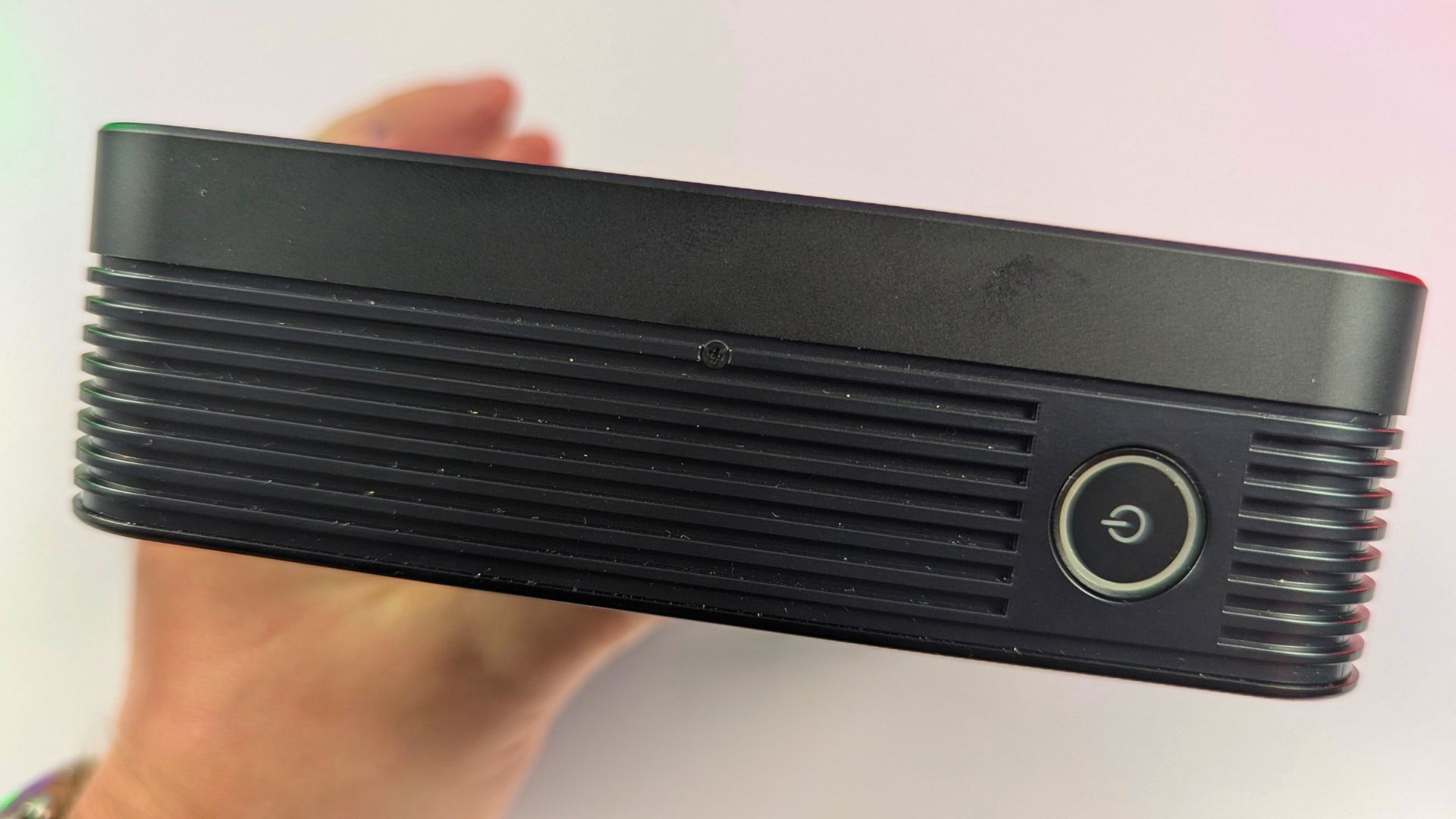
On the left side, there is a power button with an integrated fingerprint sensor, outlined with an LED light. This is useful for quick sign-in, especially if the GPD BOX is being used as a mini PC for home office work or shared family use.
Along the back, from left to right, there is the power port. On the 356H model, there is also an MCIO 8i port, and below that are dual 2.5 Gigabit Ethernet ports. HDMI 2.1 and DisplayPort 2.1 are included for display output, along with two additional USB-A 10Gbps ports.
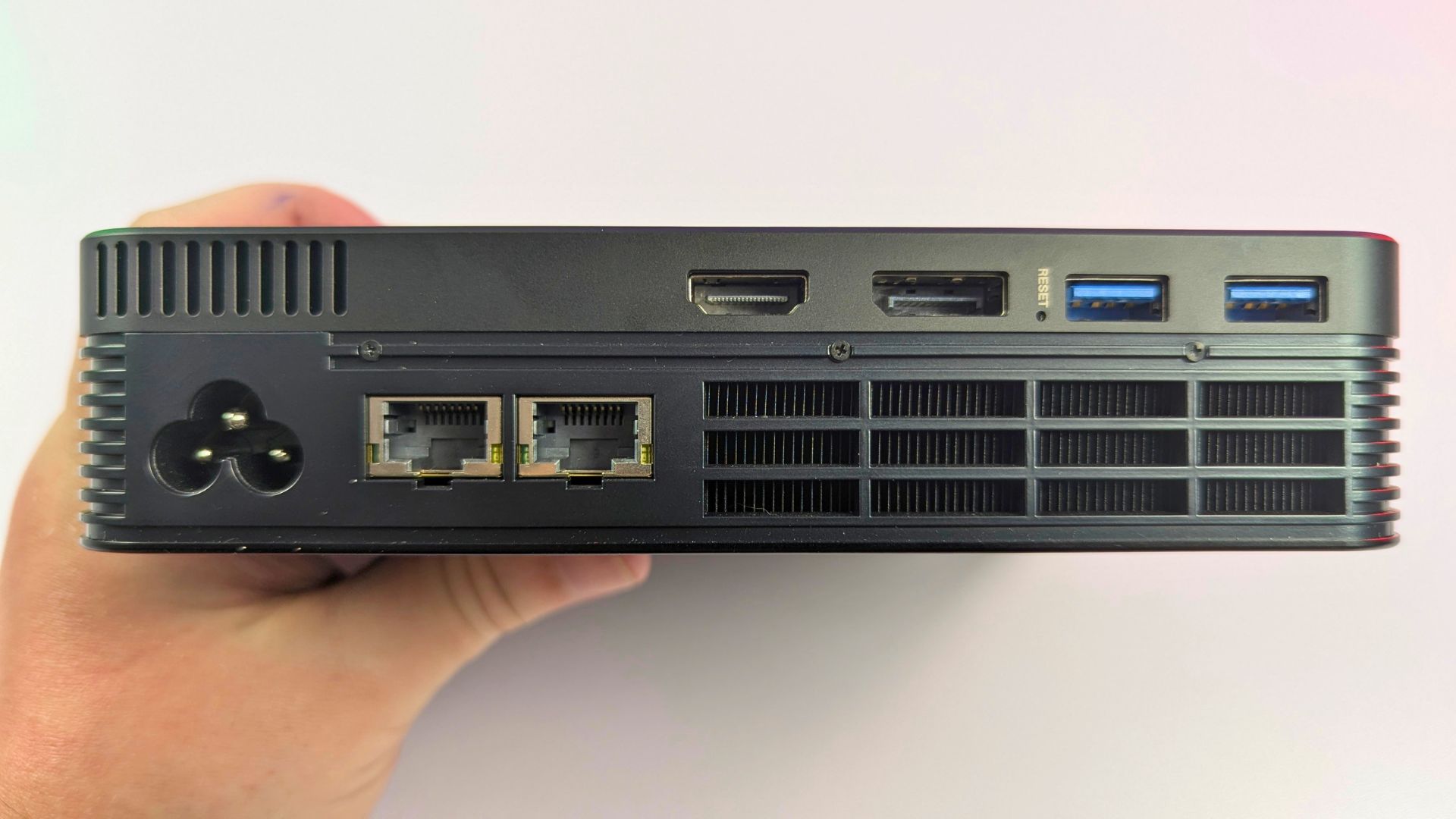
You can position the GPD BOX flat on your desk like a traditional mini PC, or use the included stand to place it vertically. That vertical option is welcome because it reduces desk footprint and makes cable access easier in tighter setups.
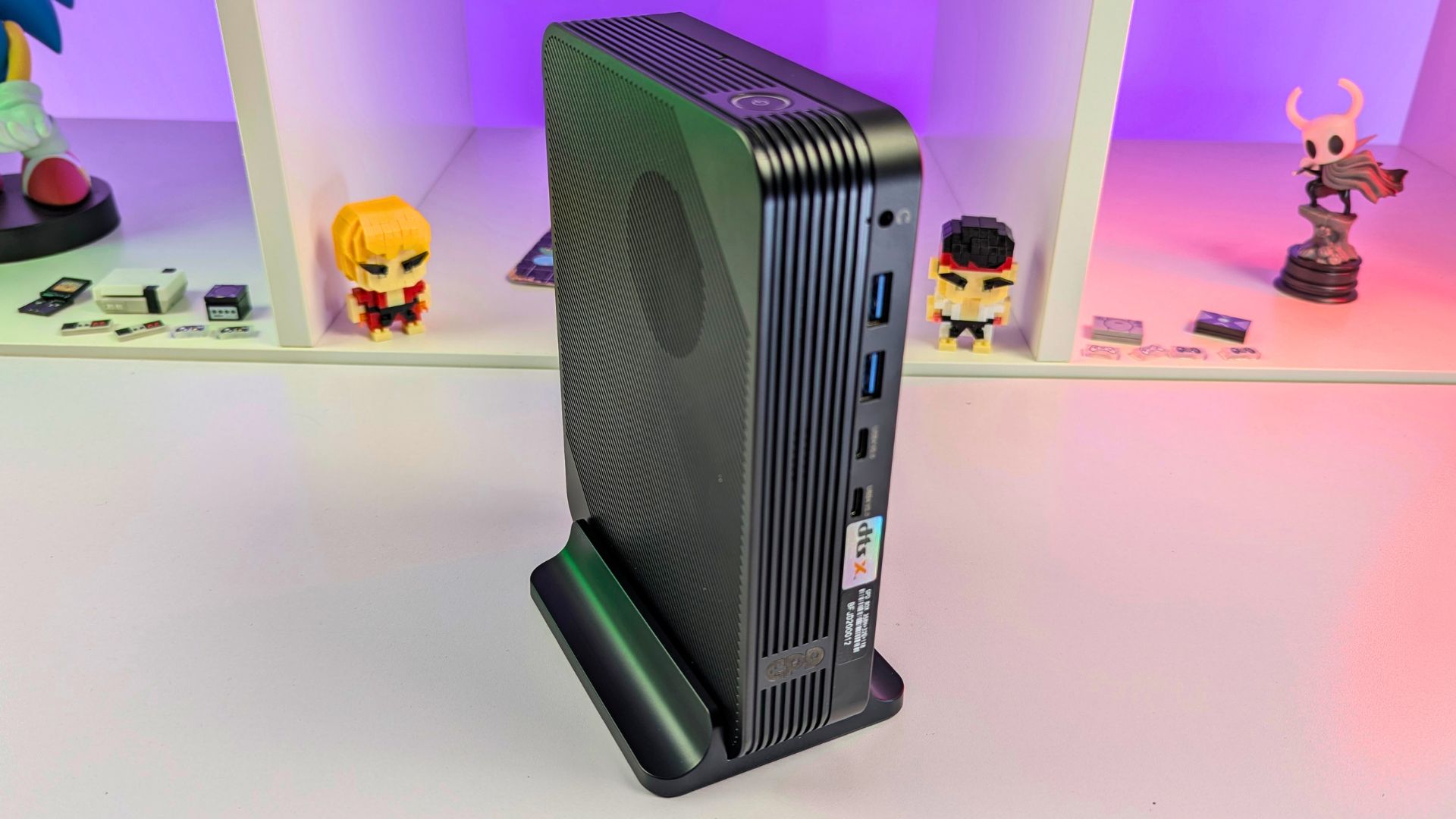
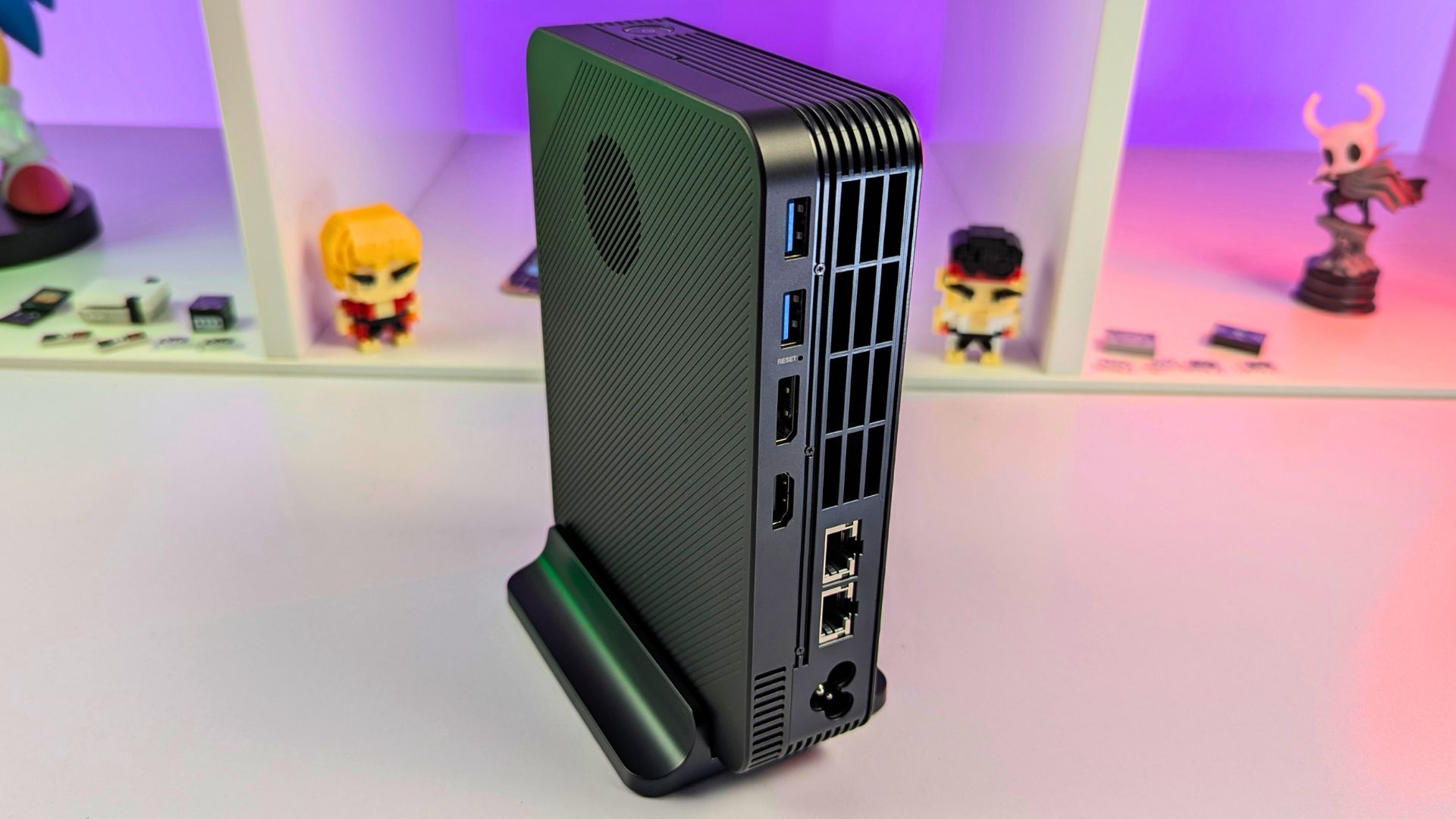
The overall design is one of the stronger parts of this GPD BOX review. It looks at home alongside other GPD devices, but it also works as a clean small desktop for users who simply want a compact Intel system with plenty of ports.
GPD BOX technical specifications
The GPD BOX is available in two main CPU specifications: the Intel Ultra 7 356H and Intel Ultra X7 358H. Both feature 4 performance cores, 8 efficient cores, and 4 low-power efficient cores. The 356H runs up to 4.7GHz, while the 358H runs up to 4.8GHz.
The graphics hardware is where the two models differ most. The Ultra 7 356H features standard Intel graphics with 4 Xe-cores and 32 Execution Units. The Ultra X7 358H steps up to Intel Arc B390 graphics with 12 Xe-cores and 96 Execution Units, so graphics performance should be very different between the two models.
| Area | GPD BOX specification or test result |
|---|---|
| Dimensions | 6.88 x 5.27 x 1.55 inches / 17.5 × 13.4 × 3.95 cm |
| Weight | Around 940g / 2.07 lbs |
| CPU options | Intel Ultra 7 356H / Intel Ultra X7 358H |
| Memory | 32GB or 64GB LPDDR5x up to 8533 MT/s |
| Storage | 512GB to 4TB M.2 NVMe 2280 SSD |
| Wireless | Wi-Fi 6E and Bluetooth 5.3 |
| Front ports | 3.5mm audio, 2× USB-A 10Gbps, 2× USB4 2.0 |
| Rear ports | Power, HDMI 2.1, DisplayPort 2.1, 2× USB-A 10Gbps, dual 2.5Gb Ethernet |
| Model-specific port | MCIO 8i on 356H model |
| Idle power draw | 4.3W |
| 4K YouTube power draw | Around 9W |
| Cinebench full-load power draw | 87W |
Power Usage
For power usage, the GPD BOX is very efficient during lighter tasks. It used just 4.3W when idle on the desktop and averaged around 9W while watching a 4K YouTube video. Under full load in Cinebench 2026, power usage rose to 87W.
Fan Noise & Temperatures
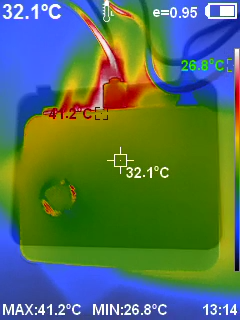
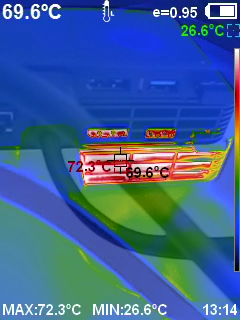
For fan noise and temperatures, the balanced fan setting measured 49dB during the Cinebench 2026 multi-thread test, with temperatures reaching 72°C on the back. Switching the fan to 100% lowered temperatures to 57°C, but noise increased significantly to 77dB.
System benchmarks
This GPD BOX review uses updated benchmark testing methods, and we have not reviewed a mini PC in some time. As a result, the benchmark comparisons are a little different to our usual format, but they still give a strong view of where the GPD BOX sits.
Geekbench 6
The GPD BOX performs very well in Geekbench 6, with a single-core score of 2,873. That puts it right alongside the top handheld gaming PCs in this test.
| Device | Single-Core | Multi-Core |
|---|---|---|
| GPD WIN 5 (AMD MAX+ 395) | 2,809 | 17,996 |
| GPD WIN 5 (AMD MAX 385) | 2,890 | 14,738 |
| ONEXPLAYER ONEXFLY APEX (AMD MAX+ 395) | 2,898 | 18,198 |
| GPD BOX (Intel Ultra X7 385H) | 2,873 | 16,462 |
Its multi-core score of 16,462 beats the GPD WIN 5 with the AMD MAX 385, though it sits around 9% behind the more powerful AMD MAX+ 395 devices. This is a strong result for a compact desktop system, especially when judging it as one of the newer mini Intel desktops rather than a high-end gaming handheld.
Cinebench 2026
For Cinebench 2026, we only have the GPD BOX results at present. It scored 492.04 in Single Thread and 3,955.26 in Multi-Thread.
| Device | Single Thread | Multi-Thread |
|---|---|---|
| GPD BOX (Intel Ultra X7 385H) | 492.04 | 3,955.26 |
These results will be useful reference points for future reviews. For now, they show that the GPD BOX has enough CPU strength for productivity, heavier desktop tasks, and general creative workloads.
PCMark 10
In PCMark 10, the GPD BOX takes the lead with a score of 9,756. That puts it 6.5% ahead of the ONEXPLAYER ONEXFLY APEX, 14.5% ahead of the GPD WIN 5 with AMD MAX 385, and 20% ahead of the MAX+ 395 model.
| Device | Score |
|---|---|
| GPD WIN 5 (AMD MAX+ 395) | 8,130 |
| GPD WIN 5 (AMD MAX 385) | 8,522 |
| ONEXPLAYER ONEXFLY APEX (AMD MAX+ 395) | 9,160 |
| GPD BOX (Intel Ultra X7 385H) | 9,756 |
That result is important because PCMark 10 reflects everyday system use. It supports the idea that the GPD BOX is a capable mini PC for home office tasks, media use, multitasking, and general desktop productivity.
3DMark
In 3DMark, the GPD BOX scores 7,285 in Time Spy, 40,277 in Night Raid, and 14,104 in Fire Strike. This places it behind the AMD-powered devices in GPU-focused tests, with the biggest gap showing in Fire Strike, where it trails by around 40%.
| Device | Time Spy | Night Raid | Fire Strike |
|---|---|---|---|
| GPD WIN 5 (AMD MAX+ 395) | 10,541 | 57,589 | 23,739 |
| GPD WIN 5 (AMD MAX 385) | 10,016 | 48,884 | 22,952 |
| ONEXPLAYER ONEXFLY APEX (AMD MAX+ 395) | 10,635 | 61,861 | 23,452 |
| GPD BOX (Intel Ultra X7 385H) | 7,285 | 40,277 | 14,104 |
This is why direct comparisons need context. The GPD BOX can game, but it is not positioned in the same way as higher-performance gaming handhelds or more expensive gaming-focused systems.
| Benchmark | GPD BOX result | Notes |
|---|---|---|
| Geekbench 6 Single-Core | 2,873 | Strong single-core performance |
| Geekbench 6 Multi-Core | 16,462 | Ahead of GPD WIN 5 with AMD MAX 385 in this test |
| Cinebench 2026 Single Thread | 492.04 | Reference point for future tests |
| Cinebench 2026 Multi-Thread | 3,955.26 | Strong CPU workload score |
| PCMark 10 | 9,756 | Excellent everyday system result |
| 3DMark Time Spy | 7,285 | Good, but behind stronger AMD GPU results |
| 3DMark Night Raid | 40,277 | Solid integrated graphics score |
| 3DMark Fire Strike | 14,104 | Around 40% behind in the largest gap |
Gaming benchmarks
As with our system benchmarks, we will be updating some gaming benchmarks to newer titles. For now, this GPD BOX review includes a mix of both older and newer games.
Forza Horizon 6
In Forza Horizon 6 at 1080p with the default Very Low graphics settings, the GPD BOX reaches 108 FPS at 80W and remains very close at 55W with 104 FPS. Even at 28W, it still delivers a smooth 87 FPS.
| TDP | GPD BOX FPS |
|---|---|
| 80W | 108 |
| 55W | 104 |
| 28W | 87 |
| 15W | 50 |
| 5W | 8 |
At 15W, performance drops to 50 FPS, which remains playable depending on your expectations. The 5W result is only really suitable for light power-saving use.
Cyberpunk 2077
In Cyberpunk 2077 at 1080p lowest settings, the GPD BOX reaches 83 FPS at 80W and stays almost identical at 55W. It trails the AMD devices at higher TDPs, but closes the gap at 15W, where its 37 FPS is right in line with the competition.At 5W, performance drops sharply to just over 6 FPS. This is expected for such a demanding game at very low power.
| Device | 80W TDP | 55W TDP | 28W TDP | 15W TDP | 5W TDP |
|---|---|---|---|---|---|
| GPD WIN 5 (AMD MAX+ 395) | 127.57 FPS | 118.6 FPS | 72.11 FPS | 36.15 FPS | 23.34 FPS |
| GPD WIN 5 (AMD MAX 385) | 120.51 FPS | 110.29 FPS | 71.87 FPS | 39.44 FPS | 23.55 FPS |
| ONEXPLAYER ONEXFLY APEX (AMD MAX+ 395) | 124.18 FPS | 117.77 FPS | 78.43 FPS | 36.65 FPS | N/A |
| GPD BOX (Intel Ultra X7 385H) | 83.0 FPS | 82.51 FPS | 57.44 FPS | 37.23 FPS | 6.20 FPS |
Shadow of the Tomb Raider
In Shadow of the Tomb Raider at 1080p Lowest, the GPD BOX scores 115 FPS at both 80W and 55W. It trails the AMD devices at higher TDPs, but the gap narrows at 28W with 97 FPS.
| Device | 80W TDP | 55W TDP | 28W TDP | 15W TDP | 5W TDP |
|---|---|---|---|---|---|
| GPD WIN 5 (AMD MAX+ 395) | 192 FPS | 182 FPS | 126 FPS | 71 FPS | 33 FPS |
| GPD WIN 5 (AMD MAX 385) | 173 FPS | 165 FPS | 121 FPS | 71 FPS | 31 FPS |
| ONEXPLAYER ONEXFLY APEX (AMD MAX+ 395) | 193 FPS | 181 FPS | 128 FPS | 74 FPS | N/A |
| GPD BOX (Intel Ultra X7 385H) | 115 FPS | 115 FPS | 97 FPS | 66 FPS | 24 FPS |
At 15W, it remains competitive with a solid 66 FPS. This shows that the GPD BOX can still deliver useful gaming performance without always needing to run at high power.
Real-world gaming performance
The GPD BOX is not classed as a gaming mini PC first, but real-world testing shows that it can still play a useful range of modern titles. It is best viewed as a compact system that can also game, rather than a dedicated gaming desktop replacement.
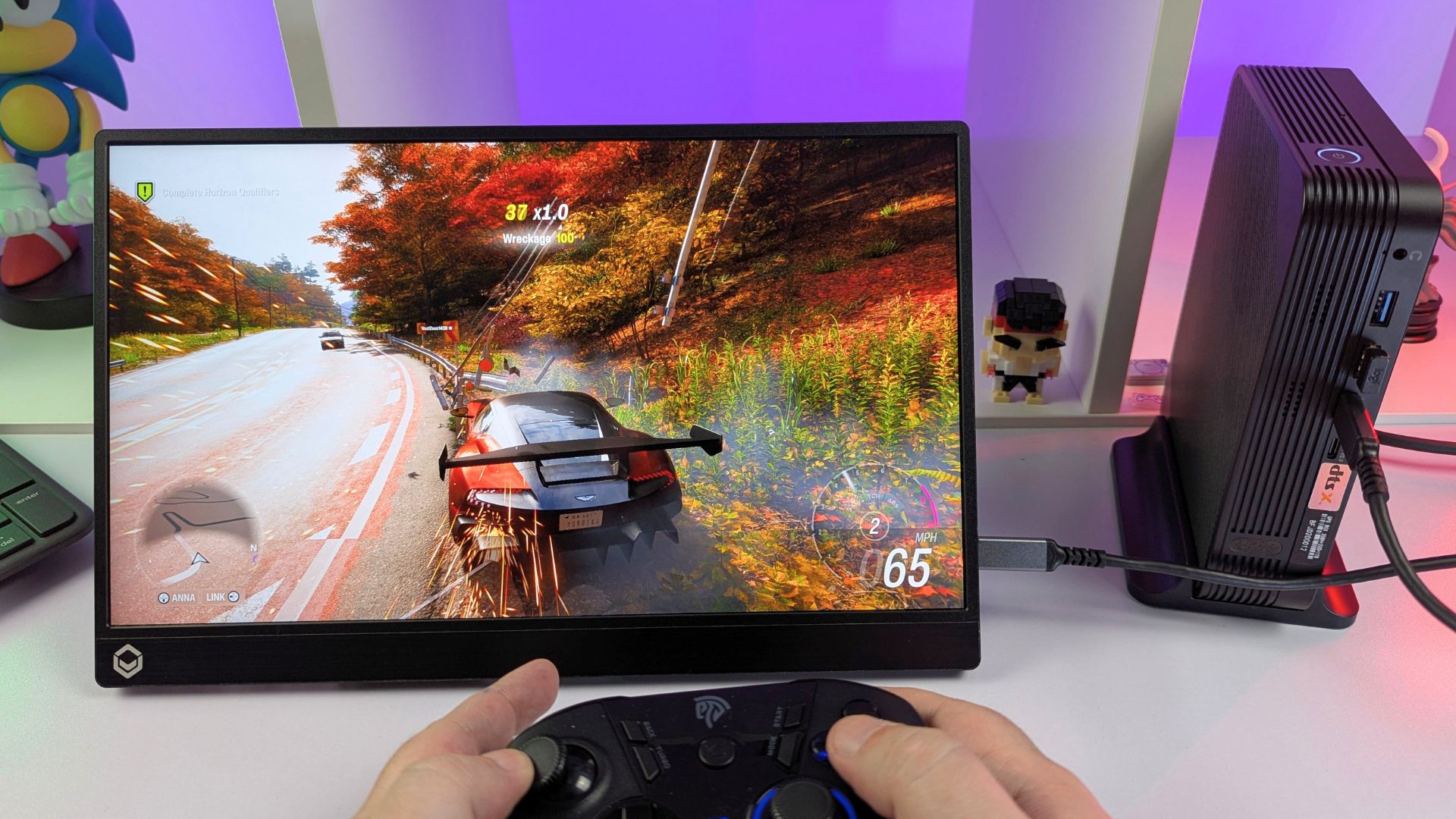
Forza Horizon 6
We were able to run Forza Horizon 6 at 1440p on the default High graphics settings with Intel XeSS-SR enabled. It gave us a solid above 60 frames per second.
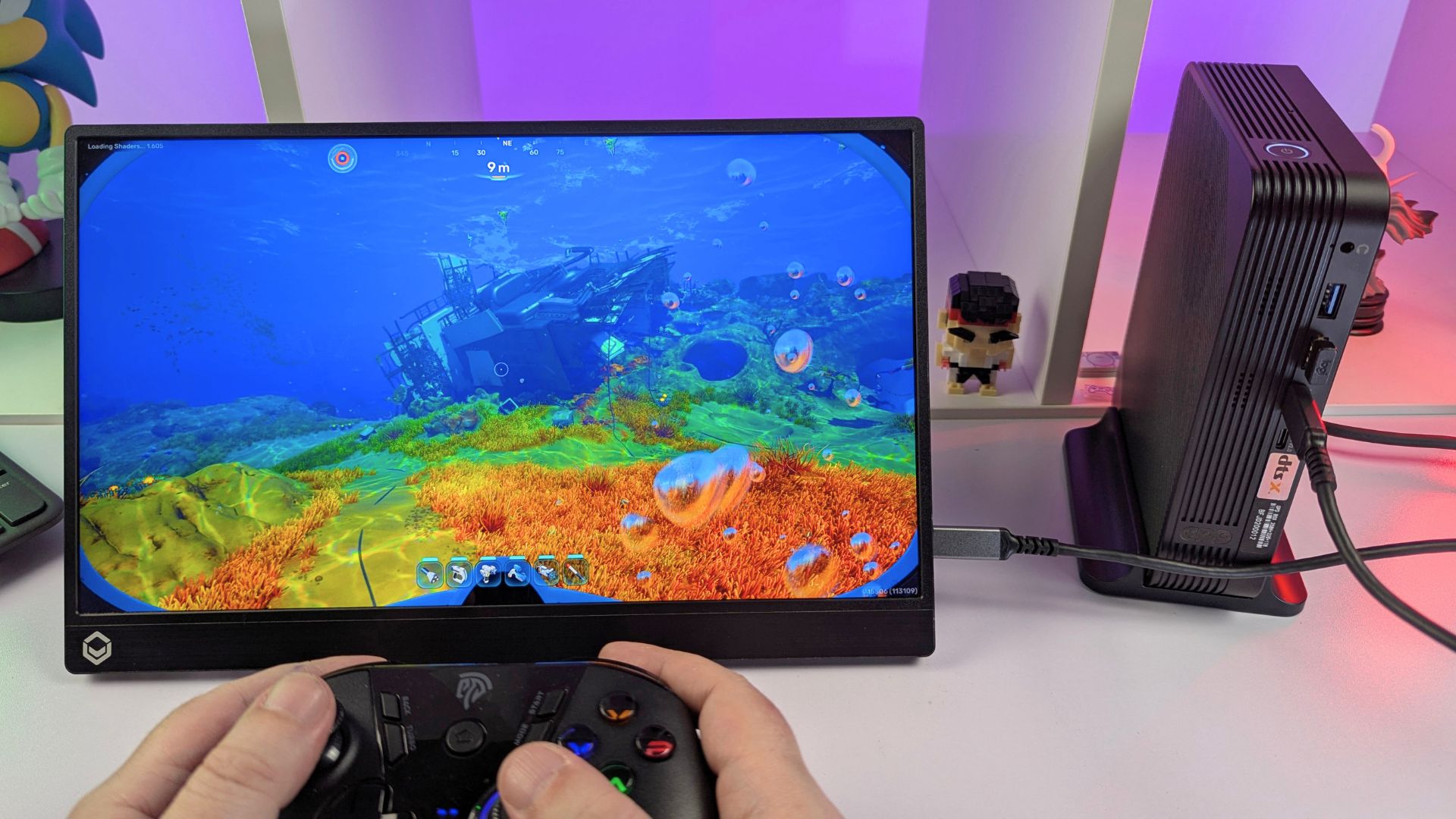
Subnautica 2
For Subnautica 2, we ran at 1440p with Balanced TSR upscaling and the default Medium graphics settings. This delivered above 60 frames per second.
Goals
Just in time for the World Cup, we have Goals. We played at 4K with everything cranked up to the highest settings and maintained a solid 60+ frames per second.

Emulation performance
Emulation is another strong use case in this GPD BOX review. Naturally, we are going to see everything up to the more modern consoles and handhelds run with absolutely no performance issues in the systems we tested.
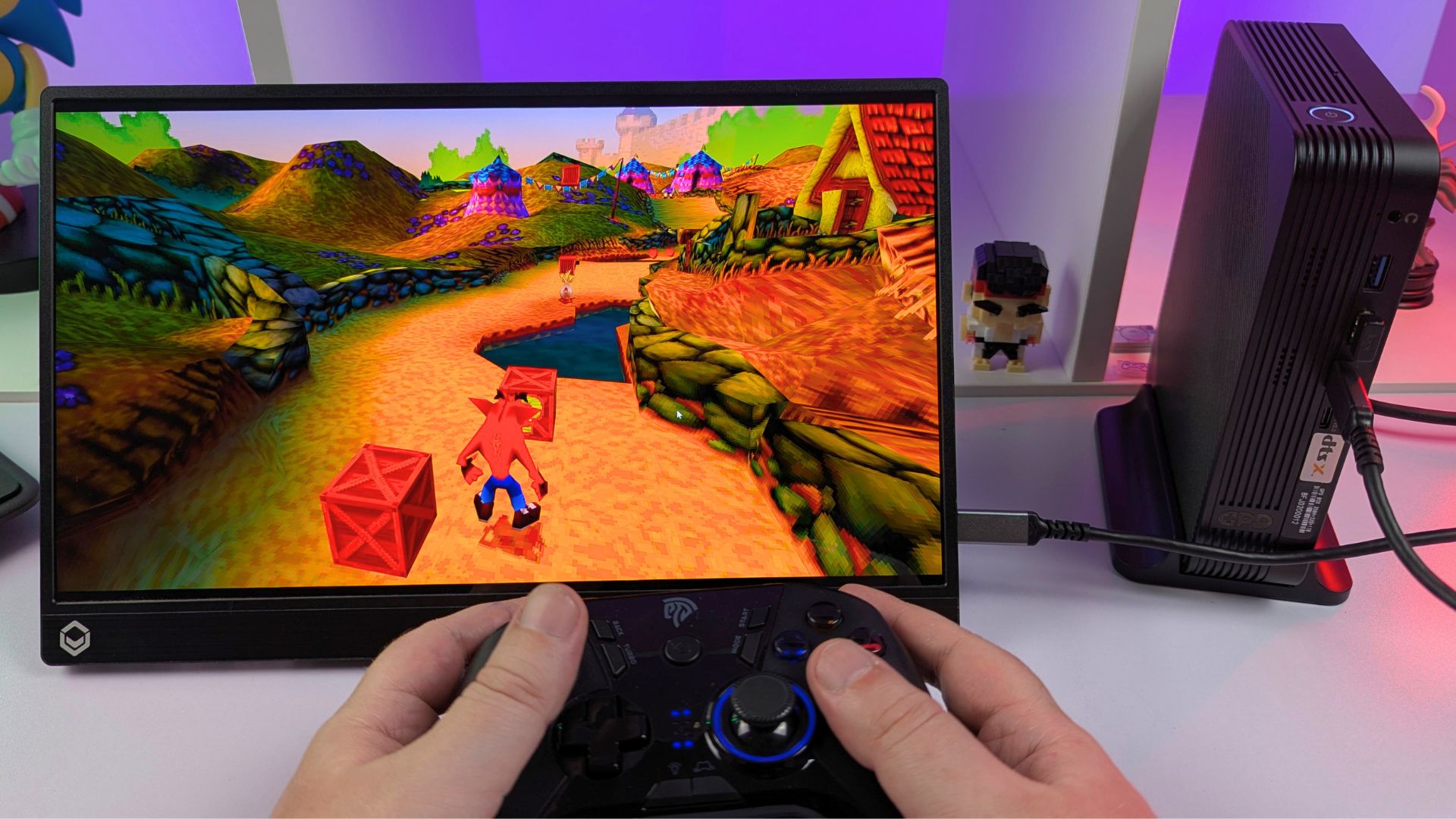
You can increase rendering resolutions up to 4K and add graphics tweaks to improve visual quality where supported. That makes the GPD BOX a good option for users who want a compact emulation system for a desk or TV setup.
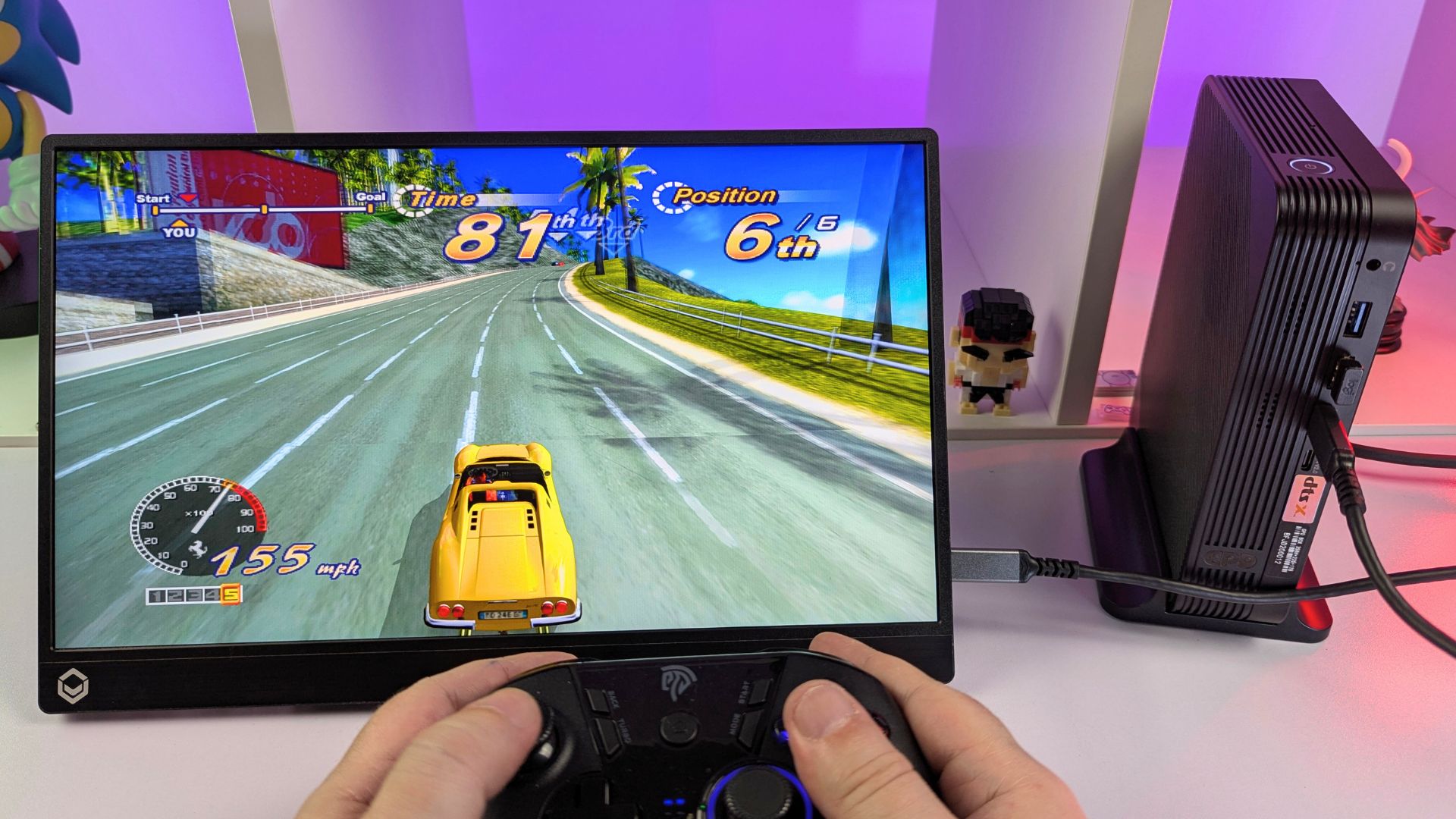
PCSX2
With PCSX2, you can go up to 4K with various graphics tweaks without any issues at all. The games look in a different league when upscaled.
RPCS3
With the PlayStation 3 emulator RPCS3, you can upscale to 4K and have no issues with performance. You can also crank up the Anisotropic Filtering to 16x for some great-looking visuals.
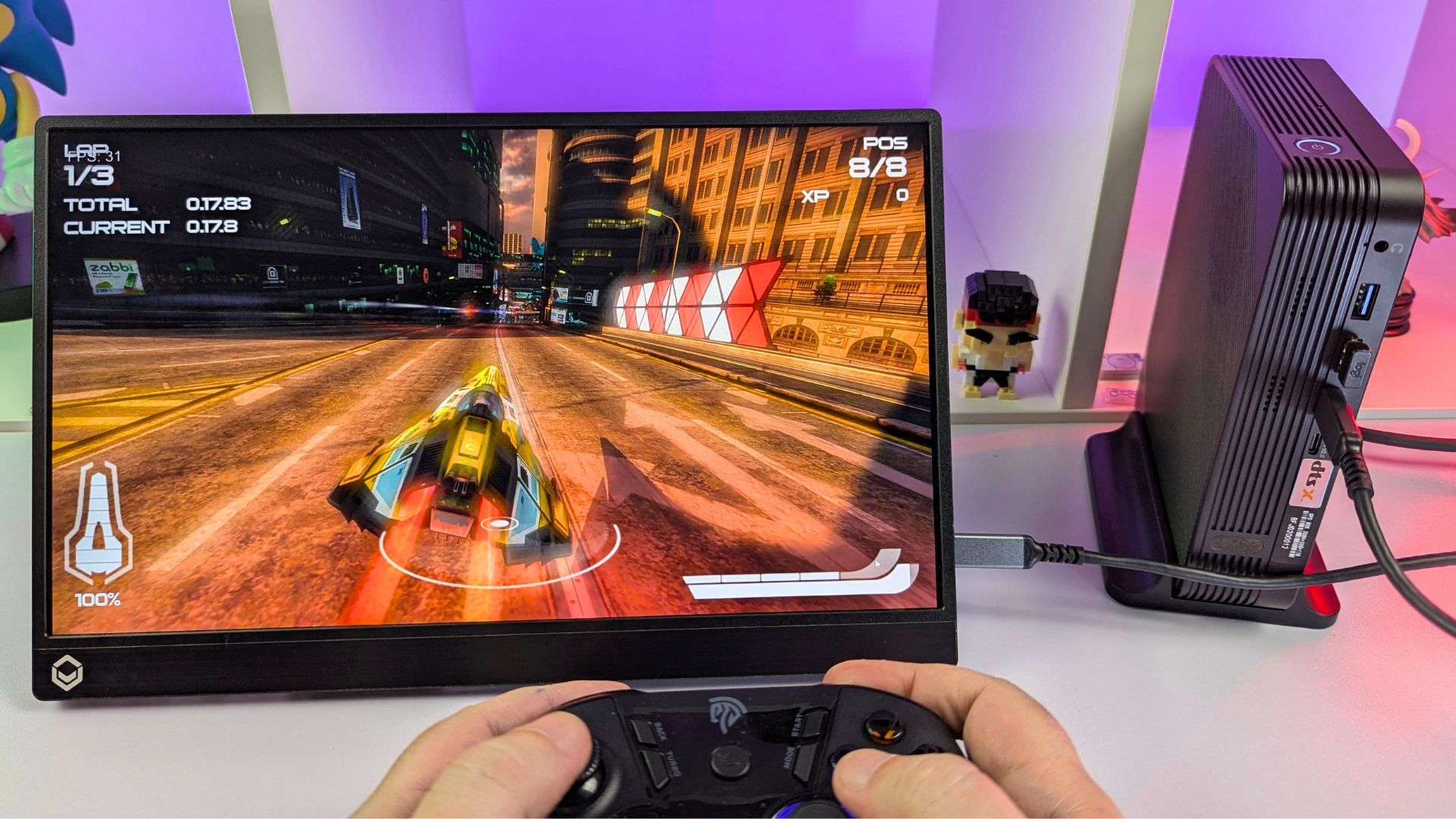
Vita3K
With Vita3K, we again increased the rendering resolution up to 4K, as well as the Anisotropic Filtering to 16x. We got solid frame rates in the games we tried.
Eden
For the Eden emulator, we see very good results in our test games. Our go-to game Cruis’n Blast runs at a full 60 frames per second at 1080p docked. Performance in games will vary depending on their demand. Overall, though, we see very good performance even in first-party games.
The GPD BOX with GPD G2 eGPU docking station
The GPD BOX was designed with the GPD G2 eGPU docking station in mind. We will be covering this in our full GPD G2 review coming shortly, but this GPD BOX review focuses on how the dock works with the GPD BOX.
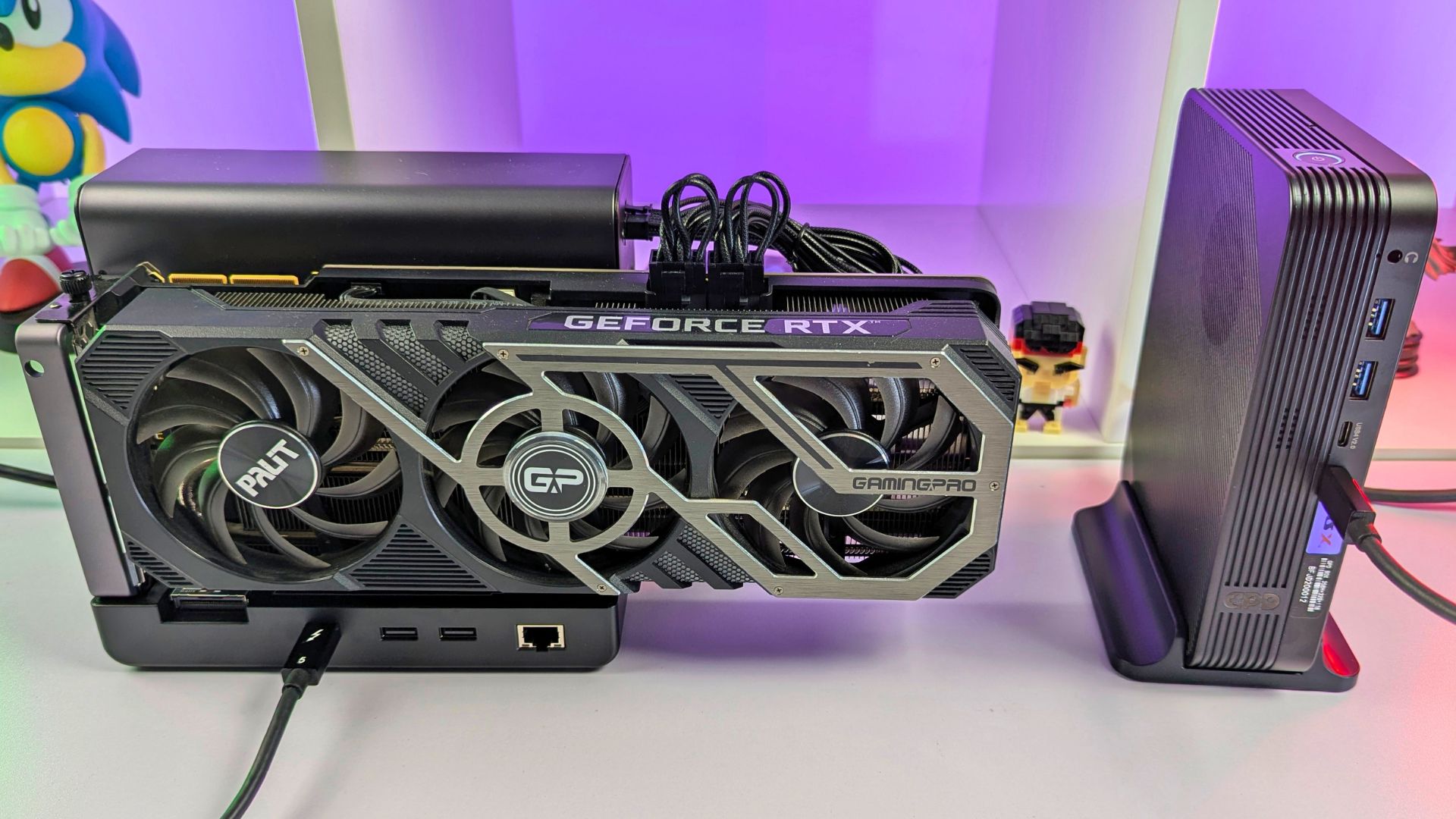
The GPD G2 has two connectivity options with your device: the MCIO port and USB4 v2, which is backwards compatible with standard USB4. The GPD BOX 356H model has an MCIO port on the back, while the 358H does not. Your options will therefore depend on which model you have.
We have the 358H model and used the USB4 v2 option with an NVIDIA GeForce RTX 3090 GPU. Performance will of course vary depending on the graphics card you use.
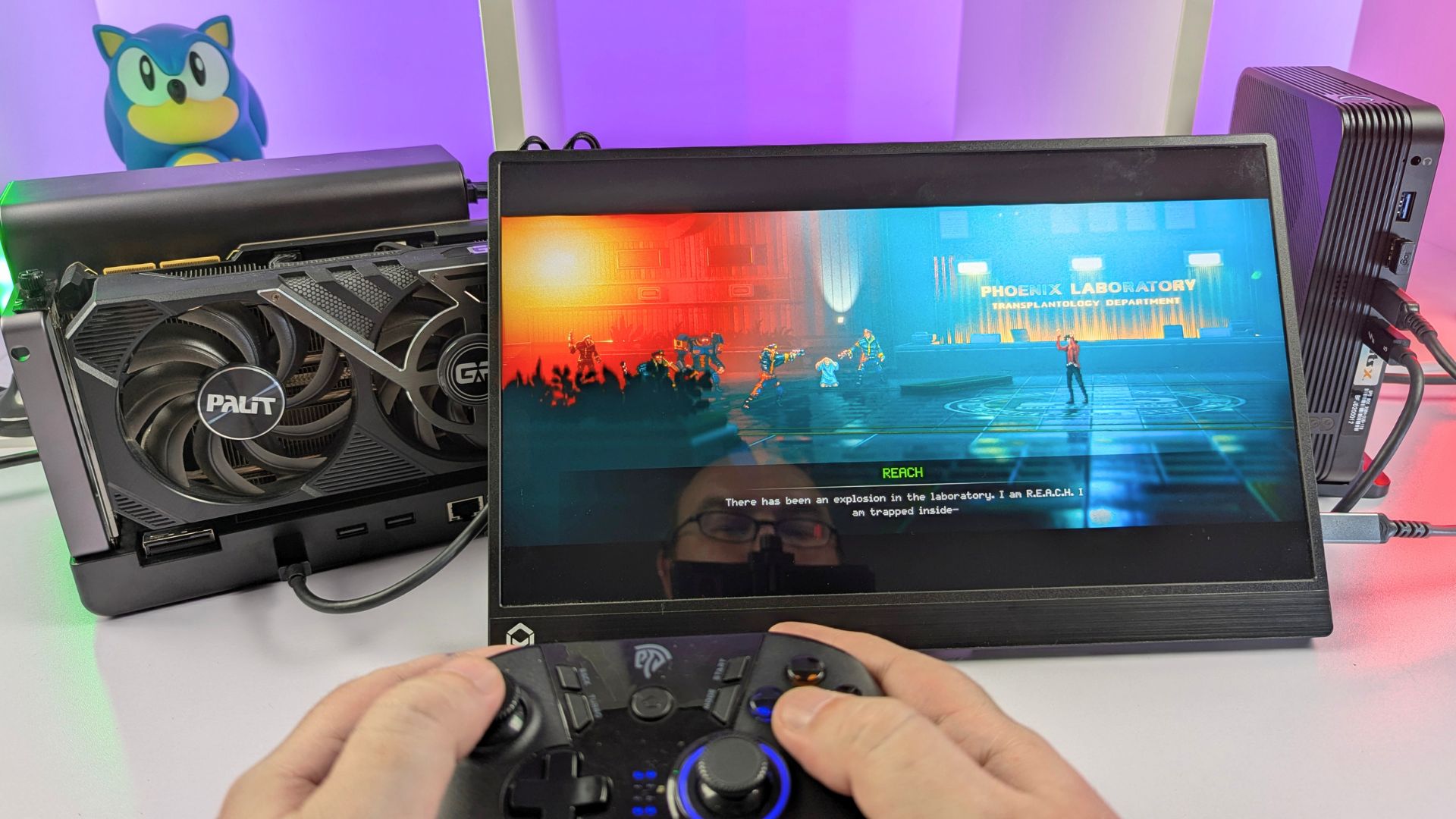
The benefit is clear. Adding the GPD G2 can greatly increase graphics performance for higher resolutions, heavier graphics settings, and more demanding games. It also makes the GPD BOX more useful for local AI workloads, GPU-accelerated creative work, and other tasks that benefit from dedicated graphics power.
Forza Horizon 6 with GPD G2
We ran Forza Horizon 6 at 1440p with FSR upscaling and the graphics on Extreme settings. This delivered 60+ frames per second.
Subnautica 2 with GPD G2
For Subnautica 2, we ran at 4K with DLSS Balanced upscaling on Epic graphics settings. It looks great under water and shows how much the external GPU helps at higher settings.
DOOM: The Dark Ages with GPD G2
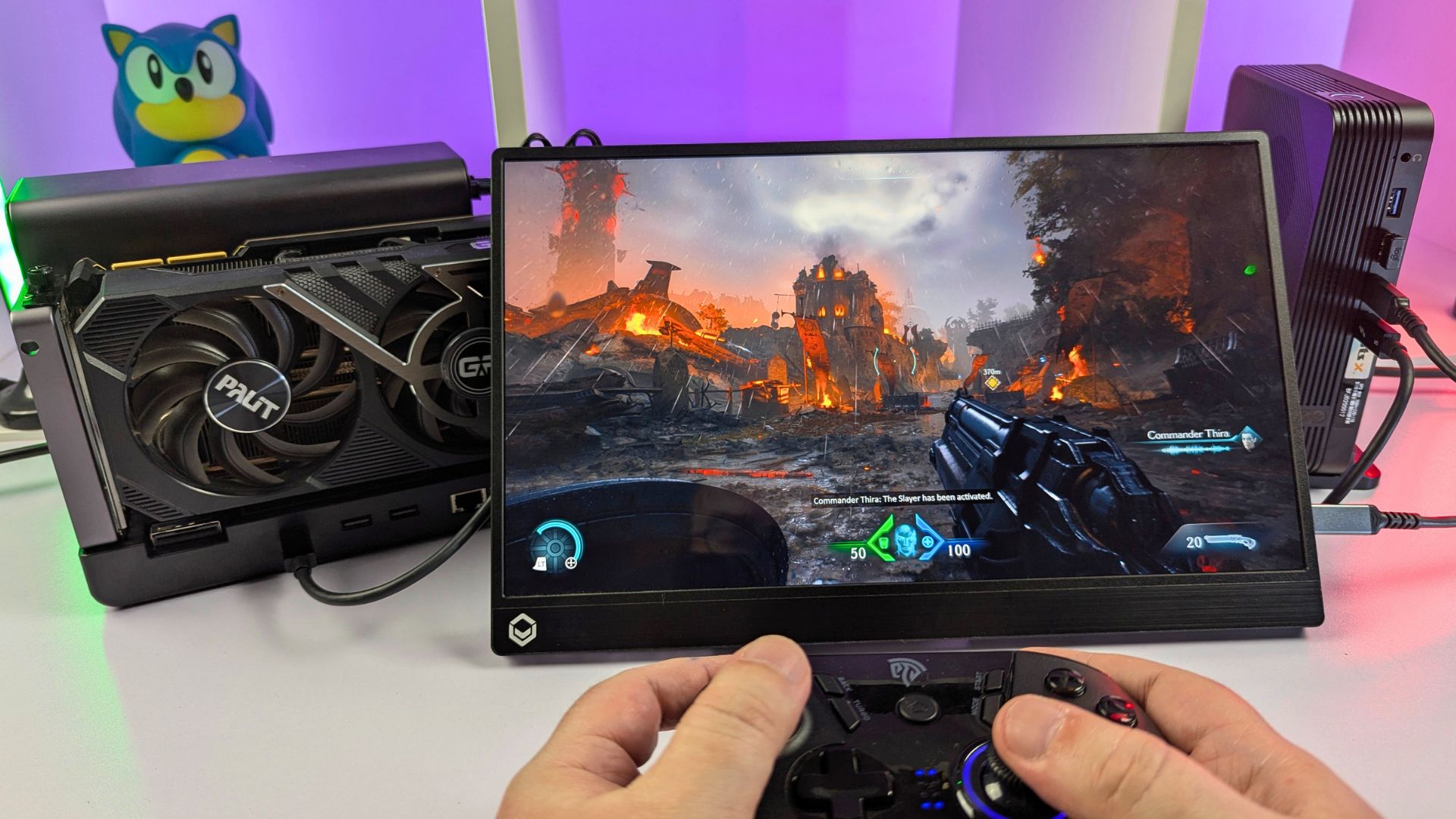
For DOOM: The Dark Ages, we ran at 4K with DLSS Quality upscaling on Nightmare settings. This is exactly the kind of workload where external graphics can make a compact system feel far more capable.
Everyday use: office, business, and streaming
Beyond gaming, the GPD BOX fits well into several everyday roles. Its low idle and media playback power usage make it practical as a mini PC for streaming, video playback, browsing, and light living-room use.
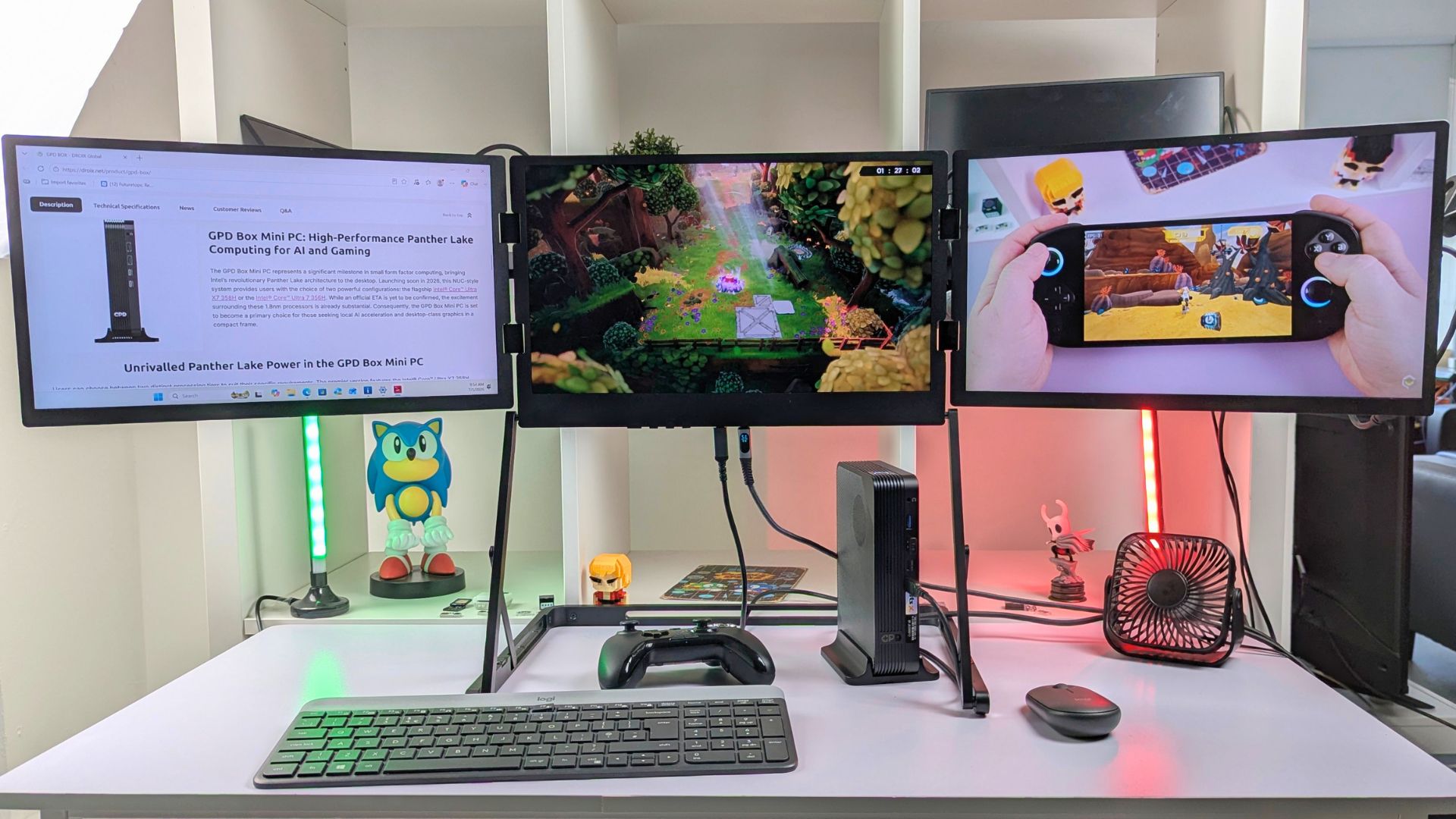
Its compact size, dual Ethernet ports, multiple USB ports, and good CPU performance also make it a useful mini PC for business. It can sit neatly on a desk, drive multiple displays, connect to wired networks, and handle productivity tasks without taking much space.
For users comparing Intel small form factor PCs, the GPD BOX stands out because it offers a more distinctive design and a stronger GPD ecosystem link than many generic alternatives. It is also one of the more interesting mini Intel desktops for users who want eGPU expansion as part of the setup.
Our verdict - Is the GPD BOX worth buying?
Short answer: The GPD BOX is worth considering if you want a compact Intel mini PC with strong everyday performance, good connectivity, and the option to expand graphics power with the GPD G2.
Best for: GPD fans, compact desktop users, office setups, emulation fans, media users, and anyone who wants a small PC that can also handle some gaming.
Not ideal for: Buyers who want maximum built-in gaming performance without relying on an eGPU, or users who need a system that directly competes with higher-performance devices such as the GPD WIN 5.
Current status: Tested as a compact GPD mini PC with supplied benchmark, gaming, emulation, and GPD G2 eGPU results.
Rating: 8.5/10 — based on supplied hands-on testing and performance results.
Final thoughts
The GPD BOX is an interesting first step into the mini PC market from GPD. It does not look or feel like a generic office mini PC, and that is one of its strengths. The front grille, compact shape, GPD branding, and vertical stand option give it a more distinctive identity than many small desktop systems.
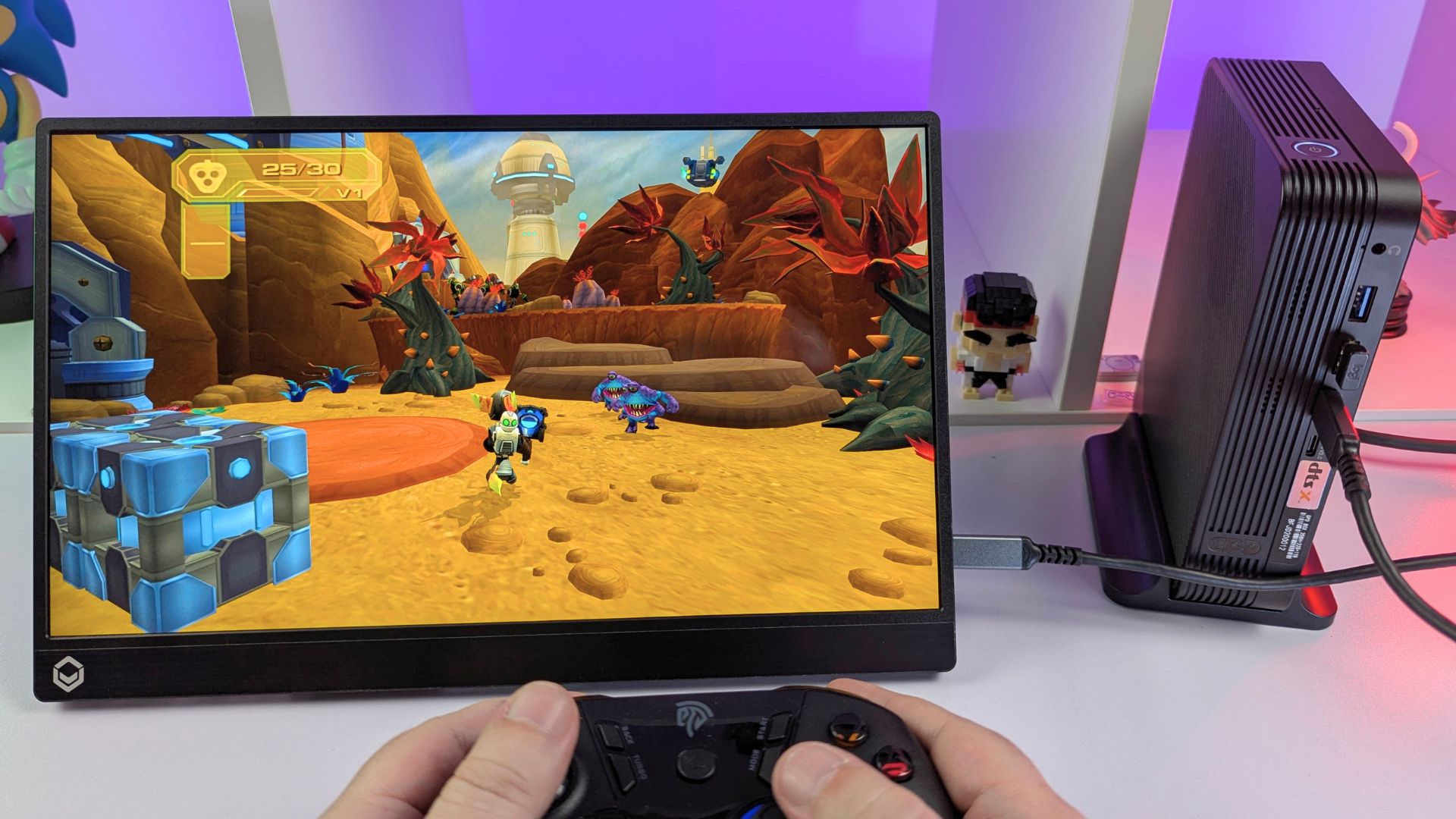
Performance is also good for the price range, especially when you consider that the GPD BOX is not positioned as a dedicated gaming mini PC. It can game, and as this GPD BOX review shows, it can do so surprisingly well in a range of titles and emulators. However, it should not be directly compared against something like the GPD WIN 5, which sits in a higher performance and price category.
Instead, the GPD BOX makes more sense as a compact everyday PC that can also handle gaming, emulation, media, productivity, and more demanding desktop tasks when needed. The CPU performance is strong, the integrated graphics are capable, and the low power usage during lighter tasks makes it efficient for day-to-day use.

The GPD G2 docking station adds another dimension to the GPD BOX. By connecting an external graphics card, you can significantly increase graphics performance for higher resolutions, higher graphics settings, and more demanding games. It also opens up more potential for local AI workloads, GPU-accelerated creative tasks, and other uses where dedicated graphics power can make a big difference.
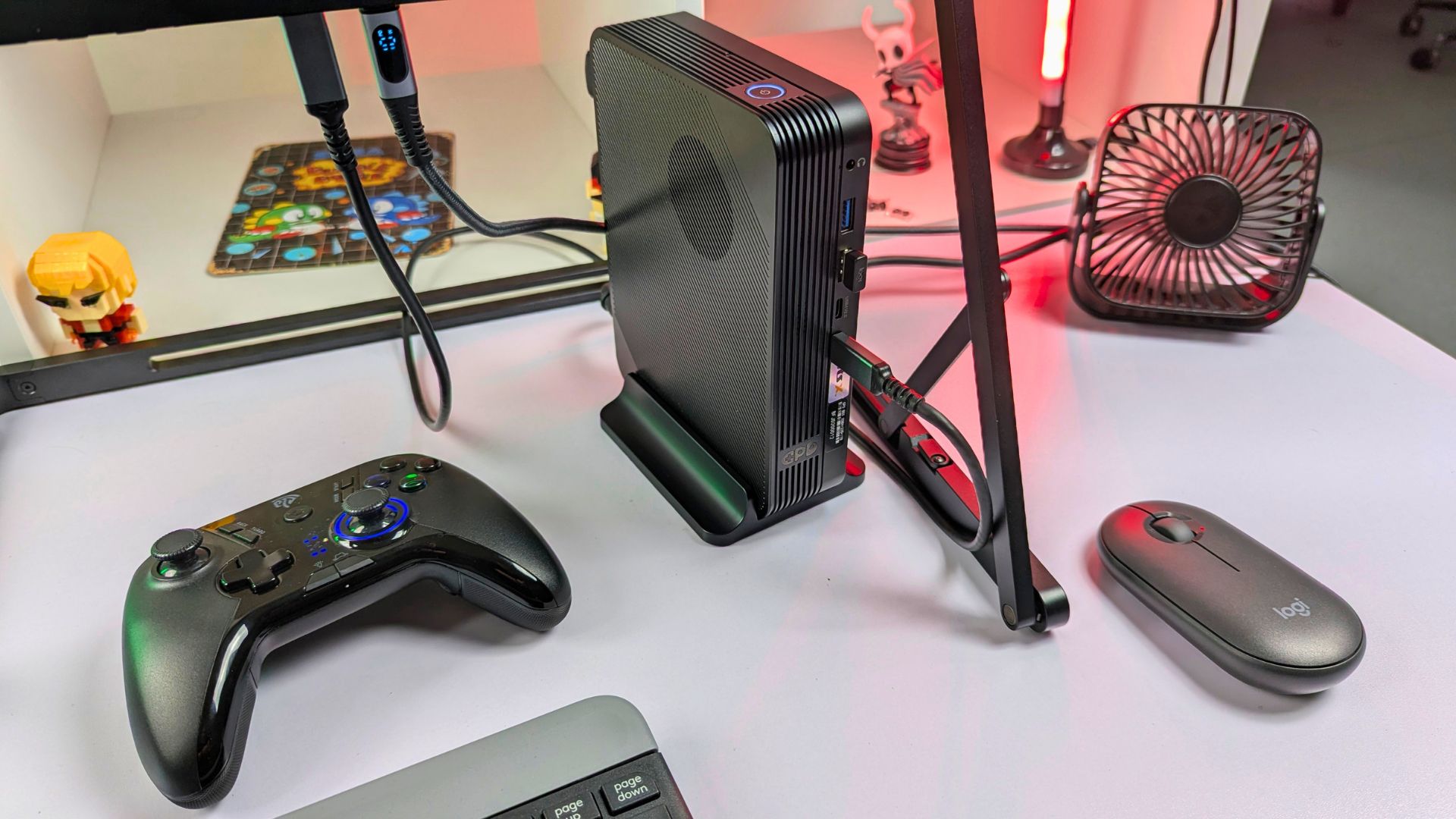
The GPD BOX is a great addition to the GPD ecosystem, with decent performance for its price range and a design that fits nicely alongside GPD’s other devices. If you are browsing the mini PCs category and want something compact, efficient, well connected, and more distinctive than a generic desktop, it is an easy recommendation.
That wraps up our GPD BOX review, we hope you have found it useful. Our GPD G2 review will be available soon, where we will be giving a complete overview as well as testing it with a few different devices.
GPD BOX FAQ
Is the GPD BOX good for gaming?
The GPD BOX is good for lighter and well-optimised gaming, but it is not positioned as a dedicated gaming mini PC. In our testing, it handled games such as Forza Horizon 6, Cyberpunk 2077, Shadow of the Tomb Raider, Subnautica 2, and Goals with useful results depending on settings, resolution, and power level.
Is the GPD BOX better than the GPD WIN 5?
The GPD BOX should not be treated as a direct replacement for the GPD WIN 5. The GPD WIN 5 sits in a higher performance and price category, while the GPD BOX is better judged as a compact desktop mini PC with gaming and eGPU potential.
Can the GPD BOX be used as a home office PC?
The GPD BOX can work well as a home office PC thanks to its compact size, strong CPU performance, multiple USB ports, dual display outputs, fingerprint power button, Wi-Fi 6E, and dual 2.5Gb Ethernet. It is especially useful where desk space is limited.
Does the GPD BOX support the GPD G2 eGPU docking station?
The GPD BOX supports the GPD G2 docking station, but connection options depend on the model. The 356H model includes an MCIO port, while the 358H model uses USB4 v2 connectivity for the GPD G2.
Is the GPD BOX good for emulation?
The GPD BOX is very good for emulation based on the systems we tested. PCSX2, RPCS3, Vita3K, and Eden all produced strong results, with many games able to run at increased rendering resolutions and enhanced visual settings.