
In this article
What is the MANGMI Pocket MAX vs Air X comparison?
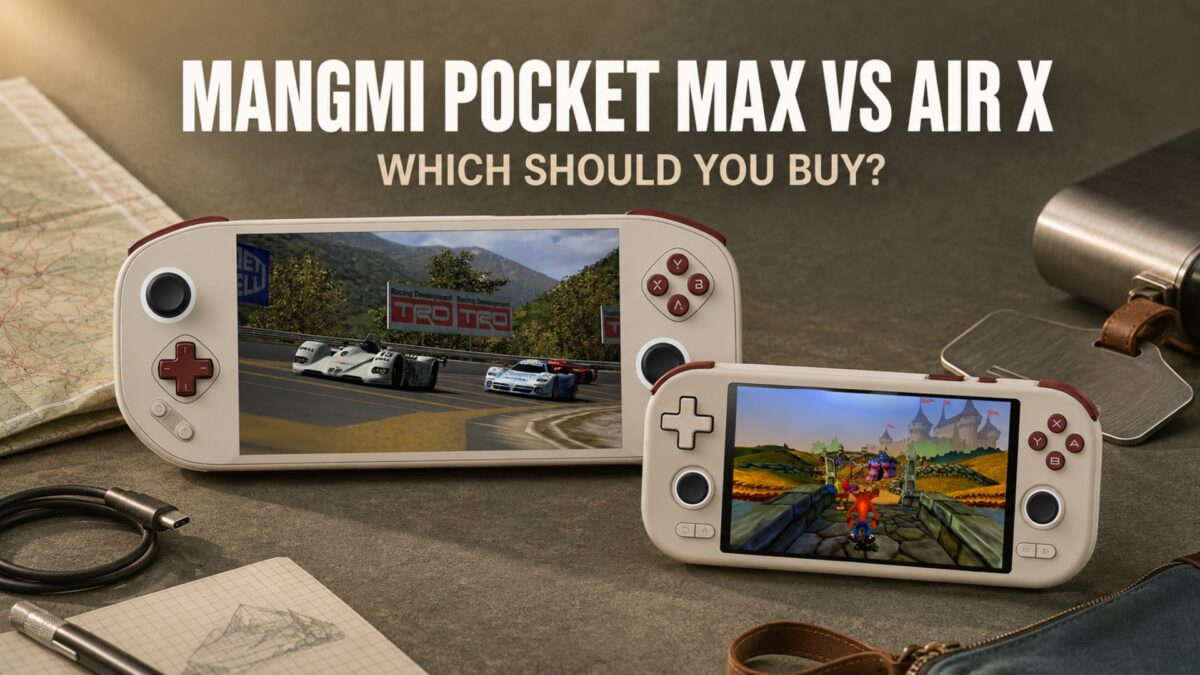
The MANGMI Pocket MAX vs Air X comparison looks at two Android gaming handhelds from MANGMI with very different priorities. The Pocket MAX combines a Snapdragon 865, 8GB RAM and a 7-inch 144Hz AMOLED display for stronger performance and a larger view. The MANGMI Air X is smaller and lighter, with a Snapdragon 662, Android 14 and a 5.5-inch 60Hz IPS display.
Choosing between the MANGMI Pocket MAX vs Air X comes down to the type of gaming you want to do. The Pocket MAX is the more capable choice for demanding emulation, larger-screen gaming and extended sessions at home, while the MANGMI Air X is better suited to portable retro gaming, lighter Android titles, streaming and buyers who want to spend less.
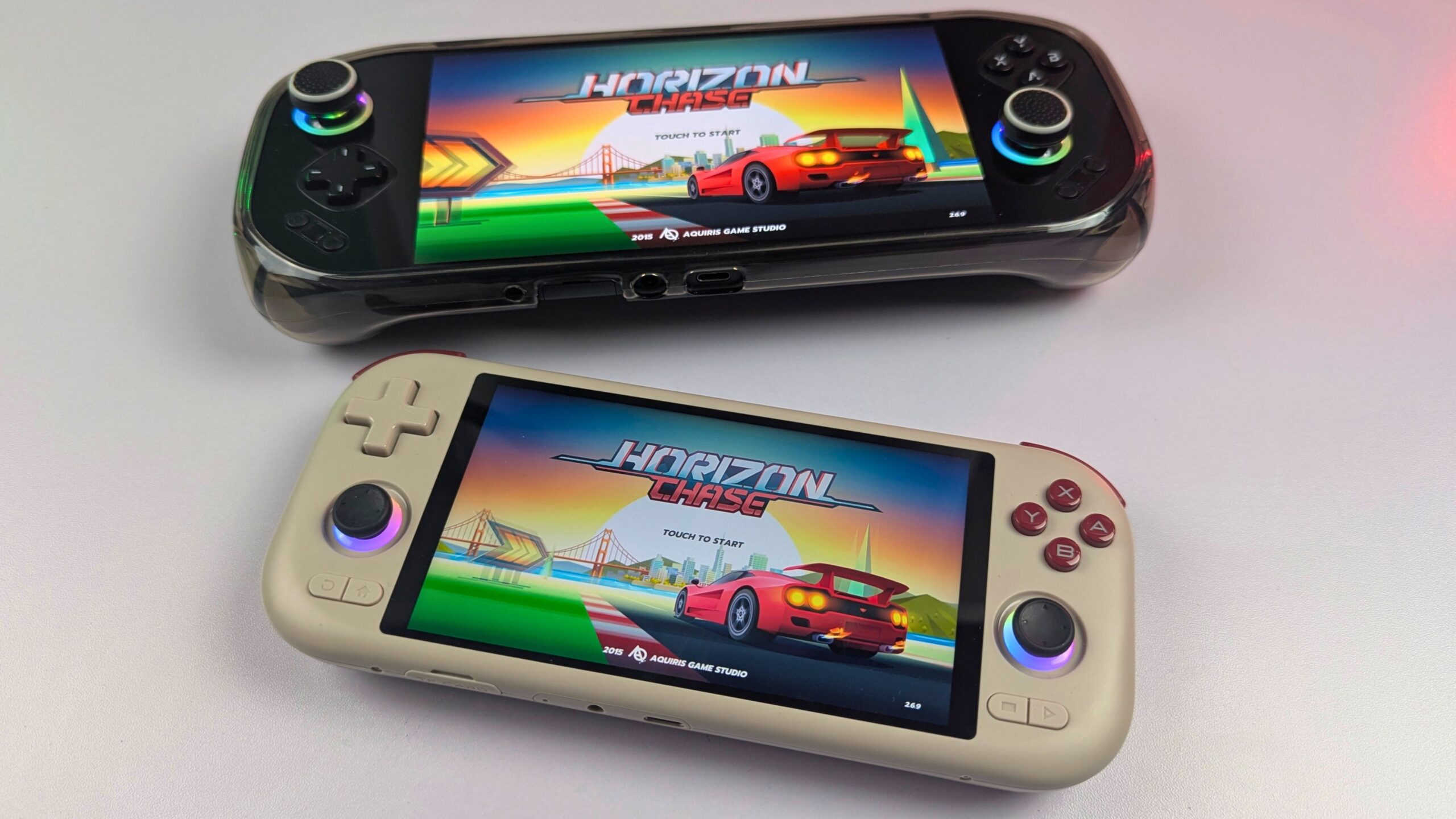
Both devices are Android OS based gaming handhelds with built-in controls, touchscreens, active cooling, expandable storage and support for Android games, emulators and streaming applications. The important difference is not simply the size of the devices: the MANGMI Pocket MAX vs Air X decision also involves a substantial performance gap, different operating-system versions and contrasting approaches to portability.
MANGMI Pocket MAX vs Air X: specifications compared
The table below brings together the main specifications from the two DROIX reviews and product pages.
| Feature | MANGMI Pocket MAX | MANGMI Air X |
|---|---|---|
| Processor | Qualcomm Snapdragon 865 | Qualcomm Snapdragon 662 SM6115 |
| CPU configuration | 1× Cortex-A77 up to 2.84GHz, 3× Cortex-A77 up to 2.42GHz, 4× Cortex-A55 up to 1.8GHz | 4× Cortex-A73 up to 2.1GHz, 4× Cortex-A53 up to 2.0GHz |
| GPU | Adreno 650 | Adreno 610 up to 1050MHz |
| RAM | 8GB LPDDR4X | 4GB LPDDR4X |
| Internal storage | 128GB UFS 3.1 | 64GB eMMC |
| Expandable storage | microSD card support | microSD card support |
| Operating system | Android 13 | Android 14 |
| Display | 7-inch AMOLED touchscreen | 5.5-inch IPS touchscreen |
| Resolution | 1920×1080 | 1920×1080 |
| Refresh rate | 60Hz, 90Hz, 120Hz, 144Hz | 60Hz |
| Brightness | 800 nits | 400 nits |
| Colour coverage | 150% sRGB | 100% sRGB |
| Wireless | Wi-Fi 6, Bluetooth 5.1 | Wi-Fi 5, Bluetooth 5.0 |
| Battery | 8,000mAh | 5,000mAh |
| Charging | Up to 27W | Up to 15W |
| Controls | TMR analogue sticks, Hall triggers, magnetic swappable button modules and macro buttons | LED-lit analogue sticks, Hall triggers, built-in controls and screen mapping |
| Video output | USB 3.1 Type-C port (inc. video output) | USB-C port |
| Dimensions | Around 25.4 × 10.1 × 1.74cm | Around 20.35 × 8.74 × 1.68cm |
| Weight | Around 450g | Around 286g |
| Colours | Black, White and Retro GB | Black, White and Retro GB |
The table shows why the MANGMI Pocket MAX vs Air X comparison is more than a choice between two screen sizes. The Pocket MAX has twice the RAM, faster UFS storage, a substantially larger battery and a Snapdragon 865 platform. The MANGMI Air X counters with a much smaller body, lower weight and the newer Android 14 operating system.






Design, screen and portability
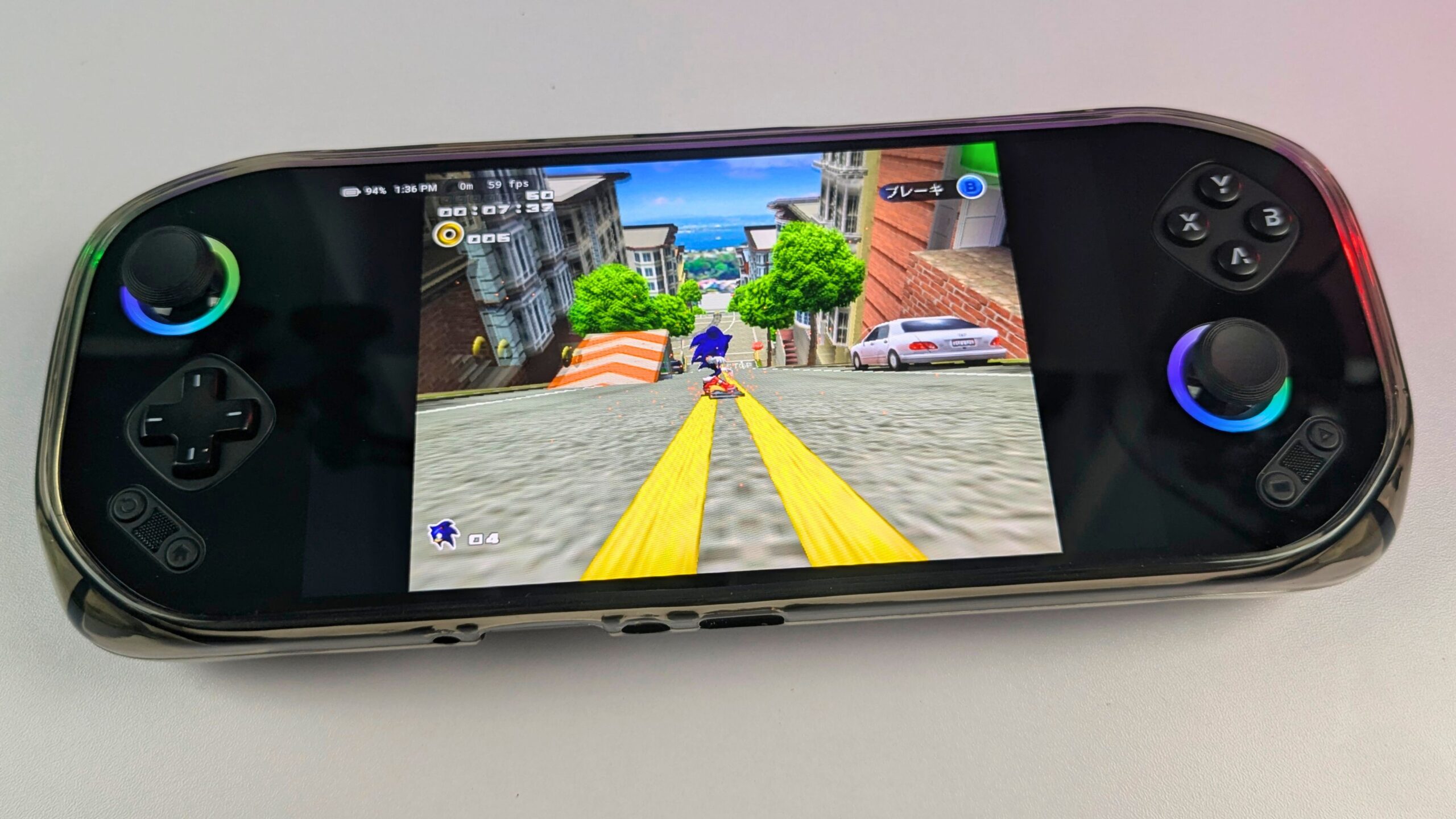
The MANGMI Pocket MAX is the better choice if your priority is a large, premium-looking display. Its 7-inch 1920×1080 AMOLED touchscreen reaches up to 800 nits and supports refresh rates up to 144Hz, so games, menus and streaming content have more space and can look especially vibrant.
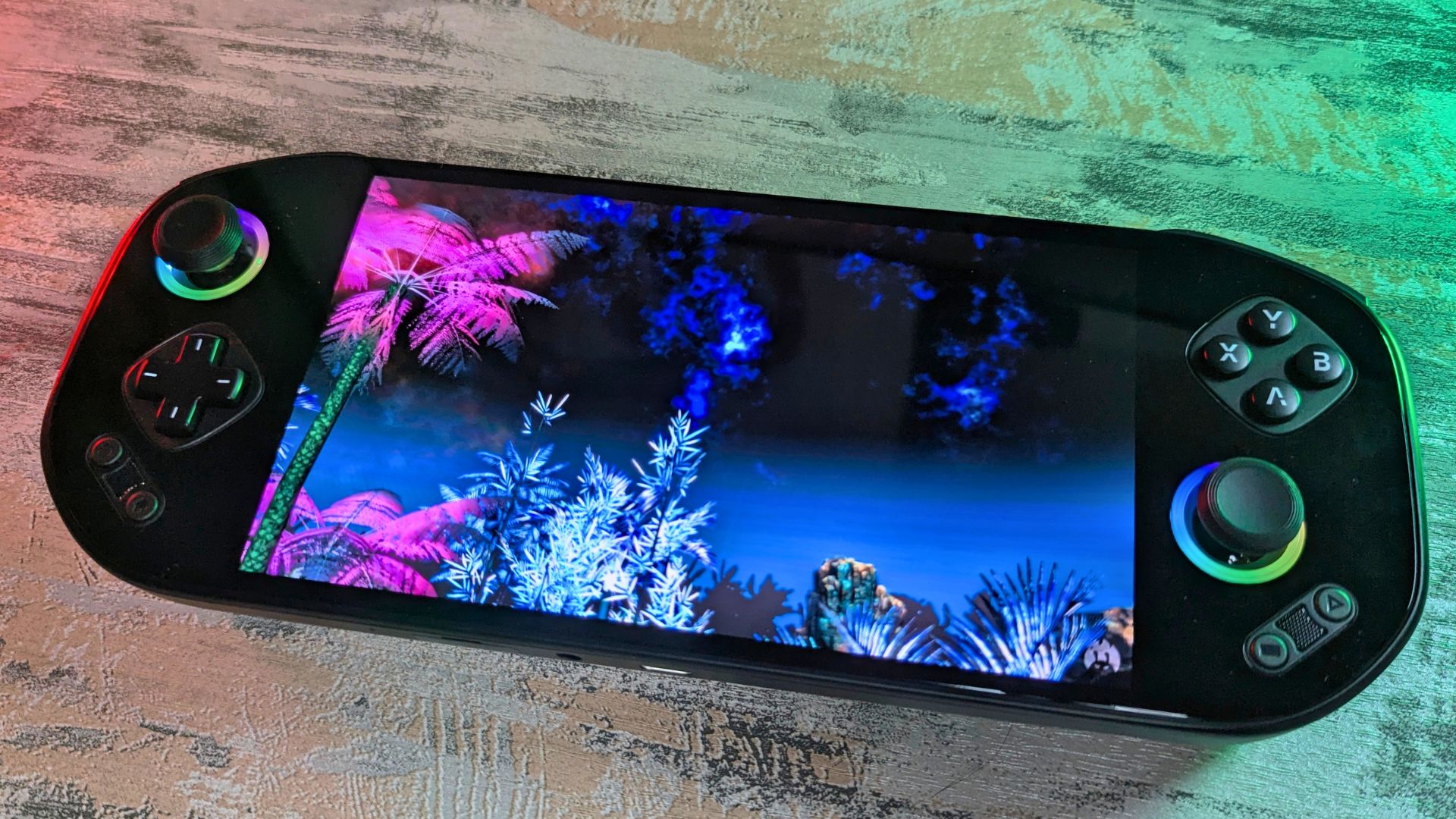
The Pocket MAX also has magnetic swappable button modules. The default conductive-rubber contacts are quieter, while separately sold mechanical modules provide a clickier feel. The TMR analogue sticks, Hall triggers and configurable rear macro buttons give it a more feature-rich control layout, although the larger 450g body is less convenient to carry than the Air X.
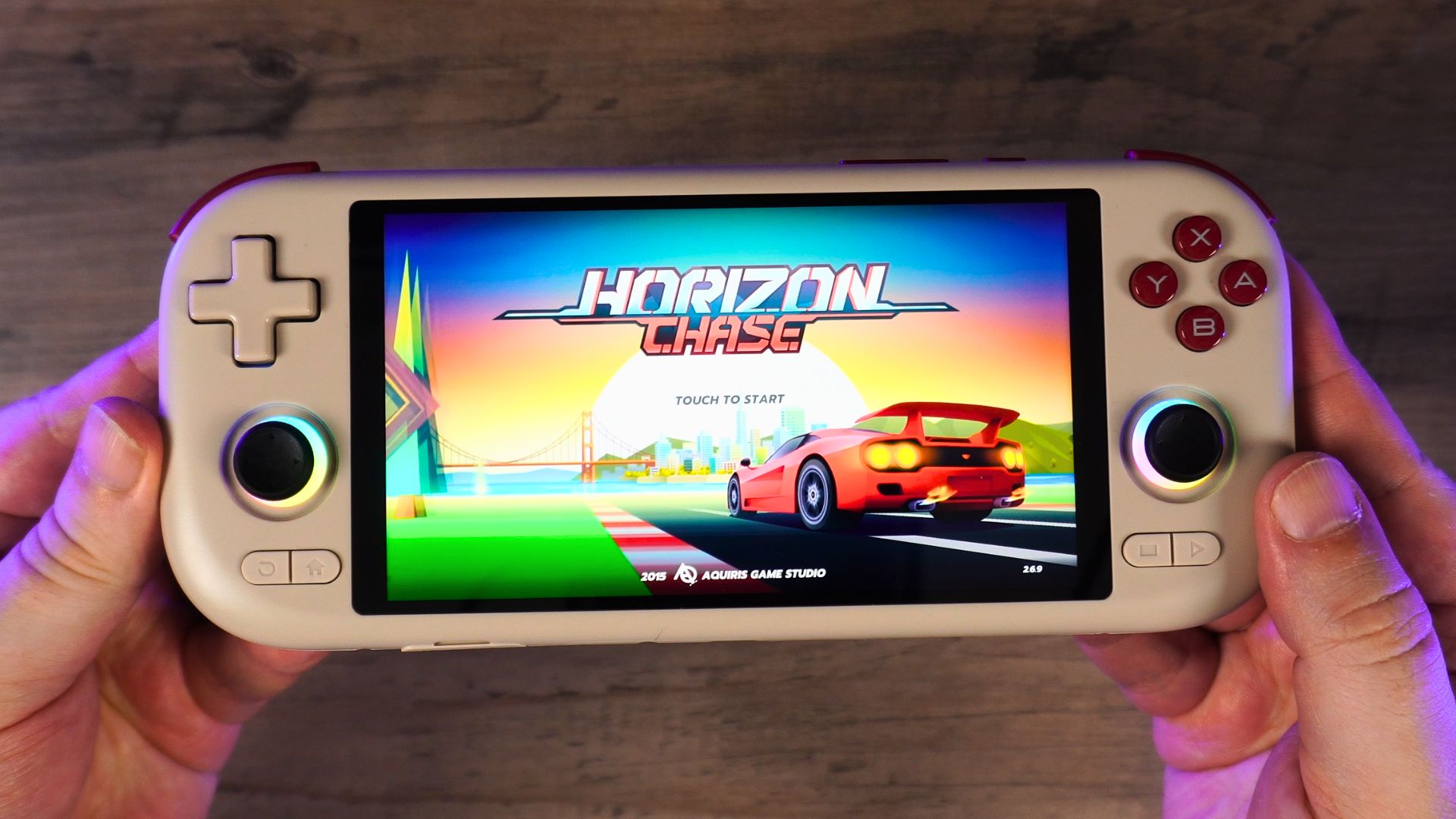
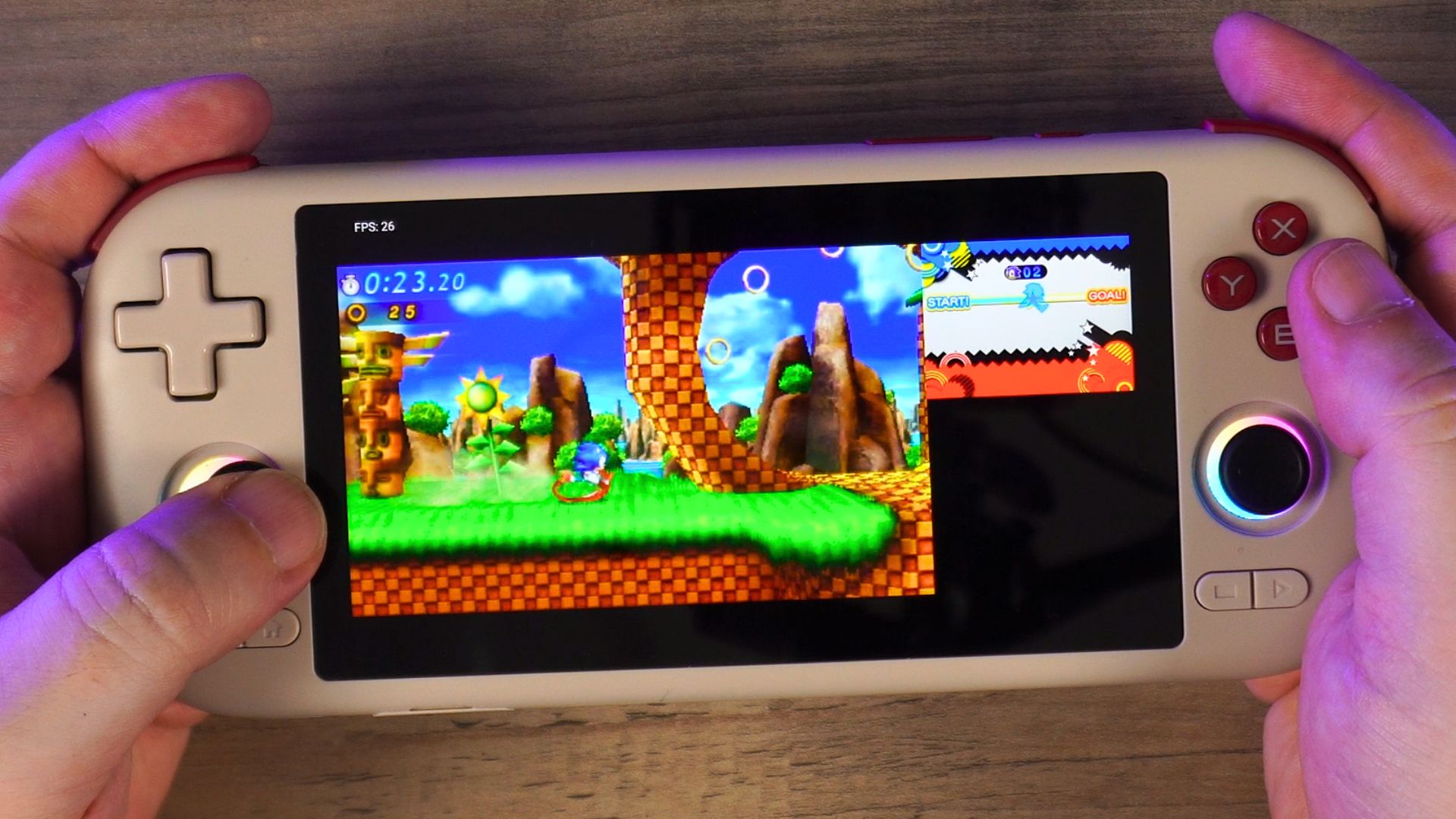
The MANGMI Air X is designed around portability. At around 286g, it is approximately 164g lighter than the Pocket MAX, and its compact dimensions make it easier to carry in a small bag or jacket pocket. Its 5.5-inch 1920×1080 IPS touchscreen is smaller and limited to 60Hz, but the DROIX review found it sharp, colourful and well suited to Android menus, retro games and lighter streaming use.
For the MANGMI Pocket MAX vs Air X buying decision, the screen question is therefore simple: choose the Pocket MAX for a more immersive large-screen experience, or choose the Air X when weight and portability matter more than display size and refresh rate.

Performance and benchmark comparison
The benchmark results show the largest difference in the MANGMI Pocket MAX vs Air X comparison. The Snapdragon 865 in the MANGMI Pocket MAX is in a higher performance class than the Snapdragon 662 in the MANGMI Air X, and the results reflect that in CPU, GPU and overall system tests.
Benchmark testing conditions
- Source: DROIX hands-on reviews
- MANGMI Pocket MAX: Snapdragon 865, 8GB LPDDR4X RAM, Android 13.
- MANGMI Air X: Snapdragon 662, 4GB LPDDR4X RAM, Android 14.
- Tests included: AnTuTu, Geekbench 5, Geekbench 6 and 3DMark.
- Important limitation: Results are useful indicators of relative performance, but they do not guarantee the same frame rate or compatibility in every game or emulator.
Direct benchmark results
| Benchmark | MANGMI Pocket MAX | MANGMI Air X | What it indicates |
|---|---|---|---|
| AnTuTu | 1,049,921 | 256,886 | Overall CPU, GPU, memory and user-experience performance |
| Geekbench 5 single-core | 829 | 315 | Short single-threaded CPU workload |
| Geekbench 5 multi-core | 2,696 | 1,236 | Multi-threaded CPU workload |
| Geekbench 6 single-core | 1,205 | 340 | Newer single-threaded CPU workload |
| Geekbench 6 multi-core | 3,388 | 1,119 | Newer multi-threaded CPU workload |
| 3DMark Wild Life Extreme | 1,225 | 115 | More demanding graphics workload |
The MANGMI Pocket MAX leads clearly in every directly comparable benchmark. In AnTuTu, its score is more than four times higher than the Air X result. Geekbench 5 also shows a substantial difference, with the Pocket MAX reaching 829 single-core and 2,696 multi-core compared with 315 and 1,236 for the Air X.
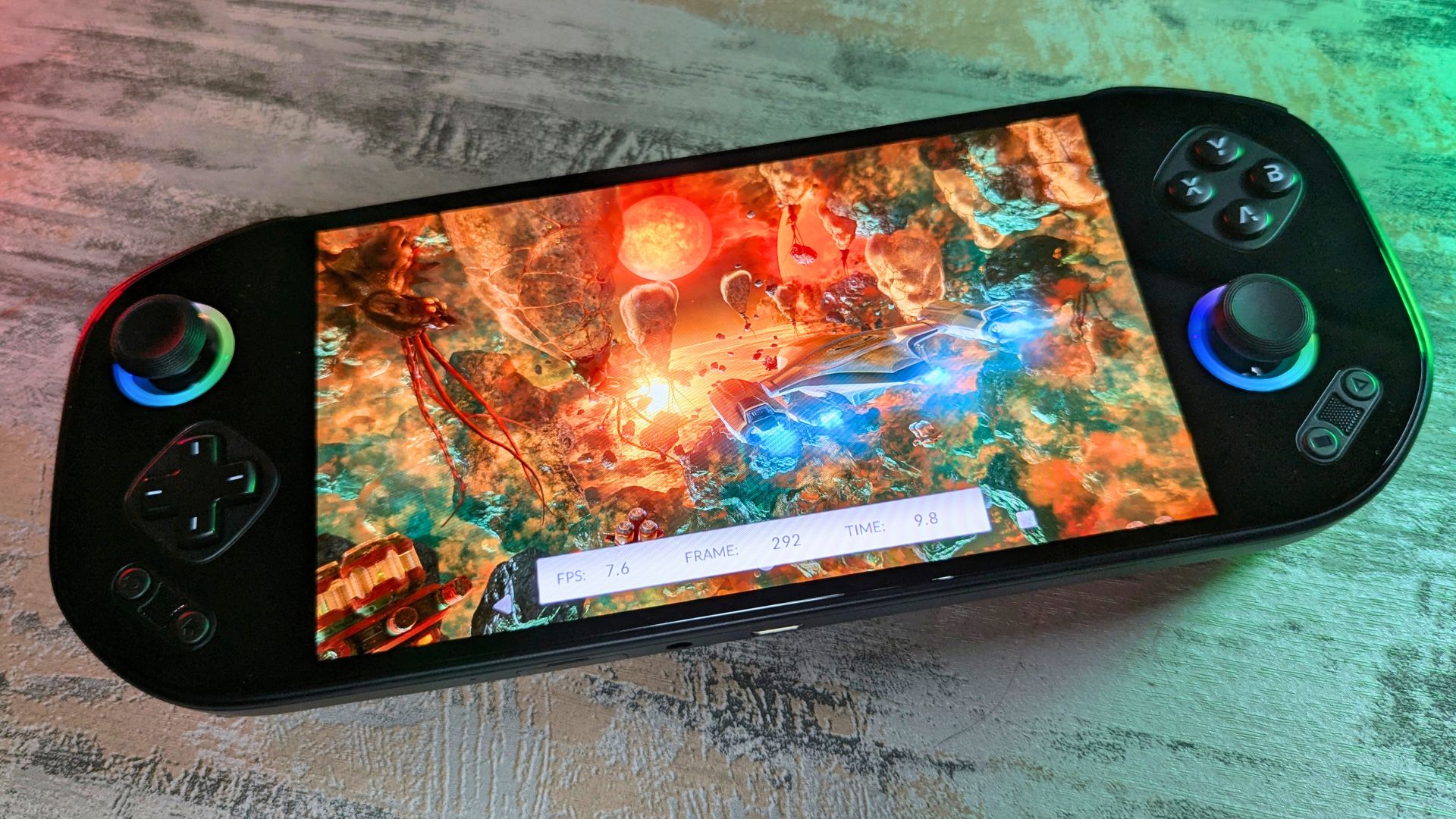
The Geekbench 6 results reinforce the same pattern. The Pocket MAX scores 1,205 single-core and 3,388 multi-core, while the MANGMI Air X records 340 and 1,119. That does not mean every game will run four times faster, because software optimisation, resolution and emulator settings all matter, but it does show why the Pocket MAX is the stronger Android gaming device for demanding workloads.
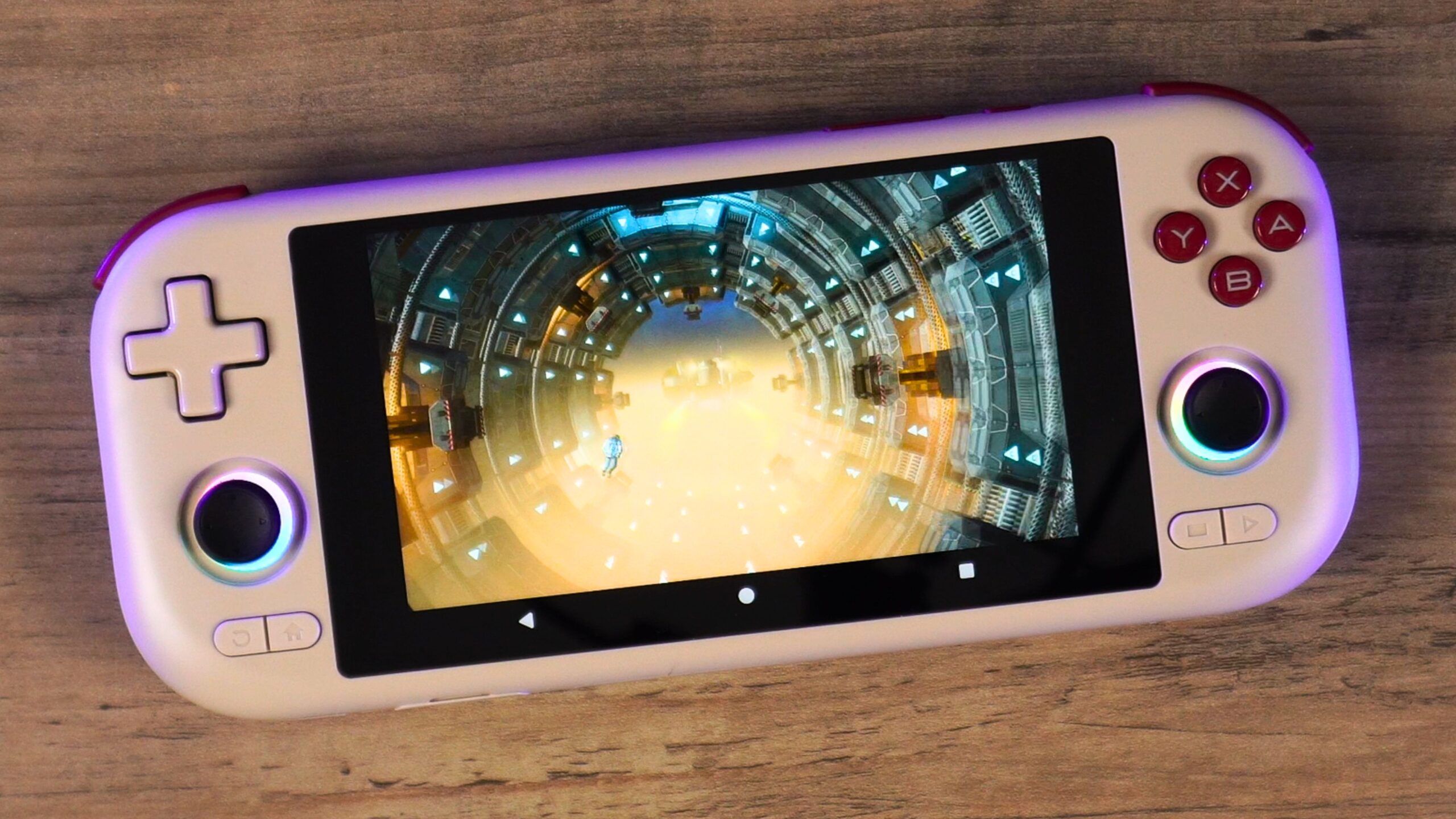
For buyers comparing the MANGMI Pocket MAX vs Air X, the benchmark results should be treated as a guide to performance headroom. The Pocket MAX has more room for higher rendering resolutions, heavier Android games and more demanding emulators. The MANGMI Air X is better matched to classic emulation, lighter Android games and streaming workloads where its smaller size is an advantage.
Android gaming performance
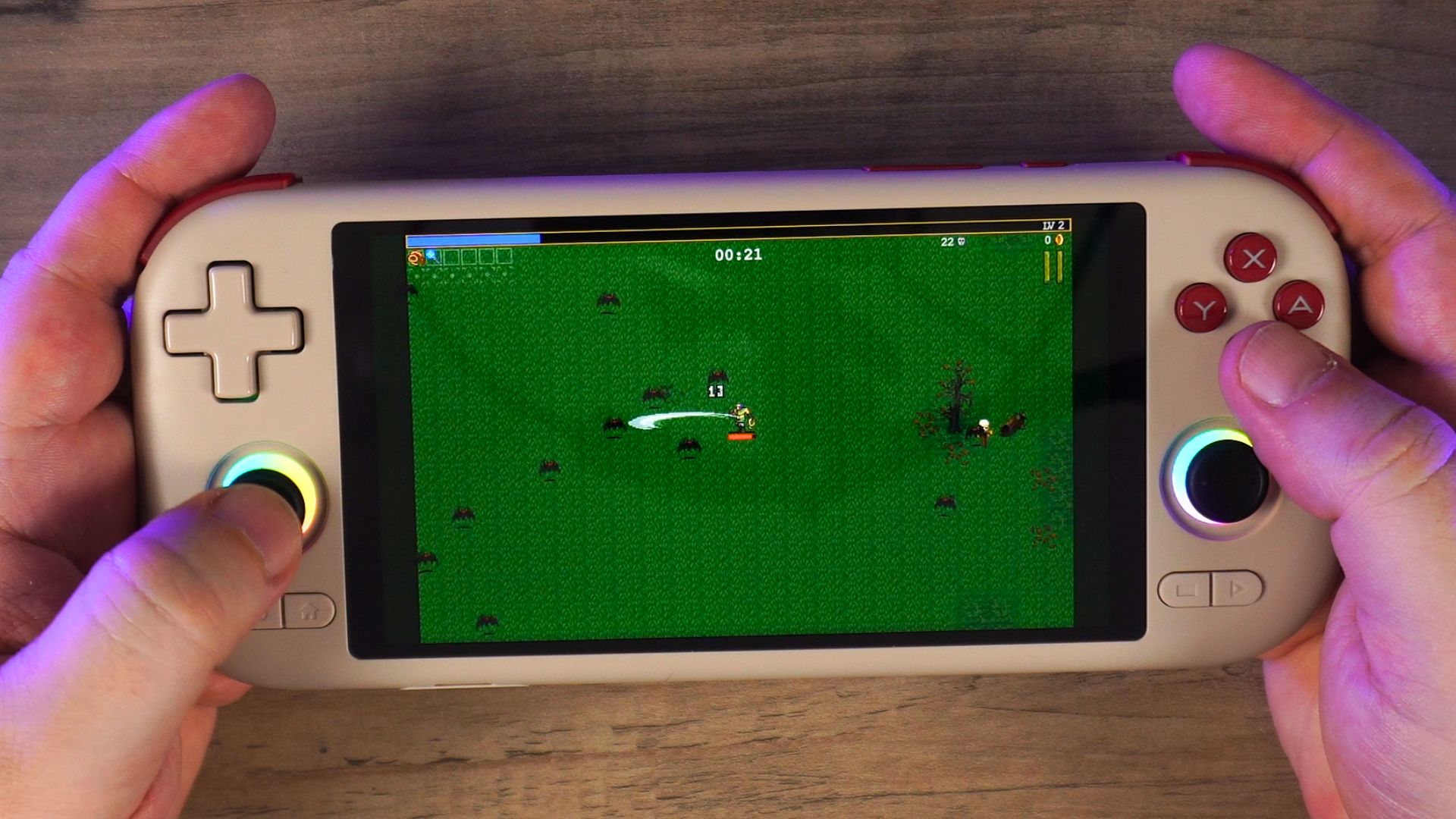
The MANGMI Pocket MAX is the better fit for demanding Android games. In the DROIX review, games including Prince of Persia, Dungeon Hunter and Horizon Chase ran without performance issues, while the built-in screen mapping software made it possible to use physical controls in games without native controller support.
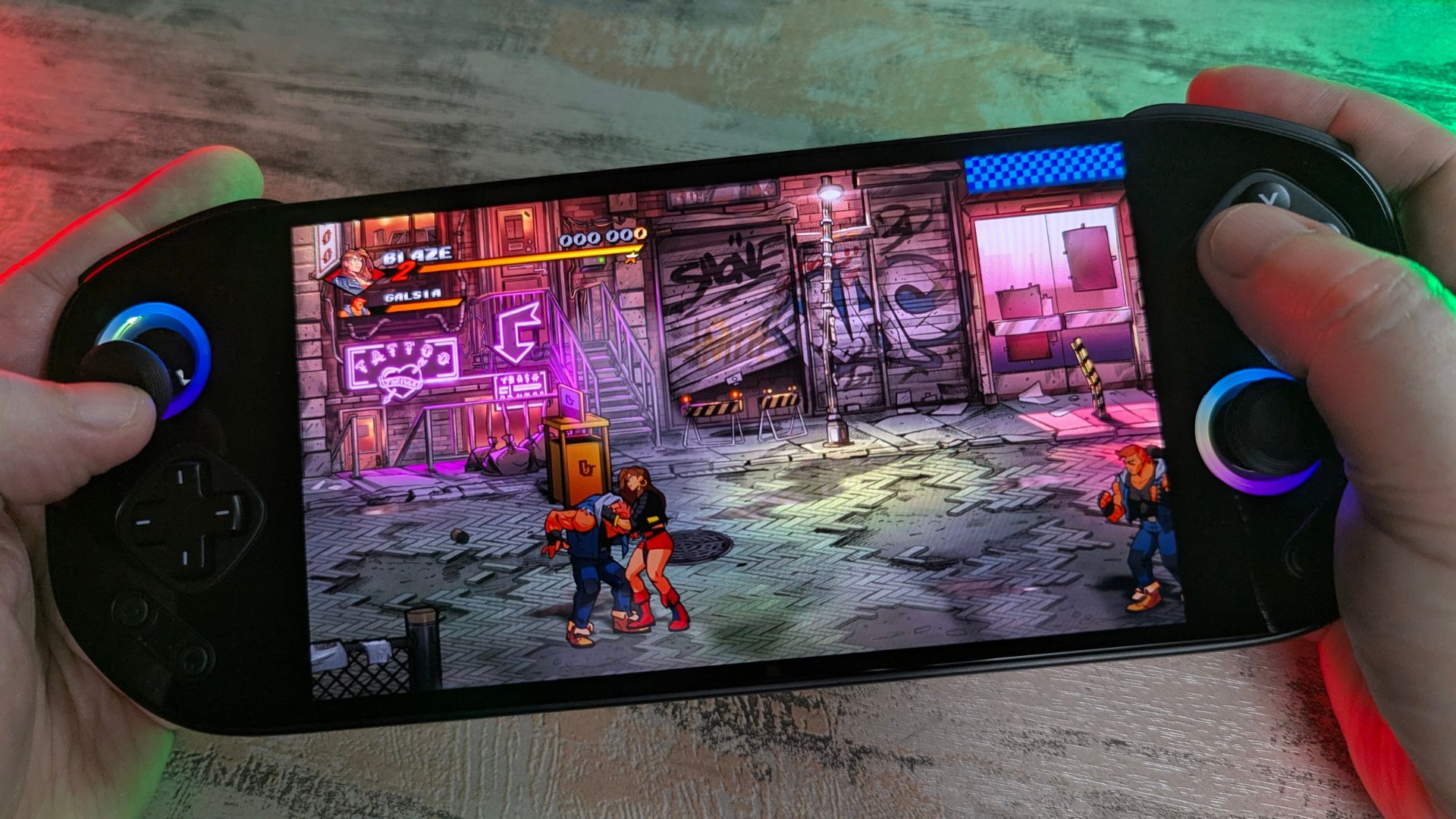
The Air X is more suited to lighter and mid-range Android gaming. The DROIX review found games such as Metal Slug ran well, while heavier titles could show slowdowns. Its screen mapping software adds flexibility, especially for touch-focused games, but the Snapdragon 662 means buyers should keep their expectations realistic.
The MANGMI Pocket MAX vs Air X choice for native Android games depends on the titles you play. If you want more demanding 3D games and stronger performance headroom, the Pocket MAX is the safer option. If you mainly play 2D games, retro-inspired Android titles, casual games or streamed games, the MANGMI Air X can provide a good experience without the extra size and cost. Either model can work well as a gaming Android handheld when its software and performance match the games you choose.
Both models can function as an Android gaming console because they combine Android software with built-in controls and handheld-focused overlays. They are also flexible Android gaming devices for installing emulators, streaming clients and native games from supported sources.
Emulation performance
The MANGMI Pocket MAX is the stronger emulation handheld of the two. Its Snapdragon 865 delivered reliable results from older systems through the PlayStation 1 era, and the DROIX review found good results with PlayStation 2, Azahar, Vita3K and Eden when using the tested settings and MrPurple v24 Turnip drivers.
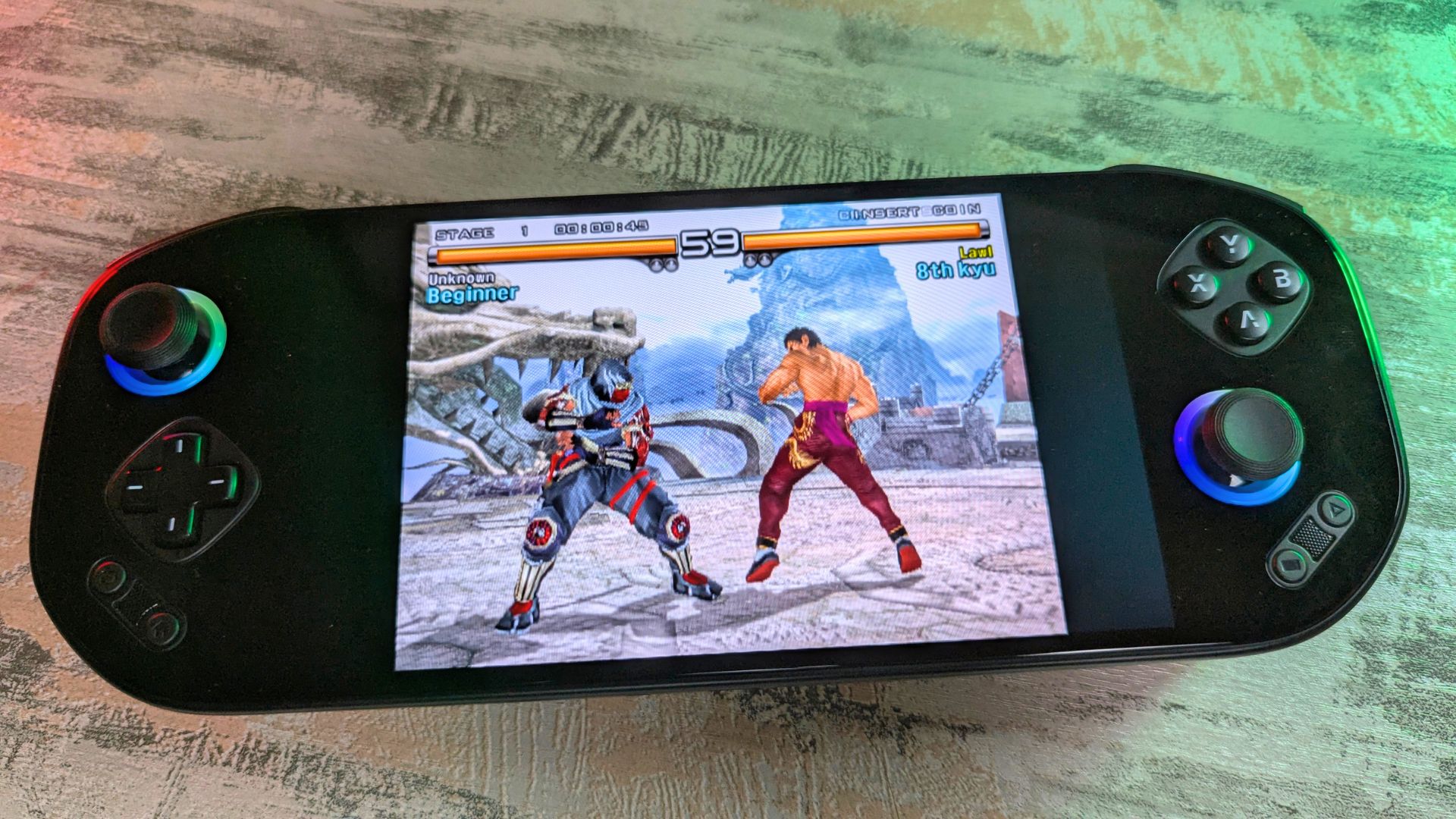
That does not make every demanding title guaranteed to run perfectly. PlayStation 2 compatibility remains game-dependent, newer emulators can have shader-cache stutter and the most demanding workloads can exceed the limits of the Snapdragon 865. The review also found that X1 Box performance was not yet a strength on this hardware.
The MANGMI Air X is a better match for classic systems. The DROIX review found reliable performance up to the PlayStation 1 era, while NetherSX2, Azahar and Vita3K produced mixed results depending on the game, emulator version, drivers and settings.
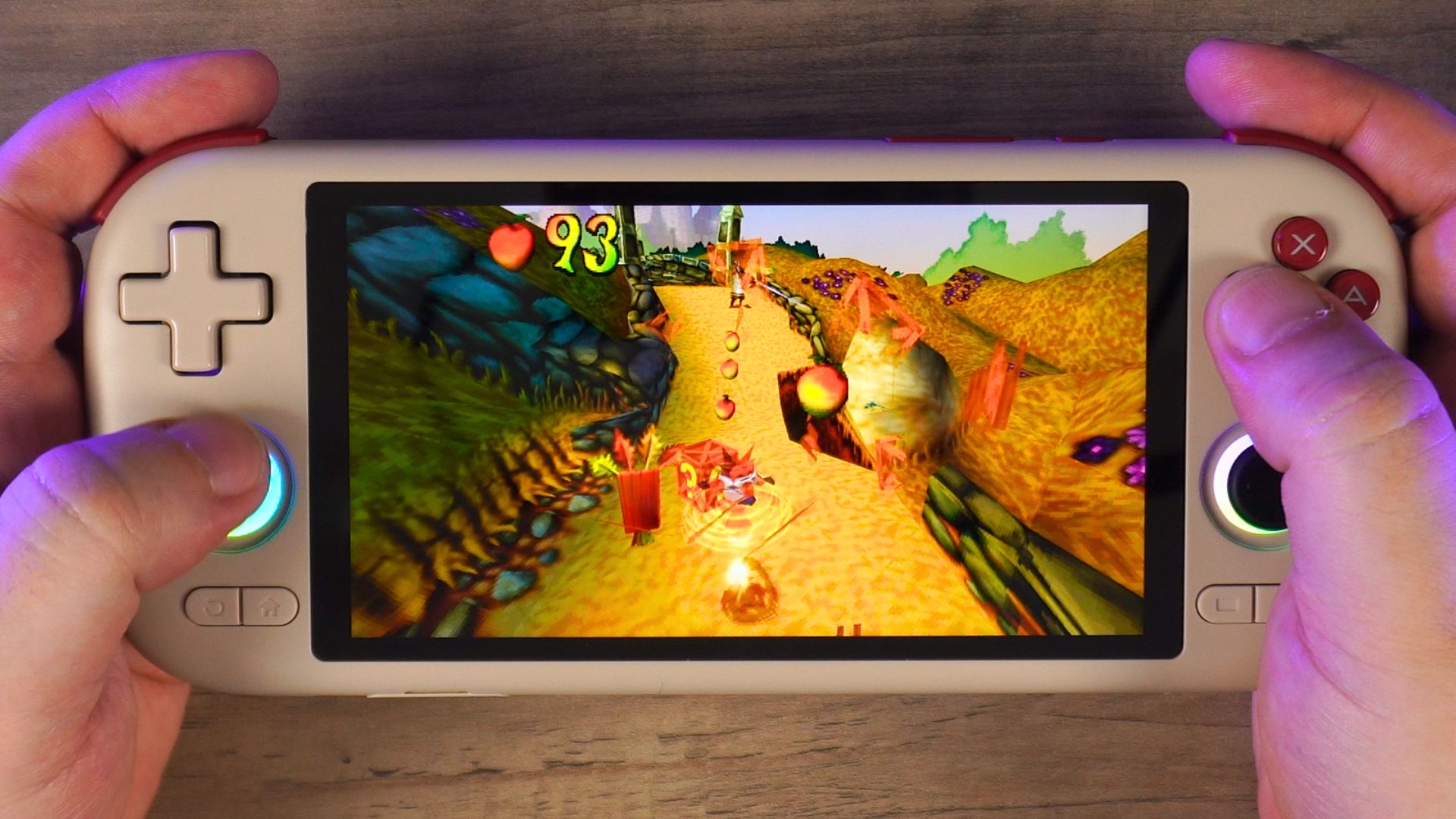
For emulation, the MANGMI Pocket MAX vs Air X decision is straightforward. Choose the Air X for classic consoles, arcade games, early 3D systems and a lightweight library. Choose the Pocket MAX if you want to explore more demanding sixth-generation and dual-screen emulation, while accepting that compatibility still varies by title.
Software and everyday use
The Air X ships with Android 14, which is newer than the Android 13 installation on the Pocket MAX. That may matter to buyers who value the newest available operating-system base, although the MANGMI Pocket MAX review found Android 13 perfectly serviceable for gaming, emulation and launcher use.
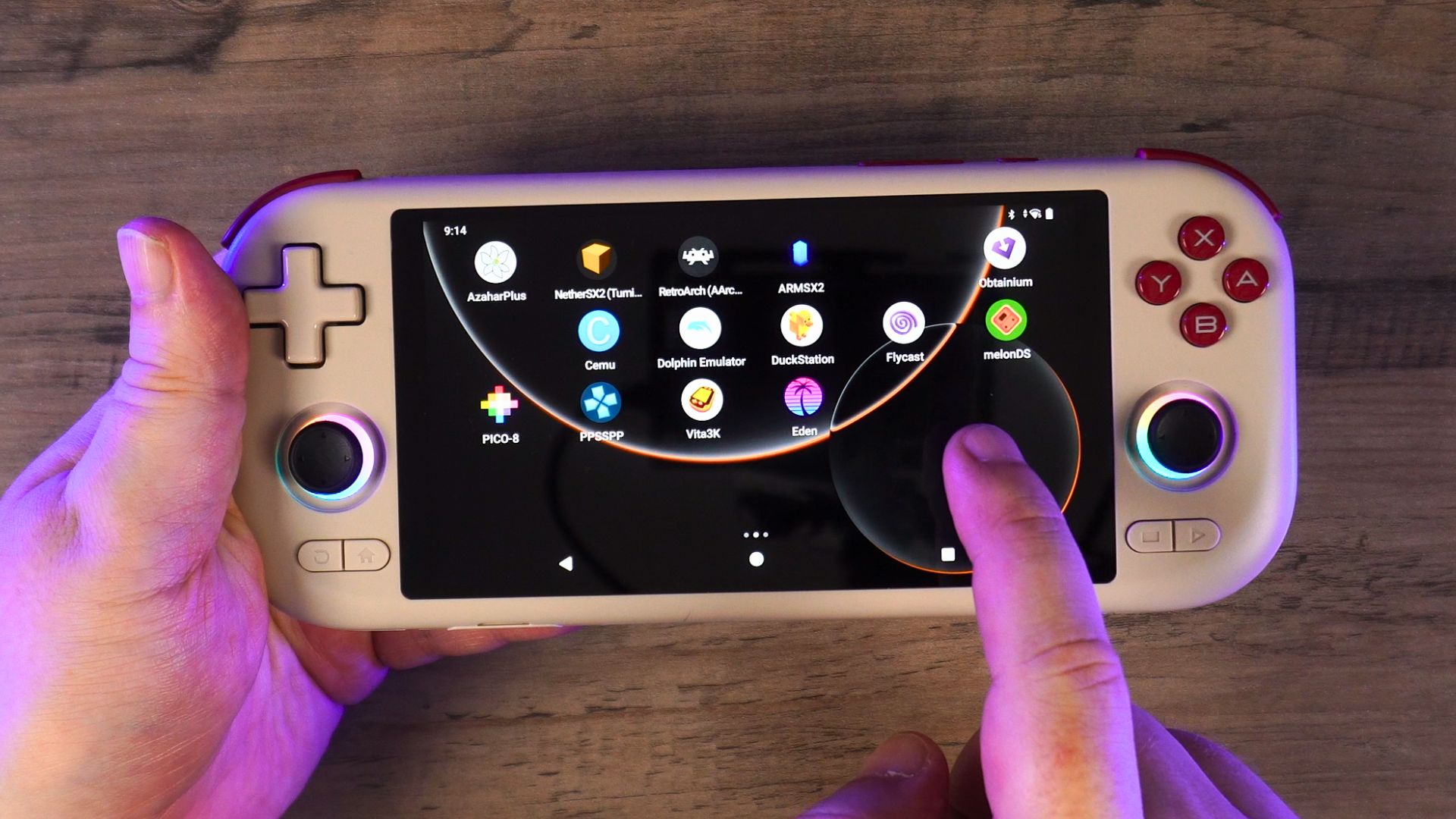
Both handhelds include MANGMI own launcher and a quick-access overlay for performance settings, fan controls, controller options, screenshots and related functions. The reviews found the launcher functional but occasionally prone to assigning games to the wrong system or category, so users who want a more organised library may prefer a third-party Android frontend such as Daijisho.
The Pocket MAX has faster UFS 3.1 storage and twice as much RAM, which gives it a stronger specification for multitasking and larger Android installations. The MANGMI Air X has less internal storage and slower eMMC storage, so a microSD card becomes more important if you plan to carry a large legally obtained game or media library.
Battery life, cooling and connectivity
The MANGMI Pocket MAX has an 8,000mAh battery and supports up to 27W charging. In the DROIX review’s demanding AnTuTu loop with full brightness, Performance mode and the fan on Extreme, it lasted just over four hours. More typical mixed use was estimated at around 8–10 hours, depending on the workload and settings.
The Air X uses a 5,000mAh battery with up to 15W charging. In the comparable demanding AnTuTu loop, it lasted around four hours and 30 minutes, while typical use was estimated at around nine hours depending on brightness, game demand, fan mode and wireless use.
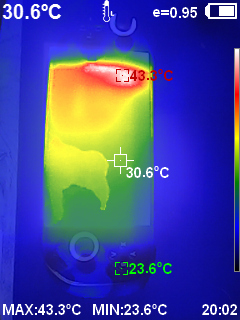
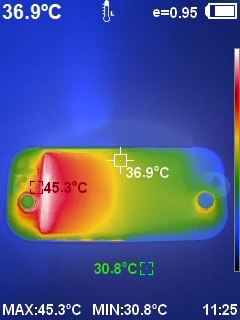
Those results show why battery capacity alone should not decide the MANGMI Pocket MAX vs Air X purchase. The Pocket MAX has the larger battery, but its larger display and more powerful processor can also consume more energy. The MANGMI Air X has less capacity but a smaller screen and lower-power platform.
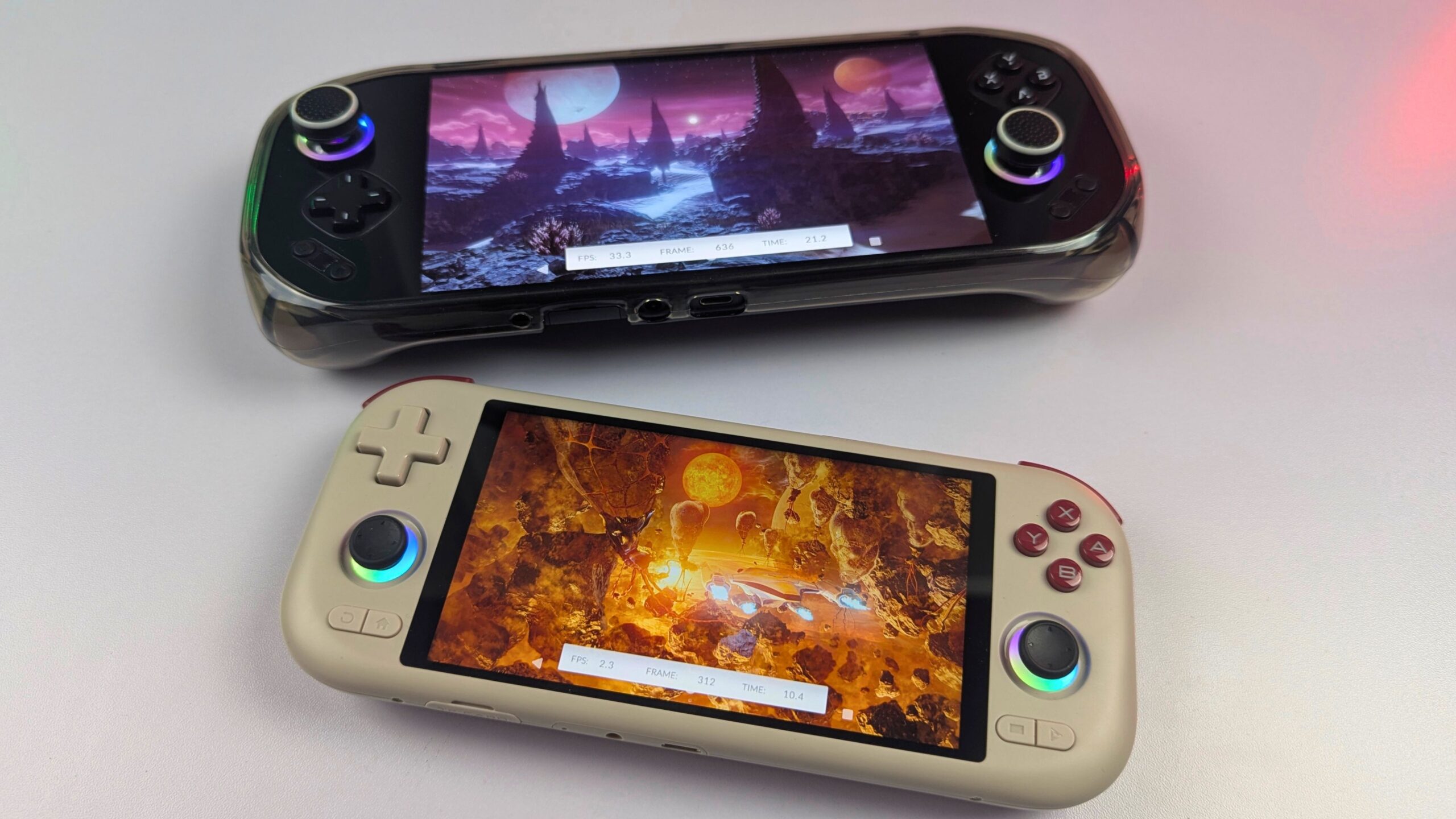
The Pocket MAX has Wi-Fi 6 and Bluetooth 5.1, while the Air X has Wi-Fi 5 and Bluetooth 5.0. Both are suitable for downloads, Bluetooth audio and supported game-streaming applications, but the Pocket MAX has the stronger connectivity specification for buyers building a dedicated streaming setup.
Which one should you buy?
Buy the MANGMI Pocket MAX if:
- You want the largest and most vibrant screen.
- You prefer a 7-inch AMOLED display with refresh rates up to 144Hz.
- You want stronger Android gaming and emulation performance.
- You plan to explore PlayStation 2, Azahar, Vita3K or other demanding emulators.
- You value 8GB RAM, 128GB UFS 3.1 storage and a larger battery.
- You like the option of magnetic swappable button modules.
- You are mainly gaming at home, on the sofa or in a larger travel bag.
The MANGMI Pocket MAX review covers the device’s controls, display, software and hands-on performance in more detail.
Buy the MANGMI Air X if:
- You want a lighter and more compact handheld.
- You mainly play classic retro games and lighter Android titles.
- You want Android 14 out of the box.
- You value portability for commuting or travel.
- You are happy with a 5.5-inch 60Hz IPS display.
- You want a lower-cost entry into Android handheld gaming.
- You do not need consistent high-end emulation performance.
The MANGMI Air X review covers the compact design, battery testing, software and emulation results in more detail.
Our verdict – is the MANGMI Pocket MAX or Air X worth buying?
Short answer: The MANGMI Pocket MAX is the better all-round choice for performance and large-screen gaming, while the MANGMI Air X is the better choice for portability, classic emulation and lower-cost Android gaming.
Best for: The Pocket MAX is best for demanding Android gaming, larger-screen emulation and streaming. The Air X is best for portable retro gaming, lighter Android games and everyday travel use.
Not ideal for: The Pocket MAX is not ideal if you want a genuinely pocketable device. The MANGMI Air X is not ideal for demanding 3D Android games or consistent high-end emulation.
Current status: Both are available Android OS based gaming handhelds, with availability, pricing and regional terms subject to change.
Rating: Not applicable for this comparison; the recommendations are based on the linked DROIX hands-on reviews and benchmark results rather than a new combined test.
The MANGMI Pocket MAX vs Air X comparison ultimately comes down to your priorities. The Pocket MAX costs more and weighs more, but its Snapdragon 865 platform, 7-inch AMOLED display and flexible controls make it the stronger long-term choice for demanding users. The MANGMI Air X gives up performance and screen size in exchange for a much lighter body, newer Android version and a more accessible entry point.
If you want to compare these models with other Android gaming handhelds, see the full DROIX category for additional screen sizes, chipsets and price points.
Frequently Asked Questions
Is the MANGMI Pocket MAX faster than the Air X?
The MANGMI Pocket MAX is substantially faster than the Air X in the published AnTuTu, Geekbench and 3DMark results because it uses a Snapdragon 865 instead of a Snapdragon 662.
Is the MANGMI Air X better for travel?
The MANGMI Air X is better for travel because it weighs around 286g and has a smaller body, compared with approximately 450g for the MANGMI Pocket MAX.
Which MANGMI handheld is better for emulation?
The MANGMI Pocket MAX is better for demanding emulation, while the Air X is a better fit for classic systems through the PlayStation 1 era. Compatibility still depends on the game, emulator, drivers and settings.
Does the MANGMI Pocket MAX have a better display?
The MANGMI Pocket MAX has the stronger display specification, with a 7-inch 1920×1080 AMOLED panel, up to 800 nits brightness and refresh rates up to 144Hz. The MANGMI Air X has a 5.5-inch 1920×1080 IPS panel at 60Hz.
Is the MANGMI Air X good for Android gaming?
The MANGMI Air X is good for lighter and mid-range Android gaming, cloud gaming and games that work well with screen mapping, but heavier 3D titles can show slowdowns.
Which should I buy, the MANGMI Pocket MAX or Air X?
You should buy the MANGMI Pocket MAX for stronger performance and a larger display, or the MANGMI Air X for lower weight, portability, Android 14 and a more affordable classic-gaming setup.

Bringer of videos, text and images! AKA the social media guy at DROIX. Massive retro gaming fan and collector, with a far too large collection of consoles and computers from 1970's to modern. Contact me at [email protected]
Questions & comments
0
Every question gets an answer. Ask before you buy — DaveC and the team reply within one working day, and answers stay public so they help the next reader too.